



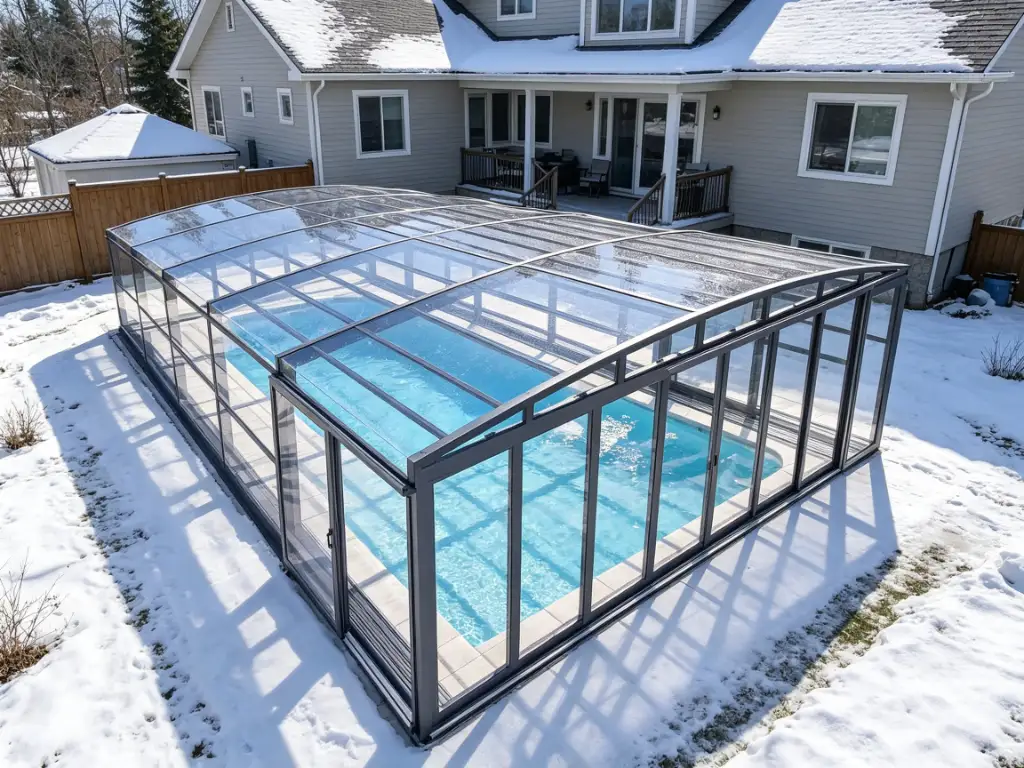
Pool Enclosure for Cold Climates: 2026 Guide for Winter Swimming, Snowy Regions and Year-Round Pool Use
A pool enclosure is especially valuable in cold climates where outdoor swimming pools are often affected by snow, wind, rain, falling leaves, low temperatures and short swimming seasons. For homeowners, hotels, resorts and wellness centers in Canada, the Northern United States, New England, Scandinavia, Northern Europe and other snowy regions, a well-designed pool enclosure can turn a seasonal outdoor pool into a more comfortable and usable indoor-outdoor swimming space.
In warm regions, a pool enclosure is often used mainly for debris protection, safety and reduced maintenance. In cold regions, however, the enclosure has a more important role. It helps protect the pool environment from winter weather, reduces heat loss, improves comfort and extends the swimming season.
A retractable pool enclosure is particularly useful because it can close during cold, windy or snowy conditions and open when the weather becomes pleasant. This allows pool owners to enjoy both sheltered swimming and open-air swimming depending on the season.
This guide explains how pool enclosures work in cold climates, what design factors matter for snow and winter use, which regions can benefit most, and how to choose the right enclosure type for residential and commercial pool projects.
If you are still comparing general enclosure options, you can also read Sunrim’s complete Tipos de coberturas para piscinas guía.
Quick Answer: Can a Pool Enclosure Be Used in Cold Climates?
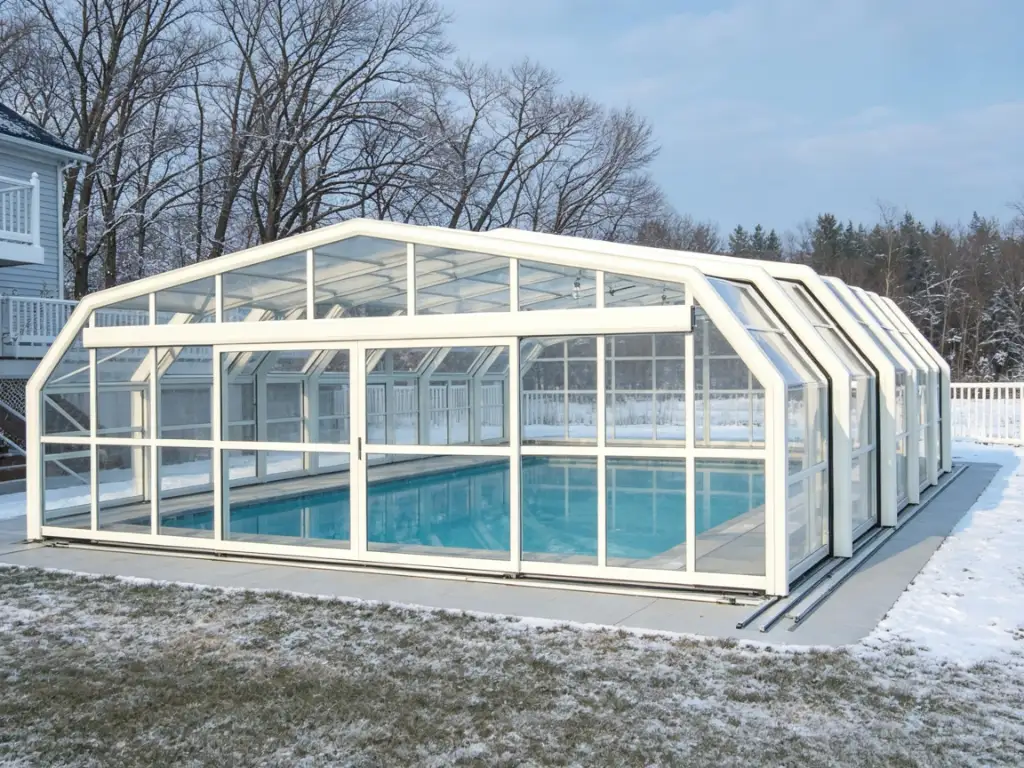
Yes, a pool enclosure can be used in cold climates if it is properly designed for local snow load, wind load, temperature changes, drainage and installation conditions. In snowy regions such as Canada, New England, Minnesota, Michigan, Wisconsin, Colorado, Scandinavia, Germany, Austria and Switzerland, the enclosure should use a strong aluminum frame, durable roof panels, proper roof slope, reliable sealing and stable ground anchoring.
A retractable pool enclosure for winter can help:
- Protect the swimming pool from snow, rain and wind
- Reducir las hojas, el polvo y los residuos
- Prolongar la temporada de natación
- Reduce heat loss around the pool
- Create a more comfortable swimming environment
- Improve pool usability for homes, hotels and resorts
- Support indoor-outdoor pool use throughout more months of the year
For a deeper technical discussion of winter use, snow load and cost considerations, see Sunrim’s Guía de invierno para cubiertas retráctiles de alberca.
Considering a Retractable Roof for Your Pool?
In cold or seasonal climates, some homeowners prefer a retractable roof system instead of a fully fixed pool enclosure. This can provide weather protection when closed and a more open swimming experience when conditions are suitable.
Compare key design factors in our guide to pool with retractable roof solutions for residential and indoor-outdoor pool projects.
Why Cold Regions Need Pool Enclosures
Outdoor pools in cold regions face different challenges from pools in warm climates.
In places such as Canada, the Northern United States, Northern Europe and mountain regions, outdoor pools may only be comfortable for a limited part of the year. Wind, cold nights, early autumn temperature drops and winter snow can reduce the useful swimming season.
A pool enclosure helps solve these problems by creating a protected microclimate around the pool.
Common cold-climate problems include:
- Short outdoor swimming season
- Cold wind around the pool area
- Rapid water temperature loss
- Snow and ice accumulation
- Fallen leaves in autumn
- Rain and storm exposure
- More difficult pool maintenance
- Limited hotel or resort pool operation
- Lower guest comfort during shoulder seasons
A well-designed swimming pool enclosure can reduce these problems and make the pool area more practical for year-round or extended-season use.
For residential villas, hotels, resorts, and wellness centers, a custom retractable pool enclosure can help extend the swimming season, reduce pool maintenance, and create a flexible indoor-outdoor swimming environment. With motorized glass roof systems and corrosion-resistant aluminum structures, it provides reliable weather protection while maintaining natural sunlight and open views.
Best Regions for Cold-Climate Pool Enclosures
Pool enclosures are useful in many parts of the world, but they are especially valuable in regions where the outdoor swimming season is short or where winter weather affects pool maintenance.
1. Pool Enclosure for Canada
In Canada, outdoor pools are often limited by long winters, cold spring weather and early autumn temperature drops. A pool enclosure can help homeowners and commercial properties extend the usable season before and after summer.
A pool enclosure in Canada is useful for:
- Piscinas residenciales en el patio trasero
- Piscinas de villas
- Piscinas de hotel
- Piscinas de los resorts
- Centros de spa y bienestar
- Indoor-outdoor leisure spaces
For Canadian pool projects, snow load and wind resistance should be reviewed carefully. Provinces with colder or snowier conditions may require stronger structural design, reinforced frames and suitable roof panel selection.
2. Pool Enclosure for the Northern United States
The Northern United States includes many areas where outdoor swimming pools are affected by cold winters and shorter warm seasons.
Relevant regions include:
- New England
- Minnesota
- Michigan
- Wisconsin
- Illinois
- Pennsylvania
- New York
- Colorado
- Montana
- Alaska
In these areas, a pool enclosure can help protect the pool from wind, leaves, snow and seasonal temperature changes.
For homeowners, this means more swimming days each year.
For hotels and resorts, it can improve pool availability and guest experience.
3. Pool Enclosure for New England
New England has long winters, snowy conditions and cool shoulder seasons. Outdoor pools may only be used comfortably for a few months without protection.
A retractable pool enclosure in New England can help:
- Reducir la exposición al viento
- Protect the pool from autumn leaves
- Extend swimming into spring and autumn
- Improve poolside comfort
- Reduce seasonal cleaning
- Create a more flexible indoor-outdoor pool space
For residential properties and boutique hotels, a pool enclosure sunroom design can also create a more comfortable leisure environment. You can learn more from Sunrim’s Guía sobre coberturas para piscinas y soláriums.
4. Pool Enclosure for Scandinavia and Northern Europe
Scandinavia and Northern Europe include countries and regions where pool enclosures can provide strong seasonal value.
Relevant markets include:
- Norway
- Sweden
- Finland
- Denmark
- Iceland
- Germany
- Austria
- Switzerland
- The Netherlands
- Northern France
- The United Kingdom
In these markets, pool owners often need protection from rain, wind, cold air and seasonal weather changes. A pool enclosure can help transform an outdoor pool into a more reliable indoor-outdoor space.
For hotels, wellness centers and spa resorts in Northern Europe, a high or classic retractable pool enclosure can help improve guest comfort during colder months.
5. Pool Enclosure for Mountain and Snowy Regions
Mountain regions often have large temperature differences, stronger wind and higher snow loads.
These areas may include:
- Colorado mountain resorts
- Swiss alpine hotels
- Austrian spa resorts
- Northern Italy mountain properties
- Scandinavian cabins and resorts
- Canadian mountain homes
- Ski resort leisure facilities
For these projects, pool enclosure design should not be based only on appearance. Snow load capacity, roof slope, structural anchoring, panel strength and installation quality are critical.
How a Pool Enclosure Helps in Winter
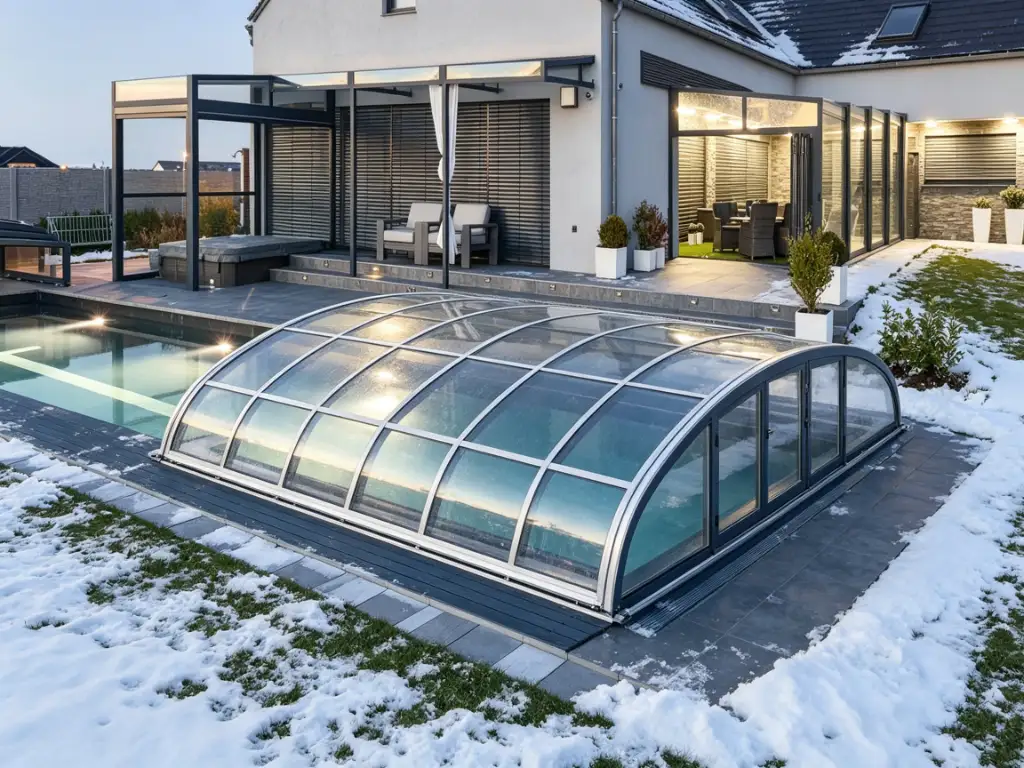
A pool enclosure does not simply cover the water. It creates a protected environment around the pool and reduces direct exposure to winter weather.
1. Protection from Snow and Ice
In snowy regions, snow can accumulate around outdoor pools, decks and pool covers. A properly designed pool enclosure helps reduce direct snow entry into the pool area.
However, snow load must be considered during design. The enclosure should be engineered according to local climate requirements, roof shape, frame strength and panel material.
For winter projects, curved or arched structures often help improve drainage and reduce snow accumulation. To compare enclosure shapes and types, read Sunrim’s Tipos de coberturas para piscinas guía.
2. Reduced Wind Exposure
Cold wind is one of the main reasons outdoor pools become uncomfortable in shoulder seasons and winter.
A pool enclosure can reduce wind exposure around:
- Pool water
- Pool deck
- Seating area
- Walkways
- Spa or wellness zones
- Hotel guest pool areas
This helps create a more stable and comfortable swimming environment.
3. Better Heat Retention
A pool enclosure can help slow heat loss by reducing wind exposure and creating a more protected air space around the pool.
This is especially helpful for:
- Piscinas climatizadas
- Spa pools
- Piscinas de hotel
- Piscinas de los resorts
- Centros de bienestar
- Residential pools with pool heating systems
The enclosure works together with the pool heating system to make the swimming environment more comfortable.
4. Reduced Debris During Autumn and Winter
In cold regions, autumn leaves, dust, branches and wind-blown debris can quickly enter an open swimming pool.
A pool enclosure helps reduce:
- Falling leaves
- Polvo
- Contaminación del agua de lluvia
- Snow entry
- Outdoor debris
- Cleaning workload
This can lower maintenance time and help keep the pool environment cleaner.
5. Extended Swimming Season
One of the biggest advantages of a cold-climate pool enclosure is season extension.
Instead of using the pool only during summer, owners may be able to enjoy the pool during spring, autumn and part of winter depending on heating, enclosure type and local climate.
For hotels and resorts, this can improve the value of the pool as a guest amenity.
6. Indoor-Outdoor Flexibility
A retractable pool enclosure allows the pool area to switch between open and enclosed modes.
During warm weather, the enclosure can be opened.
During cold, windy or rainy weather, the enclosure can be closed.
This flexibility is especially useful in climates where weather changes frequently.
For more information about the structure and function of telescopic pool enclosure systems, visit Sunrim’s cubierta retráctil para piscina product page.
Best Pool Enclosure Types for Cold Climates
Different enclosure types work better for different cold-climate applications.
1. Low Pool Enclosure for Cold Regions
A low pool enclosure is suitable when the main goal is to protect the pool water while preserving the surrounding view.
Es útil para:
- Piscinas residenciales en el patio trasero
- Villas privadas
- Garden pools
- Pools where minimal visual impact is important
- Pool protection when swimming inside the enclosure is not the main priority
In cold climates, a low enclosure can help reduce debris and wind impact, but it may not provide the same walk-in comfort as a high enclosure.
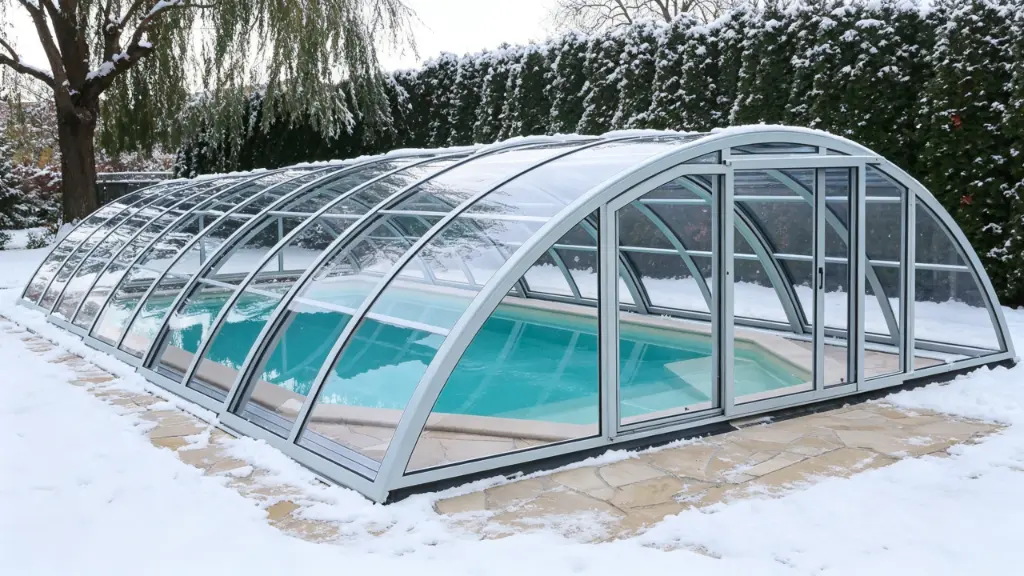
2. Classic Curved Pool Enclosure for Snow and Rain
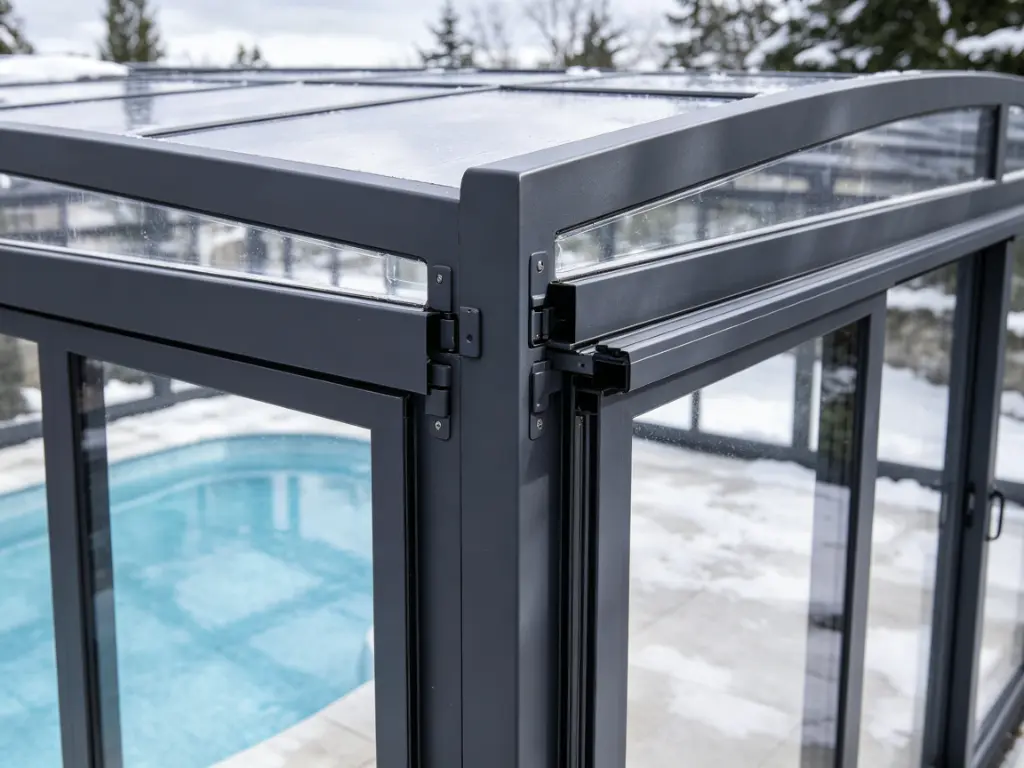
A classic curved pool enclosure is often a practical choice for cold and rainy regions because the curved roof helps improve drainage.
Es adecuado para:
- Piscinas residenciales
- Piscinas de villas
- Piscinas de hotel
- Piscinas de los resorts
- Spa and wellness spaces
- Moderate snow and rain conditions
The curved design offers a balance between structural performance, appearance and usable height.
3. High Pool Enclosure for Year-Round Comfort
A high pool enclosure is suitable when users need to walk, relax or swim comfortably inside the enclosed space.
It is often preferred for:
- Hoteles
- Complejos turísticos
- Centros de bienestar
- Instalaciones de spa
- Villas de lujo
- Cold-climate commercial pools
- Espacios de natación en interiores y al aire libre
A high pool enclosure can create a semi-indoor pool environment while still allowing the structure to open in pleasant weather.
If your project requires walk-in space, height planning is important. Sunrim’s Guía sobre la altura de las cubiertas para albercas explains how low, medium and high enclosure heights affect usability and design.
Cold-Climate Design Considerations
A pool enclosure for cold regions must be designed more carefully than a simple fair-weather cover.
1. Snow Load
Snow load is one of the most important design factors in Canada, the Northern United States, Scandinavia, alpine regions and other snowy climates.
The enclosure should be designed according to:
- Requisitos locales sobre la carga de nieve
- Roof shape
- Frame span
- Resistencia del panel
- Espaciado entre caracteres
- Sistema de anclaje
- Base instalada
Do not choose a winter pool enclosure based only on visual appearance. Structural performance is critical.
2. Wind Load
Cold regions may also experience strong winter winds. Wind load affects frame strength, anchoring, panel fixing and sealing.
For exposed sites, the enclosure may require:
- Reinforced aluminum frames
- Fijación más resistente de los rieles
- Better panel locking
- Improved sealing
- Stable foundation or deck anchoring
3. Roof Shape and Drainage
Rain, melting snow and condensation need to be managed properly.
Curved or sloped roof designs usually perform better than flat surfaces in cold climates because they help water and snow move off the structure.
Drainage planning should include:
- Inclinación del techo
- Posición del canalón
- Water outlet location
- Deck drainage
- Snow melt runoff
- Avoiding ice accumulation near tracks
4. Sealing and Thermal Comfort
For winter use, sealing matters.
Important sealing areas include:
- Panel overlaps
- Side walls
- End walls
- Sliding joints
- Door areas
- Rail contact points
Good sealing helps reduce drafts, rain entry and heat loss.
5. Panel Material
Polycarbonate panels are commonly used for retractable pool enclosures because they are lightweight, durable, impact resistant and suitable for outdoor weather exposure.
For cold climates, panel selection should consider:
- Resistencia a los impactos
- Protección contra los rayos UV
- Thermal insulation
- Snow load compatibility
- Light transmission
- Long-term weather resistance
6. Installation Quality
Even a well-designed enclosure can perform poorly if installation is not accurate.
Track alignment, frame assembly, panel installation, sealing and drainage checking are important for long-term use.
For a step-by-step overview, read Sunrim’s Guía de instalación de cubiertas para piscinas.
Pool Enclosure Cost in Cold Climates
Pool enclosure cost in cold regions can be higher than in mild climates because the system may need stronger structural design, better sealing, higher snow load capacity and more careful installation.
Entre los principales factores de costo se incluyen:
- Tamaño de la piscina
- Altura del recinto
- Low, classic or high enclosure type
- Resistencia del marco de aluminio
- Espesor del panel de policarbonato
- Requisito de carga de nieve
- Requisitos relativos a la carga del viento
- Funcionamiento manual o motorizado
- Sealing and drainage details
- Condiciones de instalación
- Envío y ubicación del proyecto
For detailed pricing factors and budget planning, see Sunrim’s Guía de costos para cubiertas de albercas.
Pool Enclosure vs Traditional Indoor Pool in Cold Regions
In cold climates, some property owners consider building a fully indoor pool. However, this can be expensive and less flexible.
A retractable pool enclosure offers a middle option between an outdoor pool and a permanent indoor pool.
| Factor | Traditional Indoor Pool | Cubierta retráctil para piscina |
|---|---|---|
| Construction cost | Por lo general, más alto | Often more flexible |
| Outdoor experience | Limitado | Disponible al abrirlo |
| Flexibilidad estacional | Bajo | Alto |
| Luz natural | Depende del diseño del edificio | Resistente, con paneles transparentes |
| Ventilación | Requiere sistemas mecánicos | Ventilación natural cuando se abre |
| Installation time | Longer | Usually shorter |
| Ideal para | Permanent indoor facilities | Indoor-outdoor pool flexibility |
For many homes, hotels and resorts, a retractable pool enclosure provides a practical way to improve winter usability without fully converting the pool into a permanent indoor room.
Pool Enclosure Sunroom for Cold Regions
In colder climates, a pool enclosure can also function like a pool sunroom.
A pool enclosure sunroom creates a bright indoor-outdoor pool space with transparent panels, natural light and weather protection. This design is especially useful for:
- Hoteles
- Complejos turísticos
- Centros de bienestar
- Villas residenciales
- Spa pools
- Mountain properties
- Cold-region leisure facilities
A pool sunroom enclosure can allow guests or homeowners to swim, relax and enjoy outdoor views while remaining protected from cold wind or rain.
For more details, read Sunrim’s Guía sobre coberturas para piscinas y soláriums.
Recommended Reading for Pool Enclosure Planning
If you are planning a pool enclosure project in a cold or snowy region, these related guides can help:
- For product structure and telescopic systems, visit the cubierta retráctil para piscina product page.
- For winter performance, snow load and cold-weather design, read the Guía de invierno para cubiertas retráctiles de alberca.
- For budget planning, see the Guía de costos para cubiertas de albercas.
- For enclosure height selection, read the Guía sobre la altura de las cubiertas para albercas.
- For installation preparation, see the Guía de instalación de cubiertas para piscinas.
- For comparing different structure types, read the Tipos de coberturas para piscinas guía.
- For indoor-outdoor pool space design, read the Guía sobre coberturas para piscinas y soláriums.
Information to Prepare Before Requesting a Quote
For a cold-climate pool enclosure project, prepare the following information before requesting a proposal:
- Ubicación del proyecto
- Country, state or region
- Local snow load requirement if available
- Condiciones del viento en la zona
- Longitud de la piscina
- Ancho de la piscina
- Dimensiones de la terraza de la piscina
- Altura deseada del recinto
- Preferencia por un recinto bajo, clásico o alto
- Preferencia por el funcionamiento manual o motorizado
- Fotos del lugar
- Planos de la distribución de la alberca, si los hay
- Existing deck or foundation condition
- Dirección del drenaje
- Heating system information if available
- Expectativas de uso en invierno
- Hotel, residential or commercial application
- Installation timeline
- Rango de presupuesto, si está disponible
For regions such as Canada, New England, Scandinavia or alpine areas, local snow load and wind conditions are especially important.
How Sunrim Supports Cold-Climate Pool Enclosure Projects
Sunrim designs and manufactures custom retractable pool enclosures for residential, hotel, resort, spa and commercial projects worldwide.
For cold-climate projects, Sunrim can help with:
- Recomendación sobre el tipo de caja
- Diseño de cerramiento para alberca bajo, clásico o alto
- Consideraciones sobre la carga de nieve
- Wind load consideration
- Ingeniería de estructuras de aluminio
- Selección de paneles de policarbonato
- Sealing and drainage suggestions
- Manual or motorized operation options
- Tamaño y color personalizados
- Planos técnicos
- Fabricación y exportación
- Guía de instalación
- Apoyo a proyectos a nivel mundial
Whether your project is located in Canada, the Northern United States, Northern Europe, Scandinavia, an alpine region or another cold climate area, Sunrim can help design a suitable pool enclosure based on local climate, pool size and project requirements.
Conclusion: Pool Enclosures Make Cold-Climate Pools More Practical
A pool enclosure is one of the most useful upgrades for swimming pools in cold climates. It helps protect the pool from snow, wind, rain, leaves and seasonal temperature changes while creating a more comfortable swimming environment.
For residential pools, it can extend the swimming season and reduce maintenance. For hotels, resorts and wellness centers, it can improve guest comfort and make the pool area more usable throughout the year.
In snowy and cold regions, the enclosure should be designed with snow load, wind load, roof shape, drainage, sealing, panel strength and installation quality in mind.
A retractable pool enclosure offers the added advantage of flexibility. It can close during winter or bad weather and open during warm, sunny days, giving pool owners the benefits of both indoor and outdoor swimming.
A custom retractable pool enclosure is designed to create a flexible indoor-outdoor swimming space for villas, hotels, resorts, and commercial pool projects. It allows the pool roof system to open during pleasant weather and close when protection from rain, wind, or cold temperatures is needed.
Start Your Cold-Climate Pool Enclosure Project
Planning a pool enclosure for a cold region, snowy climate or winter-use swimming pool?
Póngase en contacto con Sunrim and send your project location, pool dimensions, site photos, local climate information and preferred enclosure type. Our team can help recommend a suitable retractable pool enclosure for residential, hotel, resort or commercial pool projects.
For homeowners who want a brighter enclosed swimming space, see our guide to pool sunrooms for cold climates.
FAQ About Pool Enclosures for Cold Climates
Can a pool enclosure be used in cold climates?
Yes. A pool enclosure can be used in cold climates if it is designed for local snow load, wind load, drainage, sealing and installation conditions. It can help protect the pool from snow, wind, rain and debris while extending the swimming season.
¿Es adecuada una cubierta retráctil para piscina en invierno?
Yes. A retractable pool enclosure can be suitable for winter if it uses strong aluminum frames, durable roof panels, proper roof slope, reliable sealing and stable anchoring. It should be designed according to local winter climate conditions.
What regions benefit most from pool enclosures?
Pool enclosures are especially useful in Canada, the Northern United States, New England, Minnesota, Michigan, Wisconsin, Colorado, Alaska, Scandinavia, Germany, Austria, Switzerland and other cold or snowy regions.
Does a pool enclosure help extend the swimming season?
Yes. A pool enclosure can reduce wind exposure, help retain heat and protect the pool area from bad weather, allowing the swimming season to extend beyond summer.
What type of pool enclosure is best for snowy regions?
Classic curved and high pool enclosures are often suitable for snowy regions because their roof shape and structure can be designed for better drainage and snow load performance. The final design should depend on local climate and engineering requirements.
Can a pool enclosure replace an indoor pool building?
A pool enclosure does not fully replace a traditional indoor pool building, but it can provide a flexible indoor-outdoor alternative. It can close during cold weather and open during warm weather.
Does a pool enclosure reduce pool maintenance in winter?
Yes. A pool enclosure helps reduce leaves, dust, snow, rainwater and outdoor debris entering the pool, which can reduce cleaning and maintenance work.
What affects the cost of a winter pool enclosure?
Cost factors include pool size, enclosure height, frame strength, panel thickness, snow load requirements, wind load requirements, manual or motorized operation, sealing, drainage and installation conditions.
Are high pool enclosures better for cold regions?
High pool enclosures are often better when users need to walk, relax or swim comfortably inside the enclosed space. They are suitable for hotels, resorts, wellness centers and luxury residential pools in cold regions.
What information is needed for a cold-climate pool enclosure quote?
Useful information includes project location, pool dimensions, site photos, local snow load, wind conditions, desired enclosure height, enclosure type, manual or motorized preference, installation site condition and winter use expectations.


