

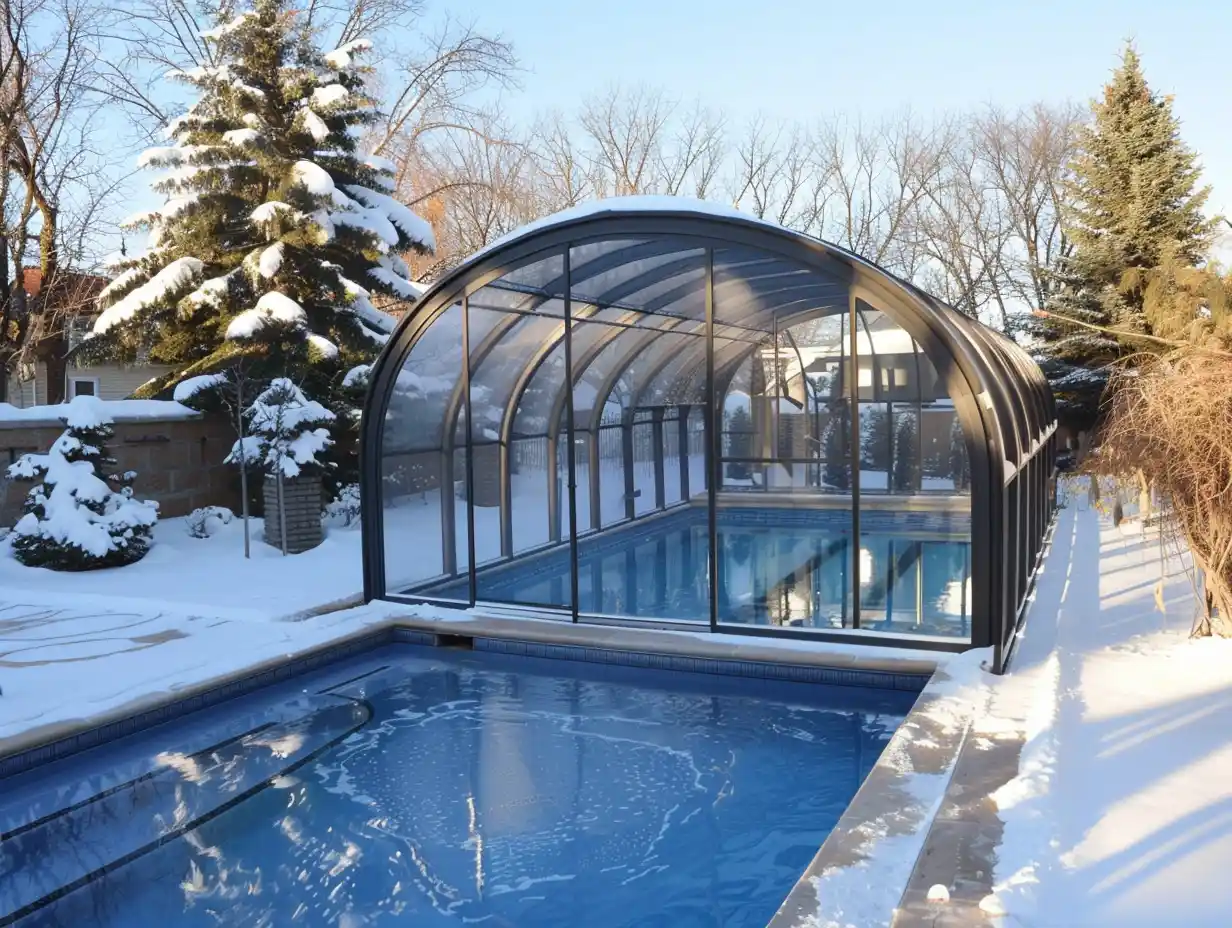
Cubierta retráctil para piscina en invierno: guía de diseño y costos
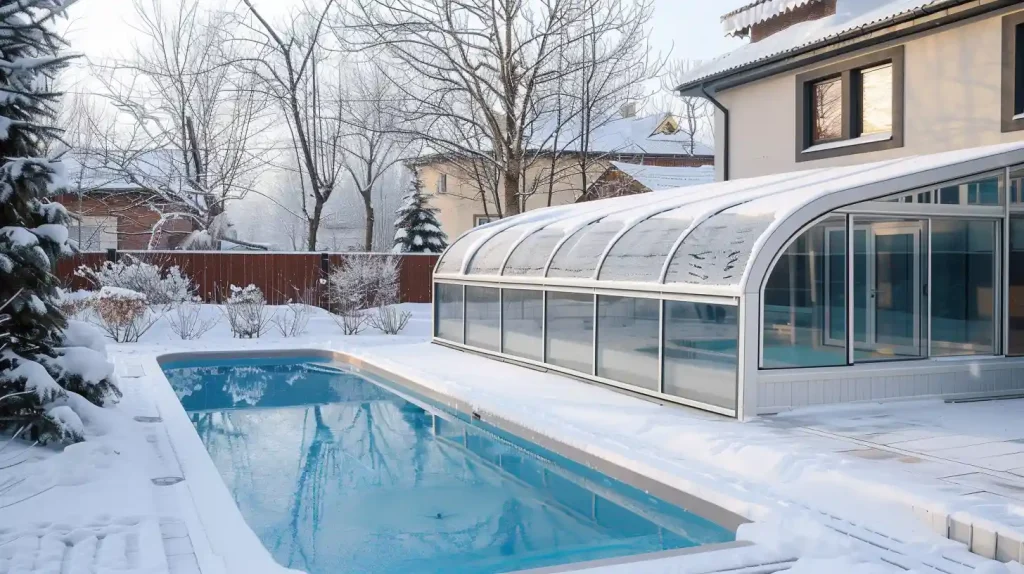
Una cubierta retráctil para piscina para el invierno puede ayudar a proteger una piscina al aire libre del viento frío, la lluvia, la nieve, la caída de hojas y los cambios climáticos estacionales. Para propietarios de viviendas, hoteles, centros turísticos, centros de bienestar e instalaciones de piscinas comerciales, puede convertir una piscina al aire libre, que depende de las condiciones climáticas, en un espacio de natación interior-exterior más cómodo y funcional.
A diferencia de una simple cubierta para alberca, una cubierta retráctil crea una estructura protegida alrededor o sobre la alberca. Permite a las personas nadar, caminar y disfrutar del área de la alberca mientras la cubierta está cerrada. Cuando el clima es agradable, la cubierta se puede abrir para dejar entrar aire fresco, luz solar y disfrutar de la experiencia de una alberca al aire libre.
Sin embargo, en zonas de invierno o con nieve, la elección de una cubierta para piscina no debe basarse únicamente en la apariencia. La estructura debe tener en cuenta la carga de nieve, la resistencia al viento, la inclinación del techo, la solidez del marco, el material de los paneles, el drenaje, el sellado y las condiciones de instalación.
Sunrim diseña y fabrica sistemas personalizados de cubiertas retráctiles para piscinas destinados a proyectos residenciales, hoteleros y comerciales en todo el mundo. Esta guía explica cómo funciona una cubierta retráctil para piscina en invierno, qué factores de diseño son importantes, qué materiales se utilizan habitualmente y qué factores influyen en el costo final.
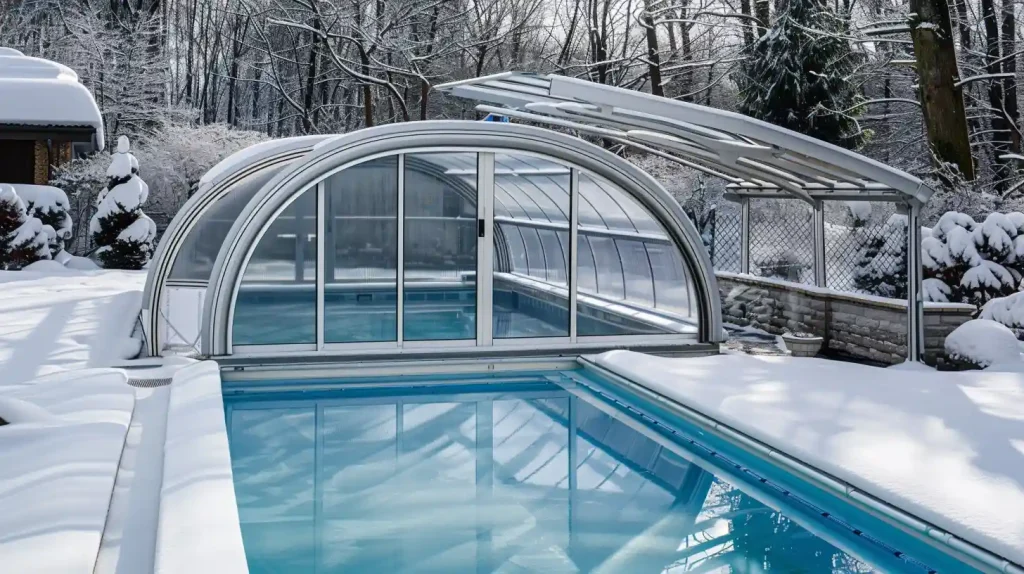
Respuesta rápida: ¿Se puede usar una cubierta retráctil para piscina en invierno?
Sí, una cubierta retráctil para piscina se puede usar en invierno si está diseñada adecuadamente para el clima local. En regiones frías o con nieve, la cubierta debe tener una capacidad adecuada para soportar la carga de nieve, marcos de aluminio reforzados, paneles de techo resistentes, un drenaje adecuado, un sellado confiable y una base de instalación estable.
Una cubierta para piscina de invierno puede ayudar a:
- Protege la alberca de la nieve, la lluvia y el viento
- Reducir las hojas, el polvo y los residuos
- Mejora la comodidad en el área de la alberca
- Prolongar la temporada de natación
- Crear un entorno de piscina semiinterior
- Reducir el impacto de las condiciones climáticas al aire libre
- Fomentar el uso de piscinas residenciales y comerciales en las estaciones más frías
Sin embargo, no todas las cubiertas retráctiles para piscinas son adecuadas para el invierno. Las estructuras de baja resistencia, los paneles endebles o un anclaje deficiente podrían no funcionar bien en zonas con nieve o vientos fuertes. Para su uso en invierno, la cubierta debe diseñarse de acuerdo con la ubicación del proyecto, la carga de nieve, la carga de viento, el tamaño de la piscina y las condiciones de instalación.
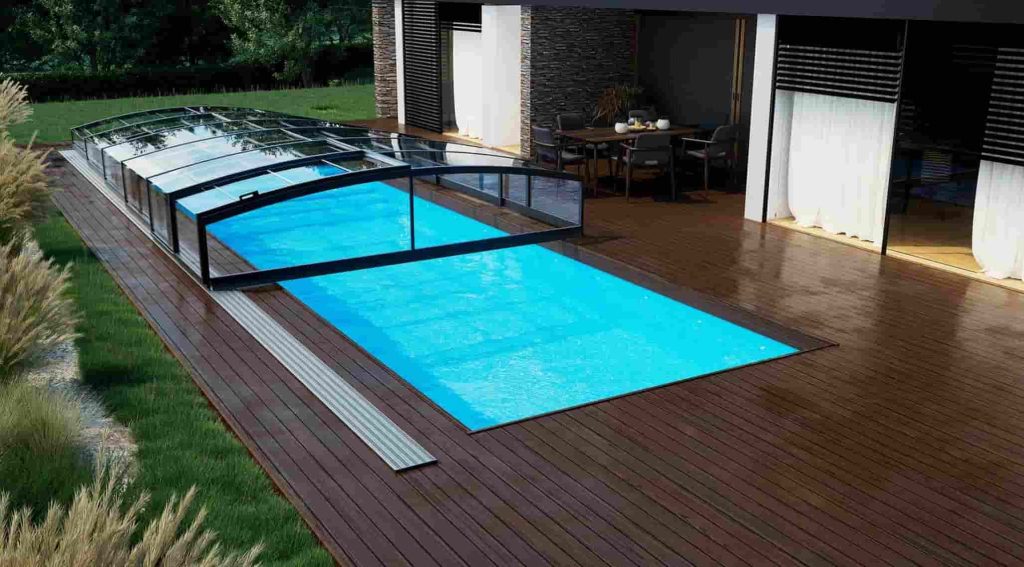
¿Qué es una cubierta retráctil para piscina para el invierno?
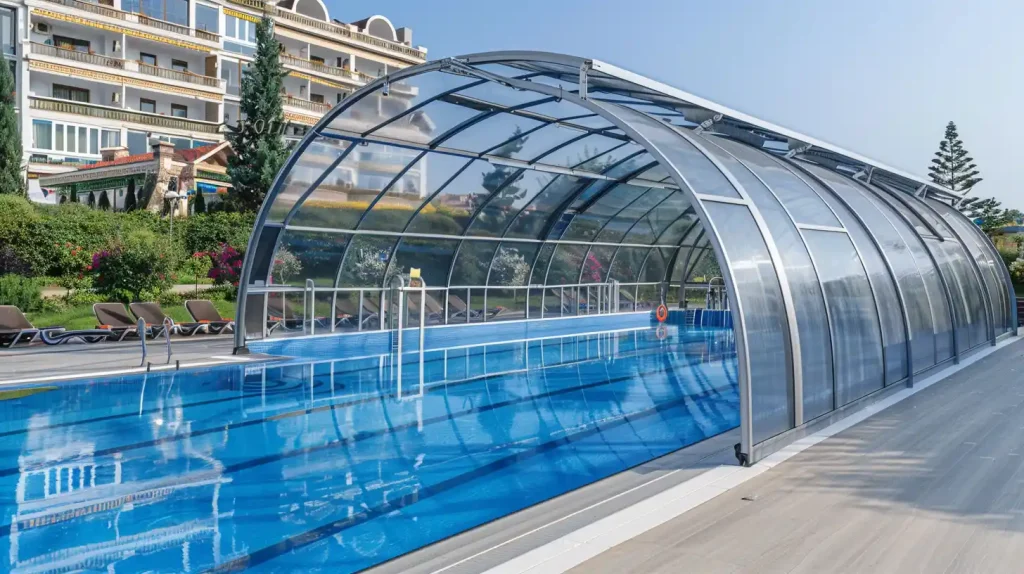
Una cubierta retráctil para piscina para el invierno es una estructura móvil que cubre o rodea una piscina y que se puede abrir o cerrar según las condiciones climáticas y las necesidades de uso. Por lo general, incluye marcos de aluminio, paneles transparentes para el techo, paneles laterales, rieles deslizantes, ruedas, componentes de sellado y sistemas motorizados opcionales.
En invierno, el cerramiento suele estar cerrado para proteger el área de la alberca del aire frío, la nieve, la lluvia y el viento. Cuando hace más calor, el cerramiento se puede abrir parcial o totalmente.
Entre los diseños más comunes de coberturas para piscinas en invierno se encuentran:
- Cubiertas deslizantes para piscinas
- Cubiertas telescópicas para piscinas
- Cubiertas para albercas sin escalera
- Cubiertas retráctiles de perfil bajo para piscinas
- Cubiertas para terrazas con piscina de gran impacto visual
- Sistemas de cerramientos personalizados para piscinas comerciales
Para los proyectos en los que se busca comodidad a la hora de nadar, una cubierta retráctil de acceso directo o una terraza acristalada para la alberca suelen ser más prácticas que una cubierta de perfil bajo, ya que permiten disfrutar del área de la alberca incluso cuando la estructura está cerrada.
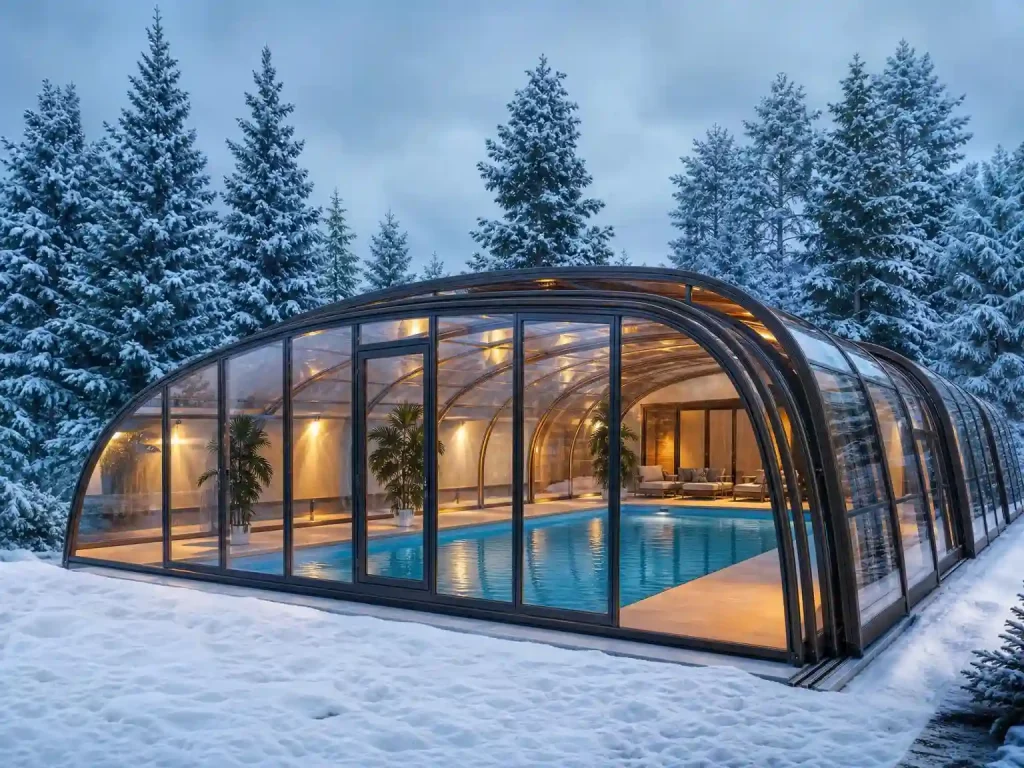
¿Por qué elegir una cubierta retráctil para la piscina en invierno?
Las albercas al aire libre suelen ser difíciles de usar durante el invierno debido a las bajas temperaturas, el viento, la nieve y las malas condiciones climáticas. Una cubierta retráctil para alberca ayuda a reducir estos problemas al crear un entorno más protegido para nadar.
Prolonga la temporada de natación
Una de las principales razones para elegir una cubierta para piscina de invierno es la posibilidad de alargar la temporada. La cubierta ayuda a proteger la piscina del viento, la lluvia y la nieve, lo que facilita su uso antes y después de la temporada alta de verano.
En el caso de los hoteles, complejos turísticos y centros de bienestar, esto puede aumentar el valor de las instalaciones de la alberca y reducir las limitaciones estacionales.
Protege la alberca de la nieve, las hojas y los residuos
El clima invernal suele traer nieve, hielo, ramas, hojas y suciedad a las áreas de las albercas al aire libre. Una cubierta retráctil para alberca ayuda a mantenerla más limpia y reduce la carga de trabajo que implica su mantenimiento.
Esto resulta especialmente útil para las albercas ubicadas cerca de árboles, jardines, patios o áreas al aire libre.
Mejora la comodidad en la piscina
El viento frío puede hacer que las áreas de la alberca resulten incómodas, incluso cuando el agua está climatizada. Una cubierta para alberca ayuda a bloquear el viento y crea un espacio más estable alrededor de la alberca.
En el caso de las viviendas particulares, esto hace que el uso de la alberca en invierno sea más placentero. En el caso de las propiedades comerciales, mejora la comodidad de los huéspedes y la experiencia de los usuarios.
Ofrece flexibilidad para usar tanto en interiores como en exteriores
Una piscina cubierta fija brinda protección, pero no ofrece la misma sensación que una piscina al aire libre. Una cubierta retráctil para piscina ofrece ambas opciones.
Cuando hace frío o nieva, la cubierta puede permanecer cerrada. Cuando mejore el clima, se puede abrir para volver a disfrutar de la experiencia de nadar al aire libre.
Aumenta el valor de la propiedad a largo plazo
Una cubierta para piscina bien diseñada puede mejorar el aspecto y la funcionalidad del área de la piscina. En el caso de villas, hoteles, complejos turísticos e instalaciones de bienestar, puede crear un espacio de ocio más exclusivo y aumentar el valor a largo plazo de la propiedad.
Cubierta retráctil para piscina vs. cubierta de invierno para piscina
Una cubierta de invierno para piscina se usa principalmente para proteger la superficie del agua cuando la piscina no está en uso. Ayuda a reducir la entrada de residuos y la pérdida de calor, pero no crea un espacio apto para nadar.
Una cubierta retráctil para piscina se distingue porque crea un espacio protegido alrededor de la piscina.
| Característica | Cubierta de piscina para el invierno | Cubierta retráctil para piscina |
|---|---|---|
| Cubre el agua de la piscina | Sí | Sí, mediante un cerramiento completo |
| Permite nadar aunque esté cerrado | No | Sí, dependiendo de la altura |
| Protege el área alrededor de la alberca | No | Sí |
| Protege del viento y la nieve | Limitado | Mejor |
| Crea un espacio que une el interior con el exterior | No | Sí |
| Ideal para nadar en invierno | Limitado | Más adecuado |
| Apariencia | Básico | Arquitectónico |
| Costo | Menor | Más alto |
| Usabilidad a largo plazo | Limitado | Más fuerte |
Para una protección básica durante el invierno, una cubierta para piscina puede ser suficiente. Pero si el objetivo es utilizar el área de la piscina con más frecuencia, mejorar la comodidad y crear un espacio de natación de alta calidad que combine el interior con el exterior, una cubierta retráctil para piscina es una mejor solución a largo plazo.
A heated pool can also be combined with an piscina cubierta con techo retráctil to support more comfortable year-round swimming.
Factores clave de diseño para cubiertas de piscinas en invierno
Una cubierta retráctil para piscina destinada al invierno requiere consideraciones de diseño más rigurosas que una cubierta estándar para piscina utilizada en climas templados. Se deben analizar los siguientes factores antes de confirmar la solución definitiva.
1. Capacidad de carga de nieve
La carga de nieve es uno de los factores más importantes en el diseño de cobertizos para albercas en invierno. Si el proyecto se encuentra en una región con nevadas, la estructura del techo debe ser lo suficientemente resistente como para soportar la acumulación de nieve prevista.
Los requisitos de carga de nieve dependen de:
- Ubicación del proyecto
- Normas locales de construcción
- Niveles históricos de nieve
- Inclinación del techo
- Longitud del recinto
- Resistencia del marco
- Material y espesor de los paneles
Una cubierta para piscina diseñada para un clima templado no debe utilizarse directamente en una zona con fuertes nevadas. Por razones de seguridad, el diseño debe adaptarse de acuerdo con los requisitos locales de carga de nieve.
En el caso de proyectos comerciales o de gran envergadura, es posible que se requiera realizar cálculos estructurales antes de la producción.
2. Inclinación del techo y deslizamiento de la nieve
La inclinación del techo influye en la forma en que la nieve se acumula y se desliza por la cubierta. Un techo muy plano puede retener más nieve, lo que aumenta la presión estructural. Una inclinación adecuada del techo ayuda a reducir la acumulación de nieve y mejora el drenaje.
En el caso de las cubiertas para piscinas de invierno, el diseño del techo debe tener en cuenta lo siguiente:
- Dirección de deslizamiento de la nieve
- Ruta de drenaje
- Paredes u obstáculos cercanos
- Seguridad en las aceras
- Diseño de canaletas y desagües
- Acceso para mantenimiento
El mejor ángulo del techo depende de la forma de la estructura, el material y la ubicación del proyecto.
3. Estructura robusta de aluminio
La mayoría de las cubiertas retráctiles modernas para albercas utilizan marcos de aleación de aluminio, ya que el aluminio es ligero, resistente a la corrosión y adecuado para los ambientes húmedos de las albercas. Para su uso en invierno, el marco de aluminio debe ser lo suficientemente resistente como para soportar la carga de la nieve, la carga del viento y la tensión estructural a largo plazo.
Entre los aspectos importantes que hay que tener en cuenta con respecto a los marcos se incluyen:
- Espesor del perfil de aluminio
- Largura estructural
- Intensidad de la señal
- Tratamiento de superficies
- Soporte técnico
- Método de anclaje
- Resistencia a la corrosión
Para zonas costeras, regiones con nieve o instalaciones comerciales, se puede recomendar el uso de perfiles de aluminio más resistentes y un tratamiento de superficie de mayor calidad.
4. Material de los paneles del techo y las paredes
El material del panel transparente influye en la resistencia, el aislamiento, la apariencia, el peso y el costo.
Entre los materiales más comunes se encuentran los paneles de policarbonato, el vidrio templado y el vidrio laminado.
Paneles de policarbonato
Los paneles de policarbonato son ligeros y resistentes a los impactos. Se utilizan comúnmente en cubiertas retráctiles para albercas porque ayudan a reducir el peso estructural y, al mismo tiempo, ofrecen una buena durabilidad.
Son adecuados para numerosos proyectos de cubiertas para piscinas de invierno, tanto residenciales como comerciales.
Vidrio templado o laminado
Los paneles de vidrio ofrecen un aspecto más elegante y una mayor transparencia. Se utilizan con frecuencia en villas de lujo, hoteles, complejos turísticos y proyectos arquitectónicos de soláriums para albercas.
Sin embargo, el vidrio es más pesado que el policarbonato, por lo que la estructura del marco y el sistema deslizante deben diseñarse en consecuencia.
Paneles aislados o más gruesos
En las regiones más frías, los paneles aislados o de mayor grosor pueden ayudar a mejorar el rendimiento térmico. La mejor opción depende del presupuesto del proyecto, el clima y el uso previsto durante el invierno.
5. Resistencia al viento
El clima invernal suele traer consigo vientos fuertes. Una cubierta retráctil para piscina debe diseñarse no solo para soportar la carga vertical de la nieve, sino también para resistir la presión horizontal del viento.
La resistencia al viento depende de:
- Estructura del marco
- Método de fijación de paneles
- Sistema de vías
- Resistencia de anclaje
- Sellado de la puerta y los laterales
- Exposición del proyecto
- Requisitos locales relativos a la carga del viento
Los campos abiertos, las azoteas, las zonas costeras y las regiones montañosas pueden requerir una mayor resistencia al viento que las albercas de patio trasero protegidas.
6. Sellado y aislamiento
Un buen sellado ayuda a reducir la entrada de aire frío, lluvia y nieve al área de la alberca. Además, mejora la comodidad cuando la cubierta está cerrada.
Entre los detalles importantes relacionados con el sellado se incluyen:
- Uniones de paneles
- Sellos para puertas
- Conexiones de las paredes laterales
- Drenaje de la pista
- Sellado de los bordes del techo
- Conexión a muros o edificios existentes
Una cubierta para piscina de invierno no siempre ofrece el mismo rendimiento que un edificio interior totalmente aislado, pero un mejor sellado puede mejorar significativamente la comodidad y la funcionalidad del espacio.
7. Drenaje e impermeabilización
La nieve se derrite y se convierte en agua, por lo que el drenaje es esencial. Un drenaje deficiente puede provocar acumulación de agua, fugas, formación de hielo o daños estructurales.
Al diseñar una cubierta para piscina de invierno, se debe tener en cuenta lo siguiente:
- Dirección del drenaje del techo
- Diseño de canaletas
- Drenaje del suelo
- Drenaje de la pista
- Salidas de agua
- Riesgo de hielo en las entradas y pasillos
En las regiones frías, el drenaje debe planificarse cuidadosamente para evitar que el agua congelada bloquee el sistema.
8. Ventilación y control de la humedad
Incluso en invierno, las áreas de la alberca generan humedad. Si la cubierta permanece cerrada durante largos períodos, la humedad puede acumularse en el interior.
Las opciones de ventilación pueden incluir:
- Puertas corredizas
- Ventanas laterales
- Aberturas en el techo
- Secciones retráctiles
- Ventilación mecánica
- Sistemas de deshumidificación para proyectos comerciales
En el caso de los hoteles, los centros de bienestar y las instalaciones con albercas que funcionan todo el año, se debe analizar el control de la humedad con el contratista de la obra o el ingeniero de climatización.
Tipos de cubiertas retráctiles para piscinas en invierno
Para el invierno se pueden utilizar diferentes tipos de cubiertas para albercas, dependiendo del tamaño de la alberca, el presupuesto, el clima y las necesidades de uso.
Cubierta retráctil de perfil bajo para piscina
Una cubierta de perfil bajo se coloca cerca de la superficie de la alberca. Ayuda a proteger el agua de la nieve, las hojas y los residuos, y puede reducir la pérdida de calor.
Sin embargo, por lo general no permite que las personas caminen o naden cómodamente cuando está cerrada. Es más adecuada para proteger la alberca que para nadar en invierno.
Cubierta para piscina de altura media
Una cerca de altura media ofrece más espacio que un diseño de perfil bajo y puede permitir un movimiento limitado alrededor de la alberca. Ofrece un equilibrio entre costo, apariencia y facilidad de uso.
Este modelo puede ser adecuado para albercas residenciales en las que el propietario busca protección estacional y un uso ocasional.
Cubierta retráctil para piscina con acceso directo
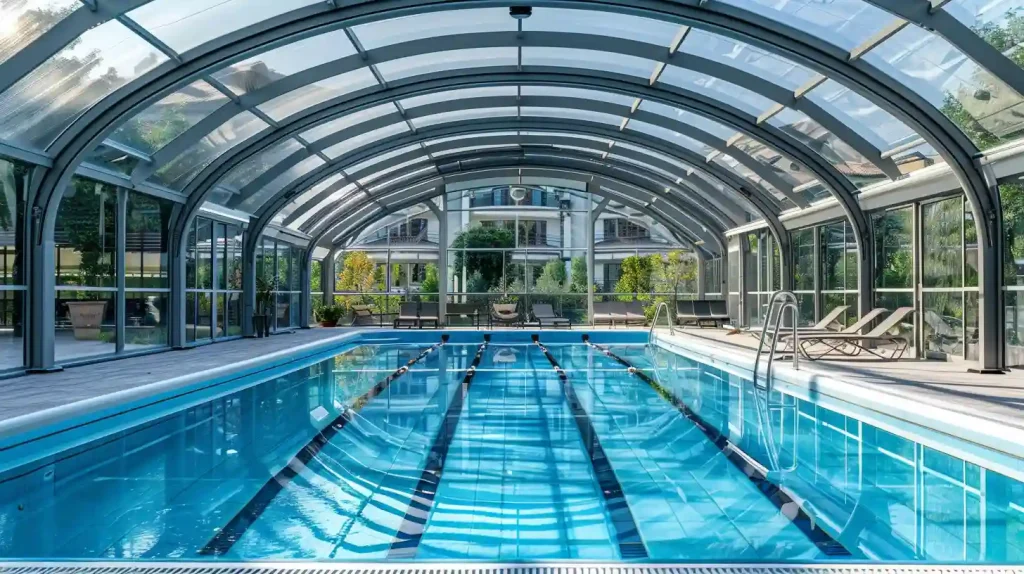
Una cubierta tipo walk-in tiene la altura suficiente para que las personas puedan nadar, caminar y relajarse en su interior mientras la estructura está cerrada. Esta es una de las mejores opciones para usar la alberca en invierno.
Es adecuado para:
- Villas privadas
- Casas de lujo
- Hoteles
- Complejos turísticos
- Centros de bienestar
- Instalaciones de piscinas comerciales
Cubierta para terraza acristalada junto a la alberca
Un cerramiento tipo solárium para piscina es una estructura que se asemeja más a una habitación, con paneles transparentes en el techo, paredes laterales, puertas y secciones retráctiles opcionales. Crea un espacio de natación que combina el interior y el exterior, muy luminoso, con mayor comodidad y valor estético.
Si quieres saber más sobre el diseño de terrazas acristaladas junto a la alberca, Puedes leer nuestra guía sobre coberturas para piscinas y soláriums.
Cubierta telescópica para piscina
Una cubierta telescópica para piscina cuenta con varias secciones deslizantes que se pueden apilar unas sobre otras. Permite abrir o cerrar el área de la piscina según las condiciones climáticas.
Esta es una opción práctica para los usuarios que buscan la máxima flexibilidad entre el uso de la piscina en interiores y al aire libre.
Factores que influyen en el costo de una cubierta retráctil para piscina durante el invierno
El costo de una cubierta retráctil para piscina para el invierno depende de muchos factores. Dado que los proyectos de invierno suelen requerir estructuras más resistentes, un mejor sellado y un diseño que tenga en cuenta la carga de nieve, pueden costar más que las cubiertas estándar para piscinas destinadas a climas templados.
1. Tamaño de la piscina
Las albercas más grandes requieren luces más largas, más paneles, marcos más resistentes, rieles más largos y componentes estructurales adicionales. El tamaño de la alberca es uno de los factores que más influyen en el costo.
2. Altura del recinto
Las cubiertas de perfil bajo suelen ser más económicas. Las cubiertas de piscina a las que se puede entrar y las estructuras tipo solárium para piscinas son más caras porque requieren más aluminio, paneles, puertas y soporte estructural.
3. Requisitos relativos a la carga de nieve
Los proyectos en zonas con fuertes nevadas pueden requerir perfiles de aluminio más resistentes, paneles más gruesos, uniones reforzadas y diseños especiales de techo. Estos requisitos pueden aumentar el costo, pero son importantes para la seguridad y el rendimiento a largo plazo.
For a more sunroom-style pool protection solution, see our article about pool sunrooms for cold climates.
4. Sistema de apertura
Un cerramiento fijo suele ser más económico que un sistema retráctil. Los sistemas deslizantes, telescópicos o motorizados requieren rieles, ruedas, secciones móviles, motores y sistemas de control.
5. Selección de materiales
Los paneles de policarbonato suelen ser más ligeros y prácticos. Los paneles de vidrio ofrecen un aspecto de alta calidad, pero pueden aumentar los requisitos estructurales y de instalación.
6. Carga del viento y exposición del emplazamiento
Si el proyecto se ubica en una zona abierta, costera, en un techo o con vientos fuertes, es posible que se requiera un anclaje más resistente y un diseño estructural más sólido.
7. Condiciones de instalación
La calidad de los cimientos, el acceso al sitio, el nivel del terreno, la terraza de la alberca existente y la mano de obra de los contratistas locales pueden influir en el costo final del proyecto.
8. Envío y embalaje
En el caso de los proyectos internacionales, también se deben tomar en cuenta el embalaje, el transporte marítimo, la entrega local y la descarga.
| Factor de costo | Repercusión en el costo de la cubierta para piscina de invierno |
|---|---|
| Tamaño de la piscina | Las piscinas más grandes requieren más estructura y paneles |
| Altura del recinto | Los diseños tipo «walk-in» son más caros que las cabinas de perfil bajo |
| Carga de nieve | Las zonas con fuertes nevadas requieren una estructura reforzada |
| Material del panel | El vidrio suele ser más caro que el policarbonato |
| Sistema de apertura | Los sistemas telescópicos o motorizados aumentan el costo |
| Carga del viento | En las zonas con vientos fuertes puede ser necesario un anclaje más resistente |
| Base instalada | Los cimientos irregulares o débiles aumentan el trabajo de preparación |
| Envío | El transporte internacional de carga influye en el costo total del proyecto |
Si quieres una explicación más detallada sobre los precios, también puedes visitar nuestra sección de productos retráctiles Guía de costos para cubiertas de alberca.
Consideraciones sobre la instalación de cubiertas para piscinas en invierno
Una cubierta retráctil para piscina para el invierno debe instalarse sobre una base estable y debidamente preparada. La calidad de la instalación influye en la seguridad, el funcionamiento del sistema deslizante, la impermeabilidad y la durabilidad a largo plazo.
Medición del sitio
Antes de iniciar la producción, es necesario realizar mediciones precisas. Se deben confirmar la longitud y el ancho de la alberca, el tamaño de la terraza circundante, el espacio disponible para las rieles y el nivel del suelo.
Preparación de los cimientos
La estructura requiere una base estable para las vías, los marcos y los anclajes. Por lo general, se utilizan plataformas de concreto o bases reforzadas.
Alineación de la vía
En los sistemas corredizos o telescópicos, la alineación de los rieles es muy importante. Una instalación incorrecta de los rieles puede provocar dificultades de movimiento, deslizamiento irregular o desgaste a largo plazo.
Planificación del drenaje
Los proyectos de invierno requieren una planificación cuidadosa del drenaje, ya que la nieve y el hielo pueden provocar la acumulación de agua alrededor de las vías y las entradas.
Coordinación con contratistas locales
En los proyectos internacionales, los contratistas locales suelen encargarse de la instalación basándose en los planos del proveedor y en sus instrucciones técnicas. Unos planos claros, componentes bien etiquetados y el apoyo a distancia pueden ayudar a reducir los errores de instalación.
Para conocer los pasos detallados de instalación, puedes leer nuestro Guía de instalación de cubiertas para piscinas.
¿Es suficiente una cubierta retráctil para calentar la piscina en invierno?
Una cubierta retráctil para piscina puede ayudar a reducir la exposición al viento y la pérdida de calor, pero no es lo mismo que un sistema de calefacción. En climas fríos, es posible que la piscina siga necesitando un calentador, una bomba de calor u otra solución de calefacción si se desea nadar durante todo el año.
La carcasa permite una mejor retención del calor gracias a:
- Proteger del viento frío
- Reducir la exposición directa a las inclemencias del tiempo
- Cómo reducir la pérdida de calor en el área de la alberca
- Crear un entorno más estable
- Cómo proteger la alberca de la nieve y la lluvia
En el caso de los hoteles, complejos turísticos y centros de bienestar, la calefacción, la ventilación y el control de la humedad deben planificarse junto con el diseño de la estructura del edificio.
For practical applications in residential, hotel and resort projects, see our guide to cubiertas para piscinas para uso en invierno.
Cómo elegir la cubierta adecuada para la piscina en invierno
Antes de elegir una cubierta retráctil para la alberca de cara al invierno, debes analizar tanto los requisitos de la alberca como el clima local.
Entre las preguntas importantes se encuentran:
- ¿Qué tamaño tiene la alberca?
- ¿El recinto es para uso residencial o comercial?
- ¿Habrá gente que se bañe mientras el recinto esté cerrado?
- ¿Cuál es el requisito local respecto a la carga de nieve?
- ¿El proyecto está ubicado en una zona con vientos fuertes?
- ¿Prefieres los paneles de policarbonato o los de vidrio?
- ¿Necesitas un diseño de perfil bajo o uno tipo “walk-in”?
- ¿El sistema debería ser manual o motorizado?
- ¿Hay suficiente espacio para secciones corredizas o telescópicas?
- ¿Qué tipos de cimientos hay disponibles?
- ¿Se encargarán los contratistas locales de la instalación?
Una buena cubierta para piscina de invierno debe combinar seguridad, apariencia, facilidad de uso, costo y durabilidad a largo plazo.
Errores comunes que hay que evitar
Elegir una cubierta retráctil para la piscina en invierno es diferente a elegir una cubierta estándar para la piscina. Se deben evitar los siguientes errores.
Elegir solo por la apariencia
No basta con que la construcción sea bonita. En las regiones invernales, la solidez estructural, la carga de nieve, la resistencia al viento y el drenaje son más importantes que la mera apariencia.
Sin tomar en cuenta la carga de nieve
Se debe revisar la carga de nieve antes de confirmar el diseño. Utilizar una estructura poco resistente en una zona con nieve puede generar riesgos de seguridad.
Elegir una altura incorrecta
Una cubierta de perfil bajo puede proteger la alberca, pero es posible que no permita nadar cómodamente en invierno. Si las personas necesitan usar la alberca mientras está cerrada, tal vez sea mejor optar por una cubierta con acceso directo.
Olvidarse de la ventilación
Las áreas de piscinas cerradas pueden volverse húmedas. Se debe considerar la ventilación, especialmente en el caso de instalaciones comerciales o que funcionan todo el año.
Preparación deficiente de los cimientos
Incluso una estructura resistente puede tener un desempeño deficiente si los cimientos son débiles o desiguales. Es fundamental preparar adecuadamente los cimientos.
For practical applications in residential, hotel and resort projects, see our guide to cubiertas para piscinas para uso en invierno.
If your project is located in a snowy region and you want to understand practical pool protection and maintenance benefits, read our guide to cubiertas para piscinas en inviernos con nieve.
Preguntas frecuentes: Cubierta retráctil para piscina en invierno
¿Se puede usar una cubierta retráctil para piscina en invierno?
Sí. Una cubierta retráctil para piscina se puede usar en invierno si está diseñada para el clima local, tomando en cuenta la carga de nieve, la carga de viento, el drenaje, el sellado y la seguridad estructural.
¿Una cubierta para piscina puede soportar la nieve?
Una cubierta para alberca solo puede soportar la nieve si está diseñada con la capacidad adecuada para soportar la carga de nieve. La estructura del marco, la inclinación del techo, el grosor de los paneles y el sistema de anclaje deben adaptarse a las condiciones locales de nieve.
¿Se mantiene cálido un cerramiento retráctil para piscina en invierno?
Una cubierta retráctil para piscina puede ayudar a reducir la exposición al viento y a las inclemencias del tiempo, pero no es un sistema de calefacción completo. En climas fríos, es posible que aún se necesite calefacción para la piscina o un control climático adicional.
¿Cuál es la mejor cubierta para piscina en invierno?
Para nadar en invierno, un cerramiento retráctil de acceso directo a la alberca o un cerramiento tipo solárium suele ser mejor que un cerramiento de perfil bajo, ya que permite utilizar el área de la alberca incluso cuando la estructura está cerrada.
¿Cuánto cuesta una cubierta retráctil para piscina para el invierno?
El costo depende del tamaño de la alberca, la altura de la cubierta, los requisitos de carga de nieve, el material del armazón, el material de los paneles, el sistema de apertura, las condiciones de instalación y el envío. Los proyectos personalizados suelen requerir las dimensiones del lugar y los detalles del proyecto para poder ofrecer una cotización precisa.
¿Qué es mejor para una cubierta de piscina de invierno: el policarbonato o el vidrio?
El policarbonato es ligero y resistente a los impactos, lo que lo hace práctico para muchas cubiertas retráctiles de piscina. El vidrio ofrece un aspecto más elegante, pero es más pesado y puede requerir un soporte estructural más resistente.
¿Necesito ventilación dentro de una cubierta para piscina de invierno?
Sí. Las áreas de alberca generan humedad, incluso en invierno. La ventilación ayuda a mejorar la circulación del aire y el confort. Los proyectos comerciales también pueden requerir ventilación mecánica o deshumidificación.
¿Se puede motorizar una cubierta retráctil para piscina?
Sí. Muchas cubiertas retráctiles para albercas pueden utilizar sistemas motorizados, especialmente en proyectos de mayor tamaño o comerciales. Los sistemas motorizados ofrecen mayor comodidad, pero también aumentan la complejidad y el costo del sistema.
¿Es adecuada una cubierta retráctil para piscinas en hoteles y complejos turísticos?
Sí. Los hoteles y complejos turísticos pueden utilizar cubiertas retráctiles para piscinas a fin de mejorar la comodidad de los huéspedes, ampliar el tiempo de uso de la piscina y reducir los cierres de la piscina por causas climáticas durante las temporadas más frías.
¿Puede Sunrim personalizar cubiertas retráctiles para piscinas para proyectos de invierno?
Sí. Sunrim puede personalizar los sistemas de cerramientos retráctiles para piscinas de acuerdo con el tamaño de la piscina, la ubicación del proyecto, los requisitos climáticos, la carga de nieve, la carga de viento, los materiales preferidos, el tipo de apertura y las necesidades de instalación.
Planea tu proyecto de cubierta para la alberca en invierno
Una cubierta retráctil para piscina para el invierno puede ayudar a convertir una piscina al aire libre en un espacio para nadar más cómodo, protegido y versátil. Ya sea que el proyecto sea para una casa particular, una villa, un hotel, un centro turístico, un centro de bienestar o una instalación comercial, la cubierta debe diseñarse de acuerdo con el tamaño de la piscina, el clima, la carga de nieve, la carga de viento, los materiales y las condiciones de instalación.
Sunrim ofrece sistemas personalizados de cerramientos retráctiles para albercas, cerramientos tipo solárium para albercas y soluciones de cerramientos de aluminio transparente para proyectos en todo el mundo. Nuestro equipo puede brindar apoyo en el diseño del proyecto, la selección de materiales, la producción, el empaque y la orientación en la instalación a los contratistas locales.
Descubre nuestra gama de productos retráctiles personalizados sistemas de terrazas acristaladas para proyectos de piscinas, patios, patios interiores y espacios exteriores comerciales.
Ponte en contacto con Sunrim para hablar sobre tu proyecto de cubierta para piscina de invierno y recibir una propuesta de diseño personalizada.


