

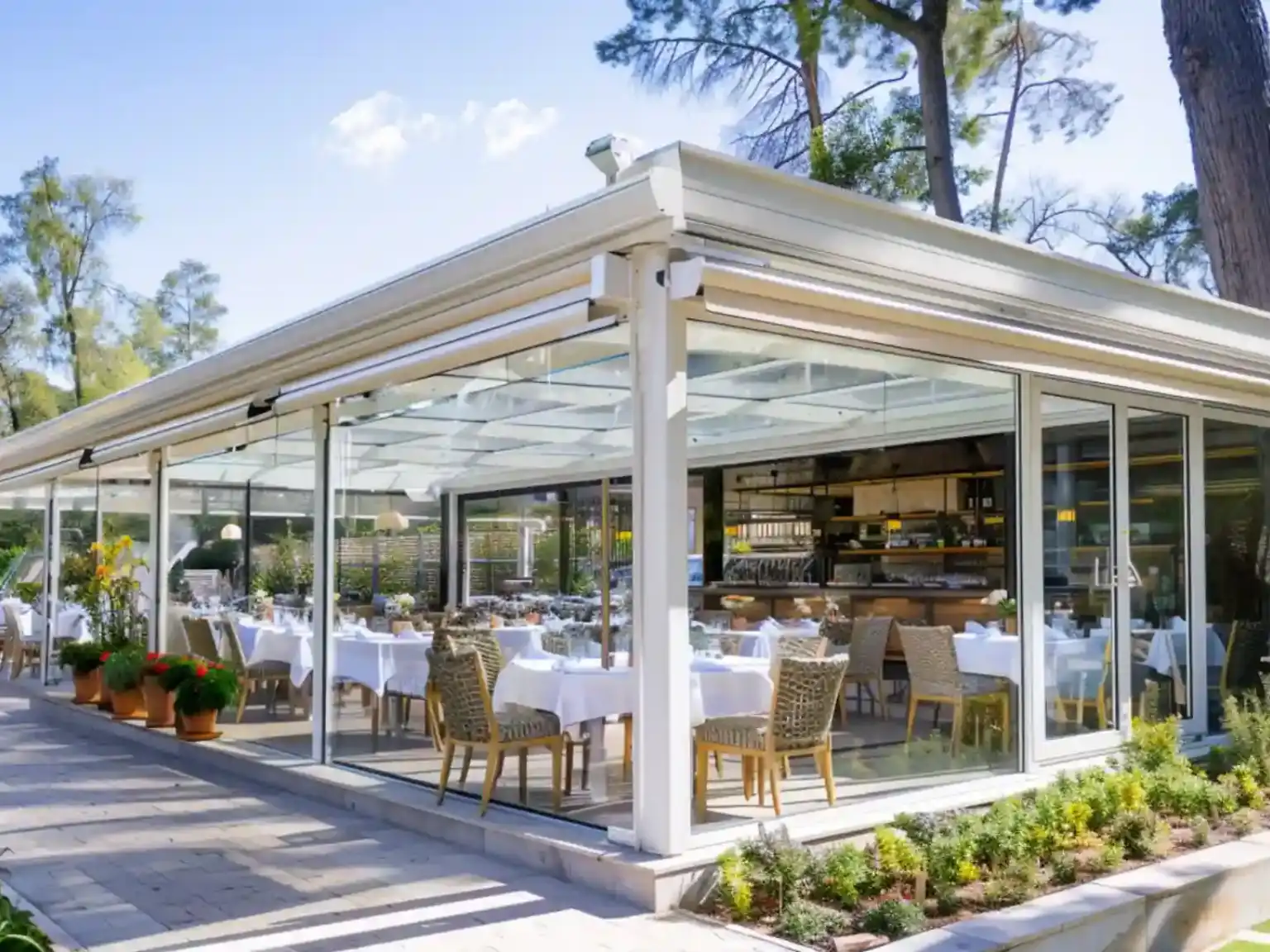
Commercial outdoor spaces are becoming more valuable for restaurants, scenic areas, hotels, resorts, airports, shopping centers and public facilities. A well-designed outdoor area can create additional usable space, improve visitor experience and support year-round operation.
However, outdoor spaces are often limited by weather. Rain, wind, strong sunlight, cold temperatures and seasonal changes can reduce comfort and make the space difficult to use.
This is why many commercial projects are choosing retractable sunroom systems and opening roof systems. Unlike simple patio covers or fixed canopies, these systems create flexible architectural spaces that can open, close, slide or retract according to weather and operational needs.
A retractable sunroom or opening roof system can help transform restaurants, scenic walkways, terraces, courtyards, pool areas and commercial passages into comfortable, protected and visually attractive spaces.
Quick Answer: What Is the Best System for Commercial Outdoor Spaces?
The best system depends on the project type, site layout, climate, structure and usage requirements.
For restaurants, scenic areas, hotels and commercial spaces, a custom motorized retractable sunroom or opening roof system is often a better long-term solution than a fixed canopy or simple awning.
A good system should combine aluminum structure, transparent glass or polycarbonate panels, smooth sliding or retractable movement, reliable weather protection and a design that matches the surrounding architecture.
The goal is not only to cover the space, but to create a flexible indoor-outdoor environment that can be used in different seasons and weather conditions.
What Is a Retractable Sunroom System?
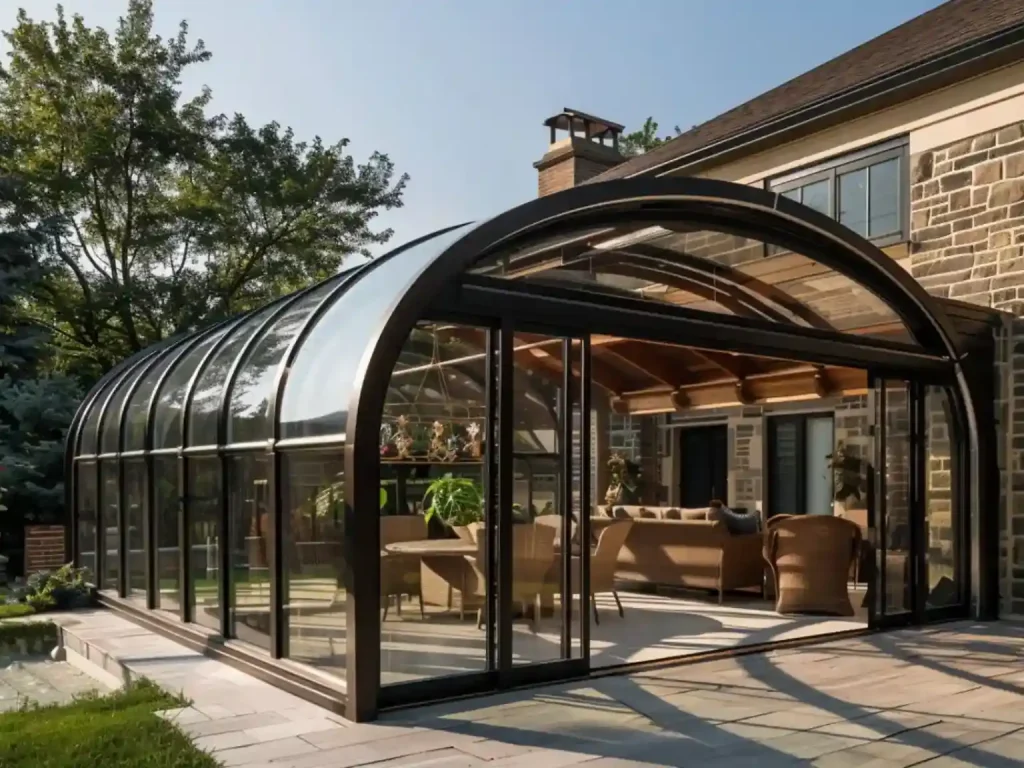
A retractable sunroom system is a movable enclosure structure built with aluminum frames and transparent panels such as glass or polycarbonate. Depending on the design, the structure can slide, stack, telescope or retract to open part or all of the covered space.
Unlike a traditional fixed sunroom, a retractable sunroom gives users more flexibility. It can be closed during rain, wind or cold weather, and opened when fresh air, sunlight or an open-air experience is desired.
Retractable sunroom systems are commonly used for:
- Outdoor restaurants
- Scenic area dining spaces
- Hotel terraces
- Resort leisure areas
- Pool enclosures
- Торговые проходы
- Airport and public passages
- Courtyard enclosures
- Rooftop leisure spaces
- Tourist attraction facilities
For commercial projects, retractable sunrooms can improve space usability while maintaining a bright and open visual experience.
What Is an Opening Roof System?
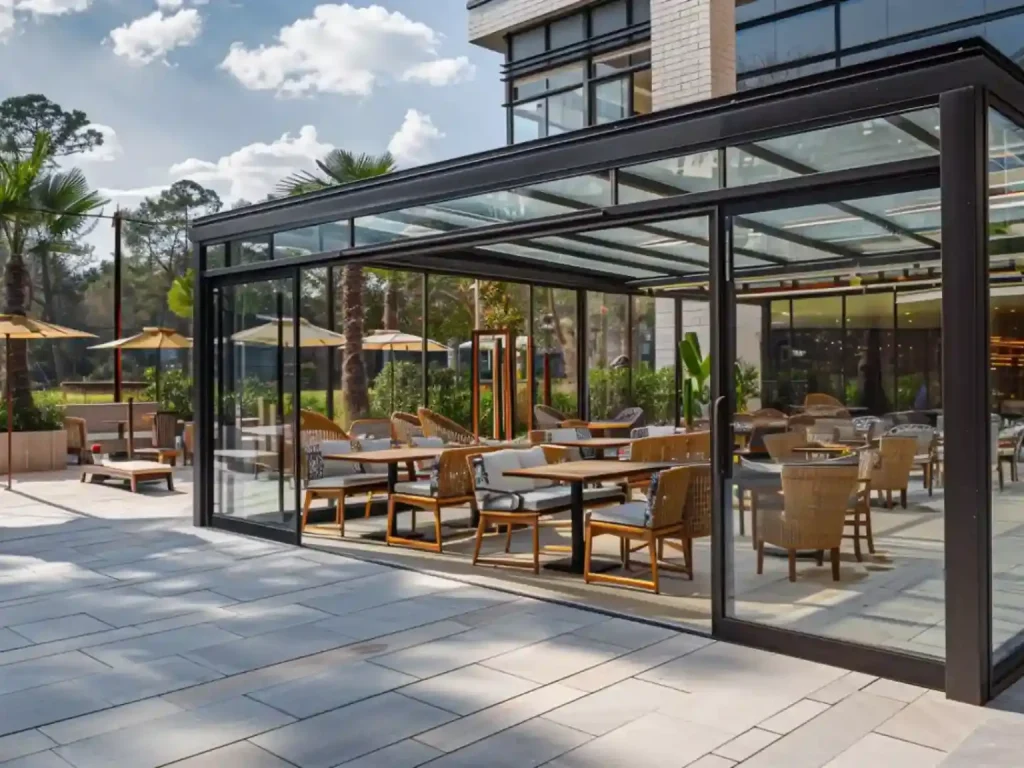
An opening roof system is a motorized roof structure that can open and close based on weather and usage needs. It may be designed as a sliding roof, retractable roof, telescopic roof or movable roof enclosure.
For commercial applications, an opening roof system is often integrated with aluminum support frames, transparent panels, drainage design, lighting and side enclosures.
Unlike louvered pergolas, which use rotating slats, Sunrim-style opening roof systems often focus on transparent or semi-transparent architectural structures that create a brighter, more enclosed and weather-protected space.
This makes them suitable for restaurants, commercial terraces, scenic areas, public walkways and hospitality projects where both protection and visual openness are important.
1. Start with the Type of Commercial Space
The first step is to understand how the space will be used.
Different commercial spaces have different requirements. A scenic restaurant needs a comfortable dining environment. A walkway enclosure needs safe passage and weather protection. A hotel terrace may require premium design and year-round usability. A pool enclosure needs moisture resistance and easy access.
К распространенным типам проектов относятся:
- Restaurant outdoor dining areas
- Scenic area restaurants and tea houses
- Hotel and resort terraces
- Commercial building entrances
- Airport walkways
- Factory or office park corridors
- Poolside leisure spaces
- Rooftop terraces
- Tourist attraction facilities
- Event and reception areas
Before choosing a system, define the main purpose of the space. Is it used for dining, walking, sightseeing, waiting, relaxing or commercial service? The answer will influence the structure, opening method, materials and comfort features.
2. Choose the Right Structure Type
Retractable sunroom and opening roof systems can be designed in different structural forms.
К наиболее распространенным вариантам относятся:
- Curved retractable sunroom
- Lean-to retractable sunroom
- Telescopic sunroom enclosure
- Sliding glass roof system
- Transparent opening roof system
- Retractable walkway enclosure
- Mobile commercial enclosure
- Pool enclosure system
- Custom aluminum glass structure
A curved retractable sunroom is often suitable for restaurants, scenic areas and pool enclosures because it provides a soft architectural appearance and good internal height.
A lean-to system is suitable for spaces attached to an existing building wall, such as hotel terraces, cafés and commercial entrances.
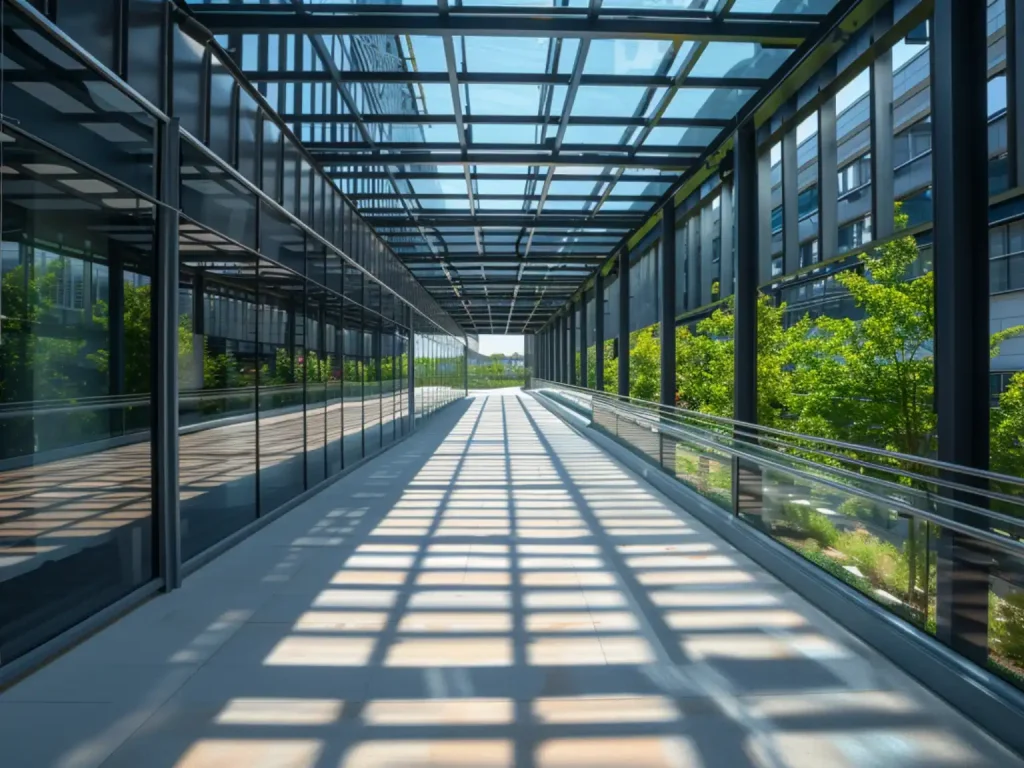
A retractable walkway enclosure is ideal for airports, office parks, public passages and scenic corridors where weather protection and pedestrian circulation are important.
The best structure should match the site layout, building style and functional requirements.
3. Pay Attention to Materials
Material selection directly affects durability, safety, appearance and maintenance.
For commercial retractable sunroom systems, common materials include:
- Aluminum alloy frame
- Tempered glass panels
- Laminated glass panels
- Polycarbonate panels
- Sealing strips
- Stainless steel hardware
- Motorized drive systems
- Weather-resistant coating
Aluminum is widely used because it is strong, lightweight, corrosion-resistant and suitable for outdoor structures.
Glass provides a premium appearance and high transparency, making it suitable for hotels, restaurants and commercial spaces.
Polycarbonate panels are lighter and more impact-resistant, making them suitable for larger movable structures, pool enclosures and projects where weight control is important.
The right material should be selected based on climate, safety needs, span, budget and design style.
4. Consider Weather Protection
Weather protection is one of the main reasons to choose a retractable sunroom or opening roof system.
A commercial outdoor space may need protection from:
- Дождь
- Ветер
- Strong sunlight
- Cold weather
- Пыль
- Падающие листья
- Snow in some regions
- Влажность
- Сезонные изменения температуры
A good system should include proper sealing, drainage and structural design. For areas with frequent rain, water management is especially important. For windy areas, structural strength and anchoring must be carefully considered.
If the project needs stronger all-weather protection, side panels, sliding glass doors or transparent side enclosures can be added.
5. Decide How the System Should Open
Opening method is one of the most important design decisions.
Different projects may need different opening styles:
- Sliding opening
- Telescopic retraction
- Sectional movement
- Motorized roof opening
- Manual or electric side opening
- Partial opening
- Full opening
For restaurants and hotels, partial opening may be enough to create fresh air and sunlight while keeping part of the space protected.
For scenic areas or pool enclosures, larger opening sections may be preferred to create a stronger outdoor experience.
For walkways and public passages, the system may focus more on protection and controlled ventilation rather than full opening.
The opening method should be practical, safe and easy for staff to operate.
6. Motorized Control and Daily Operation
For commercial projects, motorized operation is usually more convenient than manual operation.
A motorized retractable sunroom or opening roof system allows staff to open or close the structure quickly according to weather changes and business needs.
Useful control options may include:
- Пульт дистанционного управления
- Настенный выключатель
- Smart control system
- Датчик дождя
- Датчик ветра
- Управление группой
- Emergency stop
- Manual backup operation
For restaurants and scenic areas, easy operation is especially important because staff may need to respond quickly during business hours.
The system should move smoothly and quietly without disturbing guests or visitors.
7. Drainage and Sealing Design
Drainage and sealing are critical for commercial outdoor enclosures.
A beautiful structure can still perform poorly if water leaks, drips or collects in the wrong place.
A good retractable sunroom or opening roof system should consider:
- Угол наклона крыши
- Water collection
- Integrated gutters
- Drainage outlets
- Downpipes
- Panel joints
- Sealing strips
- Wind-driven rain protection
- Floor drainage connection
For restaurants and commercial spaces, water leakage can affect guest comfort, furniture, flooring and daily operation. Therefore, drainage design should be considered from the beginning of the project.
8. Match the Building and Brand Style
Commercial outdoor structures should not look like temporary additions. They should match the surrounding architecture and brand image.
For a scenic restaurant, the structure should blend with the natural landscape. For a hotel terrace, it should look elegant and premium. For an airport or corporate walkway, it should appear clean, safe and professional.
Design factors include:
- Frame color
- Roof shape
- Glass transparency
- Panel color
- Lighting integration
- Connection with the building facade
- Interior furniture layout
- Nighttime appearance
- Visual impact from outside
A well-designed retractable sunroom can become part of the project’s visual identity and improve the overall customer experience.
9. Think About Commercial Durability
Commercial projects usually require stronger durability than residential use.
A restaurant, scenic area or public walkway may be used every day and exposed to changing weather for many years.
Durability depends on:
- Aluminum profile quality
- Surface coating
- Panel strength
- Motor system
- Track design
- Hardware quality
- Sealing performance
- Коррозионная стойкость
- Structural stability
- Maintenance accessibility
For coastal areas, humid climates or high-traffic commercial sites, material and hardware quality become even more important.
A cheaper system may reduce initial cost, but it may lead to higher maintenance or replacement costs in the future.
10. Consider Safety and Engineering Requirements
Safety is essential for commercial outdoor structures.
Before choosing a system, project owners should consider:
- Требования к ветровой нагрузке
- Требования к снеговой нагрузке
- Structural support
- Foundation or anchoring
- Требования пожарной безопасности
- Glass safety
- Emergency access
- Local building regulations
- Electrical safety
- Pedestrian safety
For large commercial projects, professional design, technical drawings and engineering evaluation are important.
A reliable manufacturer should be able to provide project-based recommendations instead of only selling standard products.
11. Plan for Lighting, Heating and Ventilation
A retractable sunroom or opening roof system can become more comfortable when combined with supporting features.
Depending on the project, useful options may include:
- Светодиодное освещение
- Warm ambient lighting
- Наружные обогреватели
- Ceiling fans
- Вентиляционные окна
- Sliding side panels
- Sun shading
- Mosquito screens
- Smart weather sensors
For restaurants, lighting can improve atmosphere and support evening operation. For scenic areas and hotels, comfort features can help extend usage hours and improve visitor experience.
12. Compare Initial Cost with Long-Term Value
Retractable sunroom and opening roof systems usually require a higher initial investment than simple awnings or fixed canopies.
However, commercial projects should evaluate long-term value, not only initial cost.
A well-designed system can help:
- Increase usable outdoor space
- Improve customer comfort
- Reduce weather-related downtime
- Обеспечить круглогодичную эксплуатацию
- Protect furniture and equipment
- Improve brand image
- Create more commercial value
- Extend the service life of the space
For restaurants, scenic areas, hotels and public facilities, the value of usable space can be much higher than the cost difference between a simple cover and a custom retractable structure.
13. Choose a Manufacturer with Custom Project Experience
Every commercial project is different. A scenic restaurant, airport walkway, hotel terrace and pool enclosure cannot use the same standard solution.
An experienced manufacturer should be able to provide customized design based on:
- Объем проекта
- Site conditions
- Climate
- Требования к конструкции
- Opening method
- Material preference
- Budget
- Installation conditions
- Design style
- Long-term maintenance needs
For international projects, communication, drawings, packaging, installation guidance and technical support are also important.
Choosing the right manufacturer can reduce project risk and improve the final result.
Common Mistakes to Avoid
When choosing a retractable sunroom or opening roof system, avoid these common mistakes:
- Choosing a simple louvered pergola when a full enclosure is needed
- Ignoring wind and rain protection
- Not considering drainage design
- Using residential-grade products for commercial spaces
- Choosing only based on the lowest price
- Ignoring the opening method
- Not matching the system with the building style
- Forgetting long-term maintenance
- Not considering side protection
- Installing without proper site evaluation
Avoiding these mistakes can help create a safer, more durable and more valuable commercial outdoor space.
Заключение
Retractable sunroom systems and opening roof systems are more than simple outdoor covers. They are flexible architectural solutions that help commercial spaces become more usable, comfortable and valuable.
For restaurants, scenic areas, hotels, resorts, airports, walkways and public facilities, the right system can provide weather protection while maintaining natural light, fresh air and visual openness.
The best solution should be designed around the project’s layout, climate, structure, materials, opening method, drainage and long-term commercial needs.
By choosing a custom retractable sunroom or opening roof system, project owners can transform outdoor areas into flexible spaces that support better experiences and stronger commercial value.
Need a Custom Retractable Sunroom or Opening Roof System?
Sunrim designs and manufactures custom retractable sunroom systems, opening roof systems and commercial movable enclosures for restaurants, scenic areas, hotels, resorts, walkways and public facilities.
Our systems combine aluminum structures, transparent glass or polycarbonate panels, motorized control and project-based customization to create flexible indoor-outdoor spaces.
Contact Sunrim to discuss your project size, site conditions, climate requirements and design goals.
Request a custom retractable enclosure solution today.
FAQ About Retractable Sunroom and Opening Roof Systems
What is a retractable sunroom system?
A retractable sunroom system is a movable enclosure made with aluminum frames and transparent panels. It can slide, retract or open to create a flexible indoor-outdoor space.
What is the difference between a retractable sunroom and a louvered pergola?
A louvered pergola uses rotating slats for shade and ventilation. A retractable sunroom usually uses glass or polycarbonate panels with a movable enclosure structure, providing better protection and a more enclosed space.
Can retractable sunrooms be used for restaurants?
Yes. Retractable sunrooms are widely used for outdoor restaurants, cafés, scenic dining areas and hotel terraces because they provide weather protection while maintaining natural light and an open atmosphere.
Are opening roof systems suitable for commercial projects?
Yes. Opening roof systems can be customized for restaurants, hotels, scenic areas, walkways, airports, public facilities and other commercial outdoor spaces.
What materials are used for retractable sunroom systems?
Common materials include aluminum alloy frames, tempered glass, laminated glass, polycarbonate panels, sealing strips, stainless steel hardware and motorized drive systems.
Can a retractable sunroom protect against rain and wind?
Yes. A properly designed retractable sunroom can provide rain and wind protection. The final performance depends on structure, sealing, drainage and local weather requirements.
Can the system be motorized?
Yes. Many commercial retractable sunroom and opening roof systems can be motorized and controlled by remote control, wall switch or smart control system.
How much does a commercial retractable sunroom cost?
The cost depends on project size, structure type, materials, motorization, weather requirements, customization level and installation conditions. Commercial systems usually require project-based quotation.


