



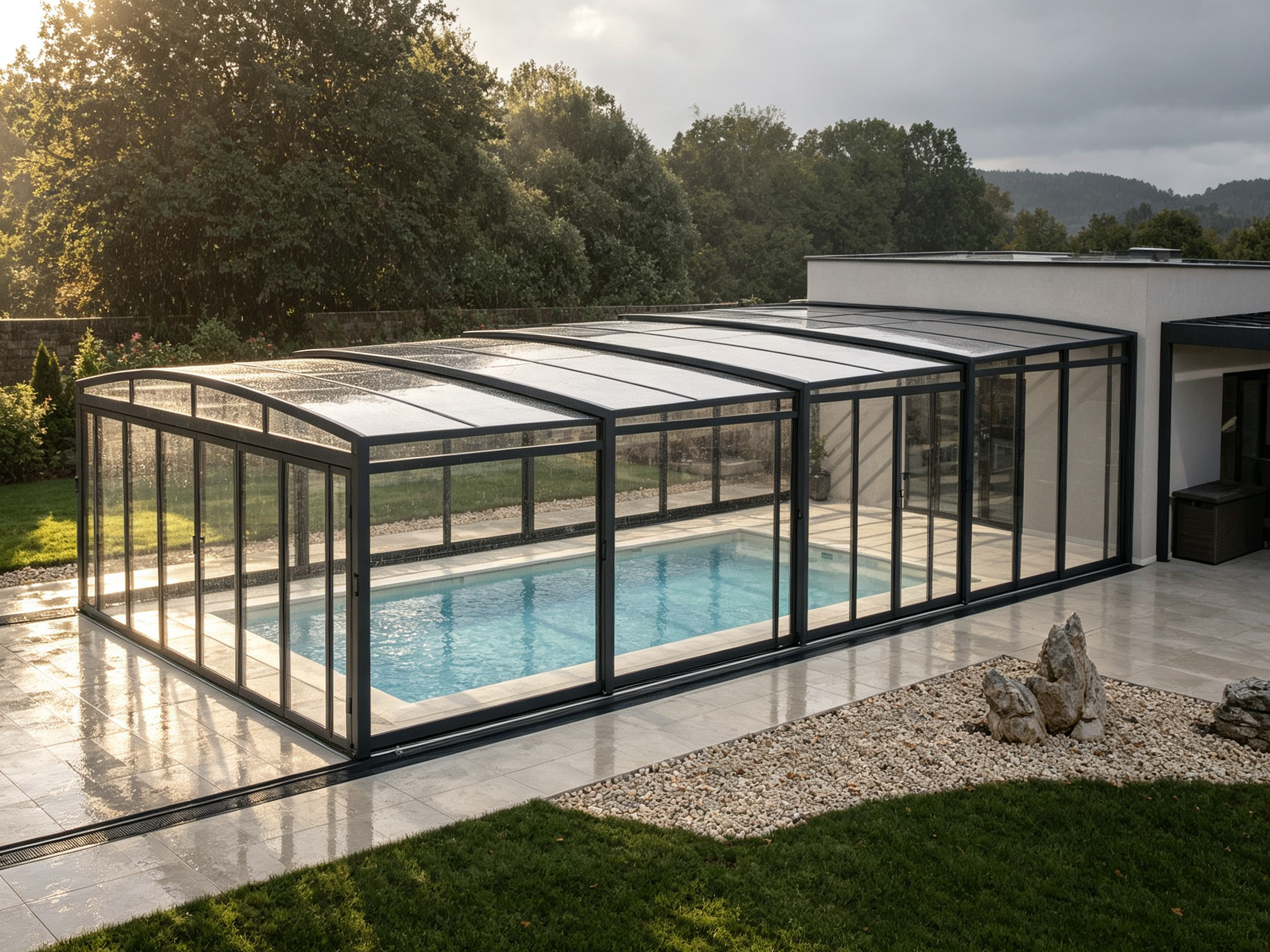
Pool Enclosure Options for Homes: How to Choose the Right Design for Your Climate, Budget and Backyard
Quick Answer: What Is the Best Pool Enclosure Option for a Home?
The best pool enclosure option depends on your climate, backyard size, budget and how you plan to use the pool. For many residential pools, a retractable pool enclosure offers the best balance of flexibility and protection because it can be opened in warm weather and closed during rain, wind or colder seasons.
A fixed pool enclosure is better for year-round protection, while glass enclosures suit luxury homes and polycarbonate enclosures are practical for lightweight, weather-resistant designs.
If you want a discreet backyard appearance, choose a low-profile pool enclosure. If you want to walk, relax or place furniture inside the enclosure, choose a high-profile or pool sunroom-style enclosure.
For homeowners comparing different swimming pool enclosure options, the right choice should consider not only appearance, but also climate, maintenance, ventilation, structure, safety and long-term usability.
What Is a Pool Enclosure?
A pool enclosure is a protective structure installed over or around a swimming pool. It can be fixed, retractable, low-profile, high-profile, glass, polycarbonate or designed as a pool sunroom. Most residential pool enclosures use aluminum frames with transparent glass or polycarbonate panels.
A pool enclosure may include:
- Aluminum frame profiles
- Glass or polycarbonate panels
- Sliding modules
- Guide rails or bottom tracks
- Doors or access panels
- Operable windows
- Roof vents
- Drainage channels
- Sealing components
- Optional motorized systems
Pool enclosures are used to protect the pool from leaves, insects, wind, rain, dust and seasonal weather. They can also help reduce pool maintenance, improve safety, extend the swimming season and create a more comfortable backyard living space.
For a complete product overview, you can also visit our swimming pool enclosure page.
Definition: Residential Pool Enclosure
A residential pool enclosure is a protective structure designed for a home swimming pool. It helps shield the pool from weather, debris and outdoor exposure while improving comfort, safety and usability. Residential pool enclosures can be fixed or retractable and are commonly built with aluminum frames and transparent panels.
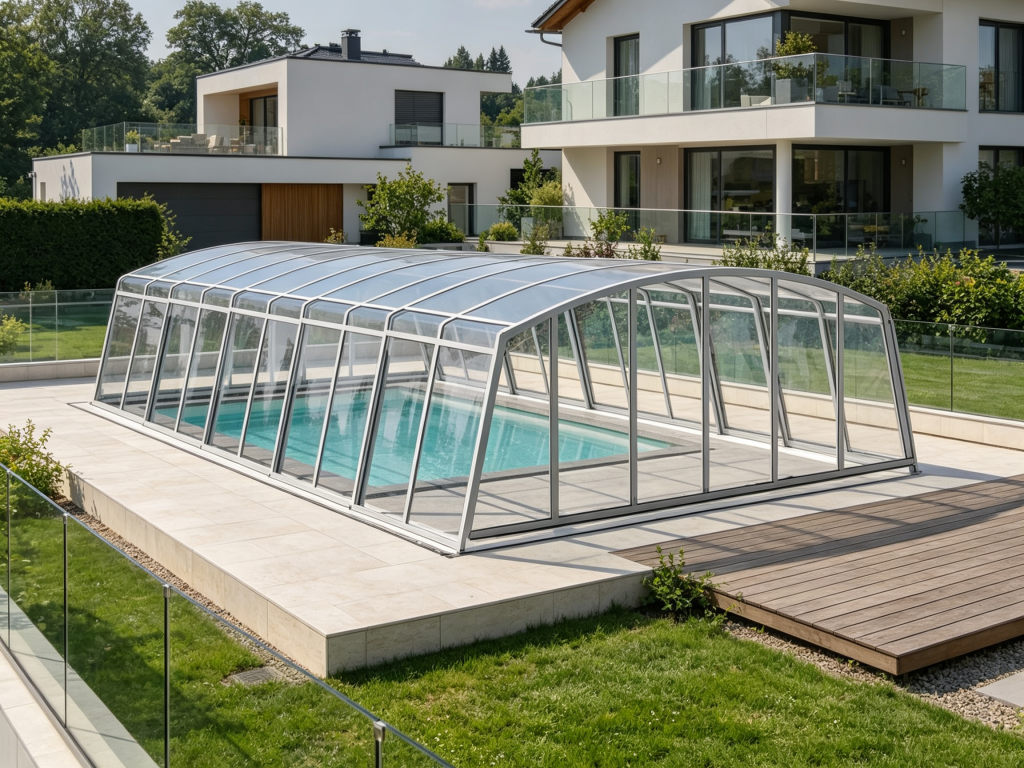
Is a Pool Enclosure Worth It for a Home?
For many homeowners, a pool enclosure is worth it if the pool is difficult to maintain, exposed to leaves and debris, affected by wind or rain, or used only for a short season. A pool enclosure can help reduce cleaning, improve comfort, protect the pool area and extend the swimming season.
A pool enclosure may be especially valuable if:
- Your pool is surrounded by trees
- You want to reduce bugs, leaves and debris
- Your region has frequent rain or wind
- You want to swim earlier in spring or later in autumn
- You want better safety around the pool
- You want a more comfortable backyard living space
- You want to protect outdoor furniture and pool equipment
- You are planning a long-term residential pool investment
- You want to improve the appearance and usability of your pool area
However, a pool enclosure may not be necessary for every home. If you only use the pool occasionally, live in a very mild climate or have limited space, a low-profile or simpler enclosure may be more practical than a large walk-in structure.
The value of a pool enclosure depends on how often you use the pool, how much maintenance you want to reduce and whether your climate limits outdoor swimming.
Quick Comparison: Pool Enclosure Options for Homes
| Pool Enclosure Option | Best For | Main Benefit | Main Limitation |
|---|---|---|---|
| Fixed pool enclosure | Year-round protection | Stable and permanent | Less flexible |
| Retractable pool enclosure | Flexible backyard use | Opens and closes as needed | Requires tracks and sliding system |
| Low-profile enclosure | Small or discreet backyards | Minimal visual impact | Limited interior height |
| High-profile enclosure | Walk-in pool space | More comfort and usable area | Higher cost and larger structure |
| Glass pool enclosure | Luxury homes and modern villas | Clear views and premium appearance | Heavier and usually more expensive |
| Polycarbonate enclosure | Practical residential pools | Lightweight and impact resistant | Less transparent than glass |
| Pool sunroom enclosure | Extended-season pool use | Creates a bright protected space | Needs ventilation and humidity control |
| Retractable roof pool enclosure | Open-sky swimming with weather protection | Flexible architectural design | Requires careful engineering |
Main Pool Enclosure Options
There are several common pool enclosure options for homes. Each option has different advantages depending on the pool size, backyard layout, local weather and the homeowner’s lifestyle.
The main types include:
- Fixed pool enclosures
- Retractable pool enclosures
- Low-profile pool enclosures
- High-profile pool enclosures
- Glass pool enclosures
- Polycarbonate pool enclosures
- Pool sunroom enclosures
- Pool enclosures with retractable roofs
Understanding these options can help homeowners choose a solution that matches both practical needs and architectural style.
1. Fixed Pool Enclosures
A fixed pool enclosure is a permanent structure installed around or over the swimming pool. It does not slide open like a retractable enclosure, but it provides stable protection throughout the year.
Fixed pool enclosures are suitable for homeowners who want a more enclosed swimming environment. They can create an indoor pool-style experience, especially when combined with doors, windows, ventilation and heating systems.
Advantages of Fixed Pool Enclosures
Fixed pool enclosures can provide:
- Stable year-round protection
- Better weather resistance
- A permanent pool room appearance
- Reduced wind exposure
- Better protection from rain and debris
- More privacy
- Improved comfort in colder or rainy seasons
- More consistent pool area conditions
Best For
Fixed pool enclosures are often suitable for:
- Year-round pool protection
- Homes in windy or rainy climates
- Indoor pool-style projects
- Luxury villas
- Large residential pools
- Projects requiring a permanent structure
- Pools connected to a house or indoor living area
Things to Consider
A fixed enclosure usually requires more careful planning for ventilation, drainage, humidity control and local building regulations. If the pool is heated or used frequently, condensation and air quality should also be considered.
In cold or humid regions, a fixed pool enclosure should not be treated like a simple cover. It should be designed as a controlled pool environment with proper airflow and moisture management.
2. Retractable Pool Enclosures
A retractable pool enclosure can be opened or closed depending on the weather and season. This is one of the most flexible pool enclosure options for homes.
When closed, it protects the pool from rain, wind, leaves and colder temperatures. When open, homeowners can enjoy an outdoor swimming experience.
Definition: Retractable Pool Enclosure
A retractable pool enclosure is a sliding enclosure system that can open or close depending on weather and pool use. It allows homeowners to enjoy open-air swimming when conditions are good and protected swimming when the weather changes.
Advantages of Retractable Pool Enclosures
Retractable pool enclosures can offer:
- Open-air swimming in good weather
- Protection during rain or wind
- Flexible seasonal use
- Reduced pool cleaning
- Improved comfort in spring and autumn
- A modern and functional appearance
- Better use of outdoor space
- The ability to adapt to changing weather
Best For
Retractable pool enclosures are suitable for:
- Backyard pools
- Residential swimming pools
- Seasonal climates
- Homeowners who want flexibility
- Outdoor pools used in spring, summer and autumn
- Luxury residential projects
- Families who want both outdoor and protected pool use
Things to Consider
A retractable system needs high-quality tracks, smooth sliding mechanisms, strong frames and proper installation. The design should also consider wind load, snow load, drainage and maintenance access.
For homeowners searching for a pool with retractable roof or retractable roof for swimming pool, this option is often one of the most relevant solutions.
3. Low-Profile Pool Enclosures
A low-profile pool enclosure sits closer to the pool surface. It usually has a lower height and a more discreet appearance.
This option is popular for homeowners who want protection without visually dominating the backyard.
Advantages of Low-Profile Pool Enclosures
Low-profile pool enclosures can provide:
- A clean and subtle look
- Reduced visual impact
- Good pool protection
- Less wind exposure
- Lower material use
- Easier integration into smaller backyards
- A practical solution for seasonal pool protection
Best For
Low-profile enclosures are suitable for:
- Small residential pools
- Backyards with limited space
- Homeowners who prefer a minimal look
- Pools that do not require walk-in height
- Seasonal pool protection
- Properties where the pool enclosure should not block views
Things to Consider
Because low-profile enclosures have limited interior height, they may not be comfortable for walking or relaxing inside. They are mainly used as protective structures rather than full pool rooms.
If you want to place lounge chairs, walk around the pool or create an indoor-outdoor pool space, a high-profile enclosure may be more suitable.
4. High-Profile Pool Enclosures
A high-profile pool enclosure creates enough interior space for walking, relaxing and using the pool area comfortably. It can feel more like a pool room or pool sunroom.
Advantages of High-Profile Pool Enclosures
High-profile designs can provide:
- Walk-in access
- More usable interior space
- Better comfort around the pool
- Space for lounge chairs or furniture
- A stronger architectural presence
- More year-round usability
- Better potential for indoor-outdoor living
Best For
High-profile pool enclosures are suitable for:
- Larger residential pools
- Luxury backyard projects
- Pool sunroom concepts
- Families who use the pool often
- Homes that want a more indoor-outdoor lifestyle
- Properties where comfort is more important than minimal appearance
Things to Consider
High-profile enclosures are more visible and usually require more materials. The structure should be designed to match the home architecture and local climate conditions.
Because a high-profile pool enclosure creates more enclosed air volume, ventilation, condensation control and heating balance may be important, especially for heated pools.
5. Glass Pool Enclosures
Glass pool enclosures are often chosen for premium residential and architectural projects. They provide clear views, elegant appearance and a high-end finish.
Advantages of Glass Pool Enclosures
Glass panels can offer:
- Clear visibility
- Premium architectural appearance
- Strong connection with the landscape
- Modern luxury design
- Good natural light
- High-end residential appeal
- A clean and transparent look
Best For
Glass pool enclosures are suitable for:
- Luxury homes
- Villas
- Modern architecture
- Scenic backyard locations
- Courtyard pools
- Projects where appearance is a priority
- Homeowners who want clear views of the garden or landscape
Things to Consider
Glass is heavier than polycarbonate and may require stronger structural support. Safety glass, frame strength, cleaning requirements and local building codes should be considered.
Glass can also show water marks and condensation more clearly, so cleaning and ventilation should be planned carefully.
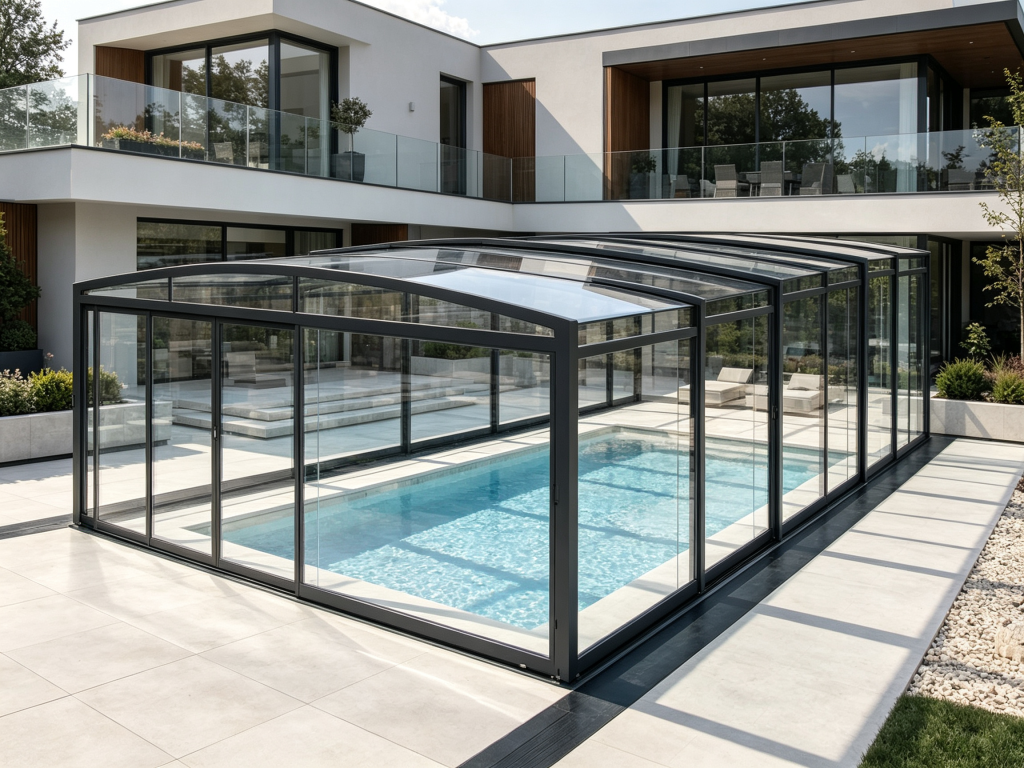
6. Polycarbonate Pool Enclosures
Polycarbonate is a common material for pool enclosure panels. It is lighter than glass and provides good impact resistance, making it practical for many residential projects.
Advantages of Polycarbonate Pool Enclosures
Polycarbonate panels can provide:
- Lightweight structure
- Good impact resistance
- Natural light transmission
- Practical weather protection
- Lower weight compared with glass
- Good performance for retractable systems
- Better tolerance for daily residential use
Best For
Polycarbonate pool enclosures are suitable for:
- Retractable pool enclosures
- Residential swimming pools
- Cold or variable climates
- Projects needing a lighter structure
- Homeowners who want practical performance
- Pool enclosures that need to balance durability and cost
Things to Consider
Polycarbonate may not look as clear as glass, depending on the panel type. Homeowners should choose panel thickness, transparency and UV protection based on project needs.
For many residential pool enclosures, polycarbonate is a practical choice because it reduces structural weight while still providing weather protection.
7. Pool Sunroom Enclosures
A pool sunroom enclosure combines the function of a pool enclosure with the comfort of a sunroom. It creates a bright, protected space around the swimming pool and can be designed with doors, windows, roof vents and comfortable interior features.
Definition: Pool Sunroom Enclosure
A pool sunroom enclosure is a bright, enclosed structure around a swimming pool that combines weather protection with a sunroom-like living environment. It is often used for extended-season or luxury residential pool spaces.
Advantages of Pool Sunroom Enclosures
Pool sunroom enclosures can provide:
- A more comfortable swimming environment
- Better protection from weather
- Natural light
- Space for seating or relaxation
- A stronger connection to the home
- More usable backyard living space
- A luxury indoor-outdoor pool experience
Best For
Pool sunroom enclosures are suitable for:
- Homeowners who want a luxury pool space
- Cold or rainy climates
- Villas and high-end homes
- Pools connected to the house
- Extended-season pool use
- Residential projects focused on comfort and lifestyle
Things to Consider
Because pool sunrooms can trap humidity, ventilation and condensation control are important. For heated pools or indoor pool-style spaces, dehumidification may also be needed.
If you are planning a sunroom-style pool area, you may also read our guide to pool sunroom enclosures.
8. Pool Enclosures with Retractable Roofs
Some homeowners want a pool enclosure that combines side protection with a retractable roof. This allows the pool area to be opened to the sky when the weather is good and covered when protection is needed.
Advantages of Retractable Roof Pool Enclosures
This option can provide:
- Open-sky swimming experience
- Weather protection when closed
- Better control over sunlight and rain
- Flexible backyard use
- Modern architectural appeal
- A premium indoor-outdoor experience
Best For
Pool enclosures with retractable roofs are suitable for:
- Modern homes
- Luxury residential pools
- Courtyard pools
- Hotels or wellness spaces
- Homeowners who want both openness and protection
- Projects where architecture is a major design priority
Things to Consider
Retractable roof systems require careful engineering, waterproofing, drainage and motorized system planning. The design should be customized according to span, wind conditions and installation environment.
For pool projects, the retractable roof should be considered together with ventilation, drainage and the surrounding pool deck design.
Fixed vs Retractable Pool Enclosure: Which One Should You Choose?
A fixed pool enclosure is best if you want permanent protection and a more indoor-like pool space. It is suitable for homes in rainy, windy or cold regions where the pool needs consistent coverage.
A retractable pool enclosure is best if you want flexibility. It can be closed during bad weather and opened when you want an outdoor swimming experience. For many residential pools, this is the most versatile option.
Choose a fixed pool enclosure if:
- You want year-round protection
- Your area has frequent rain or wind
- You prefer a permanent pool room
- You want a more stable enclosed space
- You do not need open-air swimming often
- You are planning a heated or indoor-style pool
Choose a retractable pool enclosure if:
- You want to swim outdoors in summer
- You want protection during rain or wind
- You prefer flexible seasonal use
- You want to reduce cleaning but keep an open backyard feel
- You need a practical solution for spring, summer and autumn
- You want to open or close the pool area depending on weather
For many homeowners, a retractable pool enclosure provides the best balance between protection and outdoor lifestyle.
Glass vs Polycarbonate Pool Enclosure: Which Material Is Better?
Glass and polycarbonate are two common panel materials for residential pool enclosures. Glass provides a premium architectural look and clear views, while polycarbonate is lighter, impact resistant and practical for many retractable systems.
| Material | Advantages | Considerations |
|---|---|---|
| Glass | Clear view, premium appearance, modern architectural style | Heavier, usually higher cost, requires stronger support |
| Polycarbonate | Lightweight, impact resistant, suitable for retractable systems | Less clear than glass, appearance depends on panel type |
Choose glass if appearance, transparency and luxury design are your priorities. Choose polycarbonate if you want a lighter, more practical and weather-resistant enclosure for daily residential use.
For cold, windy or retractable applications, polycarbonate may offer practical advantages because of its lower weight and impact resistance. For luxury villas or modern homes, glass may provide a more premium visual result.
Low-Profile vs High-Profile Pool Enclosure
The difference between a low-profile and high-profile pool enclosure is mainly height and usability.
A low-profile pool enclosure is designed to protect the pool while keeping the backyard visually open. It is often used when homeowners want a clean appearance and do not need to walk inside the enclosure.
A high-profile pool enclosure is designed as a walk-in structure. It can create a more comfortable space around the pool and may include lounge chairs, seating areas, doors, windows and ventilation.
Choose a low-profile pool enclosure if:
- You want a discreet design
- Your backyard is small
- You want lower visual impact
- You only need pool protection
- You do not need to walk inside the enclosure
Choose a high-profile pool enclosure if:
- You want walk-in access
- You want to relax around the pool
- You want a pool room or sunroom feeling
- You want more usable space
- You use the pool frequently
The best choice depends on whether the enclosure is mainly for protection or for creating a usable living space around the pool.
How to Choose a Pool Enclosure by Climate
The right pool enclosure option depends strongly on local climate. A design that works well in Florida may not be suitable for Canada, the Northern United States or Northern Europe.
Climate affects:
- Frame strength
- Panel material
- Roof shape
- Wind resistance
- Snow load
- Ventilation
- Heat retention
- Drainage
- UV resistance
- Condensation control
For Hot and Sunny Climates
In hot and sunny regions, shade, ventilation and UV resistance are important. Homeowners may prefer retractable systems, tinted panels, operable windows or roof ventilation to prevent overheating.
This applies to regions such as:
- Florida
- Texas
- Arizona
- California
- Southern Europe
- Middle East coastal regions
- Australia
For hot climates, the pool enclosure should allow airflow and prevent the pool area from becoming too hot. A retractable design can be useful because it allows homeowners to open the pool area during cooler parts of the day.
For Cold or Snowy Climates
In cold or snowy regions, the enclosure should be designed with snow load, wind resistance, drainage and heat retention in mind. A fixed or high-profile enclosure may be more suitable for year-round protection, while a retractable enclosure can work if the structure is engineered for local conditions.
This applies to regions such as:
- Canada
- Ontario
- Quebec
- Alberta
- Minnesota
- Michigan
- Wisconsin
- New York
- Massachusetts
- Norway
- Sweden
- Finland
- Switzerland
For snowy regions, roof shape, frame strength, panel material and anchoring are important. Homeowners should not choose a pool enclosure based only on appearance. Local snow load and wind load should be considered before design.
For Windy Areas
In windy areas, frame strength, anchoring, guide rails and panel fixing are important. The enclosure should be designed to resist uplift and lateral wind pressure.
Wind-resistant pool enclosure design is especially important for:
- Coastal homes
- Open backyards
- Hilltop properties
- Lakefront homes
- Large properties without windbreaks
- Areas with seasonal storms
For retractable systems, tracks and locking mechanisms should be designed to keep the enclosure stable when closed.
For Rainy or Humid Climates
In rainy or humid regions, drainage, sealing, corrosion resistance and ventilation are especially important. Homeowners should avoid poorly ventilated designs that trap humidity inside the enclosure.
This applies to many coastal, tropical and rainy regions, including parts of:
- British Columbia
- Pacific Northwest
- Florida
- Southeast Asia
- Northern Europe
- Coastal Australia
In humid climates, airflow helps reduce condensation and improves comfort. If the pool is heated or enclosed for long periods, humidity control should be part of the design.
Regional Considerations for North America, Europe and Australia
For homeowners in the United States and Canada, local climate can strongly affect pool enclosure design. A backyard pool enclosure in Florida may focus on sun protection and ventilation, while a pool enclosure in Ontario, Quebec, Minnesota or Michigan may need stronger snow-load and wind-load considerations.
In Europe, pool enclosure options may vary between mild coastal climates and colder northern regions. Homes in Germany, Switzerland, Norway, Sweden and Finland may require more attention to thermal performance, condensation control and structural durability.
In Australia and other warm climates, pool enclosures are often selected for UV protection, debris control, safety and flexible outdoor living rather than snow protection.
This is why a custom pool enclosure should always be designed according to project location, not only pool size.
What Is the Best Pool Enclosure for a Small Backyard?
For a small backyard, the best pool enclosure is usually a low-profile or compact retractable pool enclosure. These designs protect the pool without making the outdoor space feel crowded.
A small backyard pool enclosure should consider:
- Low visual impact
- Smooth sliding access
- Compact track layout
- Easy maintenance
- Enough clearance around the pool
- Safe door or panel operation
- Matching frame color with the house or deck
- Good drainage around the pool edge
If the homeowner wants to walk inside the enclosure, a high-profile design may be possible, but it requires more space and stronger visual integration with the home.
For small backyards, homeowners should avoid choosing an enclosure that is too tall or visually heavy unless the goal is to create a full pool room.
Do Pool Enclosures Reduce Bugs, Leaves and Debris?
Yes. One of the main benefits of a pool enclosure is reducing leaves, insects, dust and outdoor debris from entering the pool. This can reduce cleaning time and help keep the pool area more comfortable.
A pool enclosure can help reduce:
- Leaves
- Branches
- Dust
- Insects
- Bird droppings
- Rainwater contamination
- Wind-blown debris
- Outdoor furniture exposure
It does not eliminate all maintenance, but it can significantly reduce the amount of debris entering the pool compared with an open outdoor pool.
For homes surrounded by trees, gardens or windy outdoor areas, this is one of the most practical reasons to install a backyard pool enclosure.
Can a Pool Enclosure Help Keep the Pool Warmer?
Yes. A pool enclosure can help keep the pool area warmer by reducing wind exposure and creating a more stable environment around the pool.
A pool enclosure may help:
- Reduce wind-related heat loss
- Keep the pool area more comfortable
- Support extended-season swimming
- Reduce rapid temperature changes
- Improve comfort in spring and autumn
- Work together with pool heating systems
However, a pool enclosure is not the same as a fully insulated indoor pool building. In very cold regions, year-round swimming may also require pool heating, air heating, insulation, ventilation and dehumidification.
For homeowners who want to swim earlier in spring or later into autumn, a pool enclosure can be a valuable part of the overall pool comfort strategy.
Do You Need a Permit for a Pool Enclosure?
In many regions, a pool enclosure may require a building permit, especially if it is a permanent structure, attached to the house, high-profile, motorized or designed for wind and snow loads. Permit requirements vary by country, state, province, city and local building department.
Homeowners should check local requirements before installation, especially in areas such as Canada, the United States, Europe and Australia.
A permit may be required if the pool enclosure:
- Is permanently fixed to the ground
- Is attached to the house
- Exceeds a certain height
- Uses glass panels
- Includes electrical or motorized systems
- Must meet snow load or wind load codes
- Changes drainage or access around the pool
- Affects property boundaries or setback requirements
Sunrim can provide product and design information for project planning, but local permit approval should always be confirmed with the local authority, contractor or engineer.
How Much Does a Pool Enclosure Cost?
The cost of a pool enclosure depends on the size, structure, material, height, climate requirements and customization level. A low-profile polycarbonate enclosure is usually more affordable than a large high-profile glass enclosure or a motorized retractable roof system.
Main cost factors include:
- Pool length and width
- Enclosure height
- Fixed or retractable design
- Glass or polycarbonate panels
- Aluminum profile specification
- Wind load and snow load requirements
- Manual or motorized operation
- Door and window configuration
- Roof shape
- Track system
- Shipping
- Installation
- Local permit or engineering requirements
- Custom color or finish
- Drainage and foundation conditions
Instead of choosing only by price, homeowners should compare long-term value, maintenance, safety and climate suitability.
A cheaper enclosure may not be the best choice if it does not match local wind, snow, humidity or usage conditions.
Common Mistakes When Choosing a Pool Enclosure
Homeowners should avoid these common mistakes:
- Choosing only based on appearance
- Ignoring local wind or snow conditions
- Forgetting ventilation and humidity control
- Selecting panels without considering weight and durability
- Not planning drainage
- Choosing a structure that is too low for intended use
- Choosing a structure that is too large for a small backyard
- Not checking installation space
- Ignoring track maintenance for retractable systems
- Using a standard design for a complex site
- Not requesting a custom design based on pool dimensions
- Not checking local permit requirements
- Not considering future maintenance access
A good pool enclosure should be designed around the specific project, not selected as a generic product.
Pool Enclosure Buyer Checklist
Before choosing a pool enclosure, prepare the following information:
- Pool length and width
- Pool deck dimensions
- Photos or videos of the backyard
- Project location
- Local wind and snow conditions
- Preferred enclosure type
- Fixed or retractable preference
- Low-profile or high-profile preference
- Glass or polycarbonate preference
- Frame color preference
- Door and access requirements
- Drainage conditions
- Whether the pool is heated
- Expected use season
- Budget range
- Local permit requirements
- Whether the enclosure will be attached to the house
- Available space around the pool
This information helps the supplier recommend a more accurate and practical pool enclosure solution.
Questions to Ask Before Buying a Pool Enclosure
Before ordering a residential pool enclosure, homeowners should ask:
- Is this enclosure suitable for my local climate?
- Can it handle local wind or snow conditions?
- Is it fixed or retractable?
- What panel material is used?
- Is the frame aluminum or another material?
- How does the sliding track system work?
- Does the enclosure need maintenance?
- How is drainage handled?
- Does the design require ventilation?
- Can doors or windows be added?
- Can the frame color match my house?
- Is installation guidance available?
- What information is needed for a custom quote?
- Do I need a local permit?
- Can the enclosure be customized for my pool size?
These questions help homeowners avoid choosing a system that looks good but does not perform well in real use.
What Information Should You Prepare Before Requesting a Quote?
To get a suitable pool enclosure proposal, prepare the following information:
- Pool length and width
- Pool deck size
- Photos of the pool area
- Project location
- Preferred enclosure type
- Fixed or retractable preference
- Preferred height
- Frame color preference
- Glass or polycarbonate preference
- Local weather conditions
- Wind or snow concerns
- Expected use season
- Whether the pool is heated
- Budget range
- Installation site conditions
- Whether the enclosure should connect to the house
- Any local permit or building code requirements
The more information you provide, the easier it is to design a practical and accurate pool enclosure solution.
Why Choose Sunrim for Residential Pool Enclosures?
Sunrim designs and manufactures custom pool enclosures, retractable pool enclosures, pool sunrooms, retractable roof systems and outdoor enclosure solutions for residential and commercial projects.
For residential swimming pool enclosure projects, Sunrim can support:
- Custom pool enclosure design
- Fixed and retractable options
- Low-profile and high-profile structures
- Glass and polycarbonate panel solutions
- Aluminum frame systems
- Sliding track design
- Pool sunroom solutions
- Retractable roof solutions
- Climate-based design recommendations
- Export project support
- Installation guidance
- Residential and villa project solutions
Whether you need a backyard pool enclosure, a residential swimming pool enclosure, a pool sunroom or a pool with a retractable roof, Sunrim can help recommend a suitable solution based on your pool size, climate and design goals.
Conclusion
There are many pool enclosure options for homes, and the best choice depends on your pool size, backyard layout, climate, design preference and expected use.
Fixed pool enclosures provide stable protection, while retractable pool enclosures offer flexibility. Low-profile designs keep the backyard simple, while high-profile enclosures create a more comfortable walk-in pool space. Glass pool enclosures are ideal for premium architectural projects, while polycarbonate pool enclosures provide lightweight and practical performance.
For homeowners who want a more comfortable lifestyle space, a pool sunroom enclosure or retractable roof pool enclosure may be the best solution.
Before choosing a pool enclosure, compare your options carefully and prepare your pool dimensions, project photos and location information. A custom-designed pool enclosure can help protect your swimming pool, reduce maintenance and make your backyard more enjoyable.
Start Your Pool Enclosure Project
Planning a residential pool enclosure, backyard pool enclosure or retractable pool enclosure?
Contact Sunrim and send your pool dimensions, project location and site photos. Our team can help recommend the right pool enclosure option for your home.
FAQ About Pool Enclosure Options for Homes
What is the best pool enclosure option for a home?
The best pool enclosure option depends on climate, backyard size, budget and pool use. For many homes, a retractable pool enclosure offers the best balance of flexibility and protection. A fixed enclosure is better for year-round protection, while glass and polycarbonate options depend on appearance and structural needs.
Is a pool enclosure worth it?
A pool enclosure is often worth it if you want to reduce pool cleaning, protect the pool from leaves and debris, improve comfort, extend the swimming season or create a more usable backyard space.
What is the difference between a fixed and retractable pool enclosure?
A fixed pool enclosure stays in place permanently, while a retractable pool enclosure can slide open or closed. Fixed systems provide stable protection, while retractable systems offer more flexibility.
Is glass or polycarbonate better for a pool enclosure?
Glass is better for premium appearance and clear views. Polycarbonate is lighter, impact resistant and practical for many residential and retractable pool enclosure systems.
What is the best pool enclosure for a small backyard?
A low-profile or compact retractable pool enclosure is usually best for a small backyard because it protects the pool without overwhelming the outdoor space.
Can a pool enclosure help keep the pool warmer?
Yes. A pool enclosure can reduce wind exposure and help create a more stable environment around the pool, which may help retain heat and extend the swimming season.
Do pool enclosures reduce bugs and leaves?
Yes. Pool enclosures can significantly reduce leaves, insects, dust and wind-blown debris from entering the pool, although they do not eliminate all maintenance.
Can a pool enclosure handle snow?
A pool enclosure can handle snow only if it is designed for the local snow load. In snowy regions, the frame, roof shape, panel material and anchoring system should be engineered for winter conditions.
Can a pool enclosure handle strong wind?
A pool enclosure can be designed for windy areas, but it must include suitable frame strength, anchoring, guide rails and panel fixing. Local wind conditions should be considered before design.
Do I need a permit for a pool enclosure?
Permit requirements vary by location. A permit may be required if the enclosure is permanent, attached to the house, high-profile, motorized or subject to wind and snow load codes. Homeowners should check with local authorities.
How much does a pool enclosure cost?
The cost depends on pool size, enclosure height, material, fixed or retractable design, wind and snow load requirements, shipping and installation. A custom quote is usually needed.
Can I install a pool enclosure myself?
Some simple pool covers may be DIY-friendly, but most structural pool enclosures require professional design and installation, especially retractable, glass, high-profile or snow-load systems.
Will a pool enclosure make my backyard look bulky?
Not necessarily. Low-profile enclosures and well-designed retractable systems can reduce visual impact, while glass or custom-colored frames can match modern residential architecture.
Does a pool enclosure need ventilation?
Yes. Ventilation is important, especially for high-profile, fixed or sunroom-style pool enclosures. It helps control humidity, condensation and indoor comfort.
What information should I provide for a quote?
You should provide pool dimensions, site photos, project location, preferred enclosure type, height preference, material preference, local climate conditions and expected use season.

