



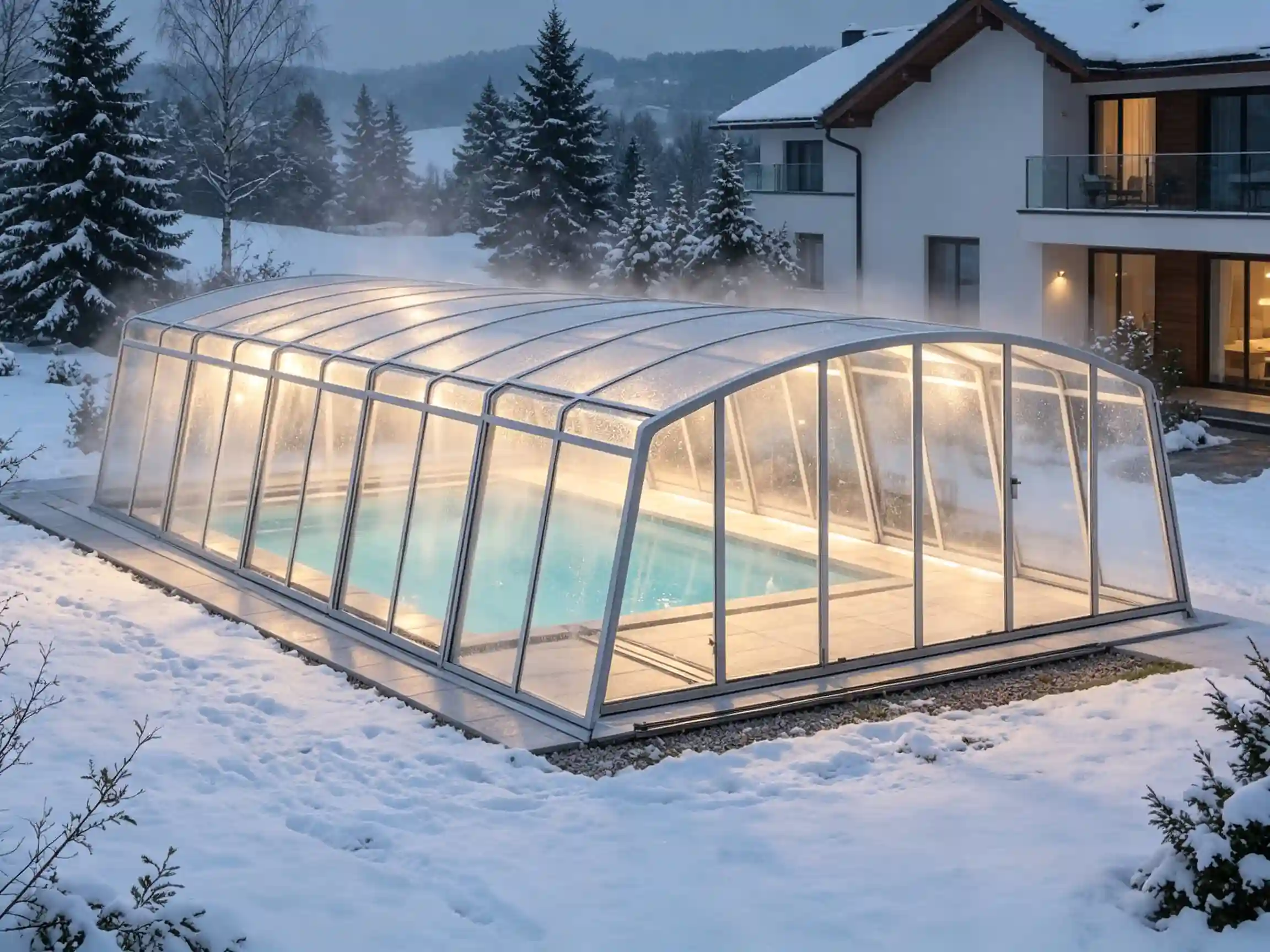
How to Control Condensation in Pool Sunrooms and Indoor Pool Enclosures
Condensation is one of the most common concerns for pool sunrooms and indoor pool enclosures, especially in cold climates. When warm, humid air from the swimming pool meets cold glass, polycarbonate panels or aluminum frames, water droplets can form on the surface. Over time, this may affect visibility, comfort, air quality and long-term maintenance.
For homeowners in Canada, the Northern United States, Northern Europe and other cold regions, condensation control is an important part of pool sunroom design. A beautiful swimming pool enclosure is not only about structure and appearance. It also needs proper humidity control, ventilation, heating, drainage and material selection.
This guide explains why condensation happens in pool sunrooms, how to reduce it, and what homeowners should consider before choosing an indoor pool enclosure or pool sunroom system.
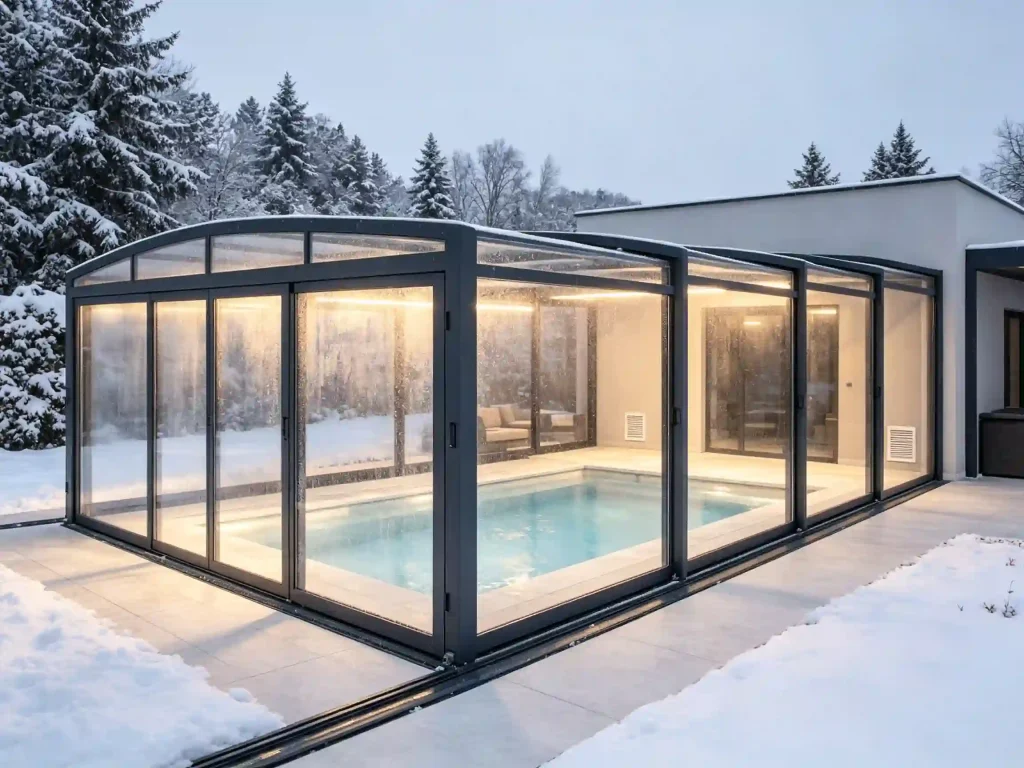
Why Condensation Happens in Pool Sunrooms
If you are planning a pool sunroom for a cold region, you may also read our guide to pool sunrooms for cold climates.
Condensation happens when warm, moist air comes into contact with a colder surface. In a pool sunroom, the swimming pool continuously releases moisture into the air. If the enclosure surfaces are cold, the moisture in the air may turn into visible water droplets.
This is common on:
- Glass panels
- Polycarbonate roof panels
- Aluminum frames
- Sliding doors
- Windows
- Roof edges
- Metal connectors
- Cold corners
- Poorly ventilated areas
In cold climates, the temperature difference between the inside and outside of the enclosure can be large. For example, a pool sunroom in Ontario, Quebec, Minnesota, Wisconsin or Sweden may have warm humid air inside and freezing temperatures outside. This makes condensation more likely.
Why Condensation Control Matters
Some condensation may be normal in pool environments, but excessive condensation can create problems.
Common issues include:
- Foggy glass or panels
- Water dripping from the roof
- Wet pool deck surfaces
- Mold or mildew risk
- Corrosion risk for metal parts
- Staining on frames or walls
- Uncomfortable indoor air
- Reduced visibility
- Higher maintenance requirements
- Damage to furniture or finishes
For indoor pool sunrooms and enclosed pool areas, humidity control is not optional. It directly affects comfort, safety and the long-term performance of the structure.
Cold Climates Make Condensation More Serious
Condensation is especially important in cold regions because the exterior surfaces of the enclosure can become very cold during winter. When warm pool air touches those surfaces, moisture can form quickly.
This is common in regions such as:
- Ontario, Canada
- Quebec, Canada
- Alberta, Canada
- Minnesota, United States
- Michigan, United States
- Wisconsin, United States
- New York, United States
- Massachusetts, United States
- Norway
- Sweden
- Finland
- Germany
- Switzerland
In these locations, a pool sunroom should be designed with both weather protection and moisture management in mind.
The Role of Ventilation
Ventilation is one of the most important ways to reduce condensation in a pool sunroom. Without airflow, humid air becomes trapped inside the enclosure and moisture builds up on cold surfaces.
Good ventilation can help:
- Remove humid air
- Bring in fresh air
- Reduce fogging
- Improve air quality
- Lower condensation risk
- Make the pool area more comfortable
- Reduce mold and mildew risk
Ventilation options may include:
- Sliding doors
- Operable windows
- Roof vents
- Side vents
- Exhaust fans
- Mechanical ventilation
- Air circulation fans
- Smart ventilation systems
For mild climates, natural ventilation may be enough during some seasons. But in colder regions such as Quebec, Minnesota or Finland, controlled mechanical ventilation may be needed, especially if the pool is used frequently.
Natural Ventilation vs Mechanical Ventilation
Pool sunrooms can use natural ventilation, mechanical ventilation or a combination of both.
Natural Ventilation
Natural ventilation uses doors, windows and vents to allow air movement.
It may work well for:
- Seasonal pool sunrooms
- Mild climates
- Retractable pool enclosures
- Spring and summer use
- Low-humidity situations
However, natural ventilation may not be enough during cold winter months when homeowners want to keep the space warm.
Mechanical Ventilation
Mechanical ventilation uses fans or HVAC systems to control airflow more consistently.
It is useful for:
- Indoor pool enclosures
- Year-round swimming spaces
- Cold climates
- High-humidity pool rooms
- Large pool sunrooms
- Enclosures connected to the house
For homeowners in Canada, the Northern United States and Northern Europe, mechanical ventilation is often a more reliable choice for enclosed pool spaces.
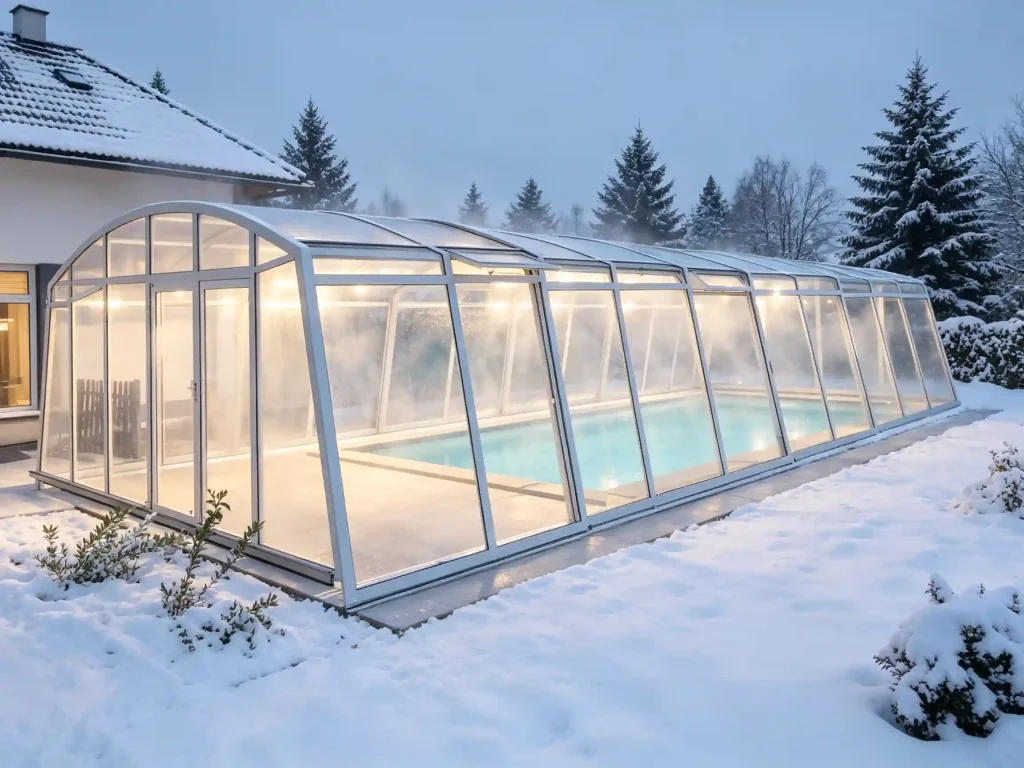
Dehumidification for Indoor Pool Enclosures
A dehumidification system can be very important for indoor pool enclosures and pool sunrooms used throughout the year. It removes moisture from the air and helps maintain a more stable humidity level.
Dehumidification can help:
- Reduce condensation on glass and panels
- Improve comfort
- Protect furniture and finishes
- Reduce mold risk
- Improve air quality
- Protect metal components
- Support year-round use
A dehumidifier should be sized according to:
- Pool size
- Water temperature
- Air temperature
- Enclosure volume
- Usage frequency
- Local climate
- Ventilation design
- Whether the pool is covered when not in use
A small residential pool sunroom may need a different solution from a large indoor pool enclosure or hotel wellness area.
Heating and Air Temperature Balance
Heating can also affect condensation. If the air temperature, water temperature and surface temperature are not balanced, condensation may increase.
In general, condensation risk can rise when:
- Pool water is warm
- Air is humid
- Exterior temperature is very low
- Glass or panels are cold
- Air circulation is poor
Heating the air inside the enclosure can improve comfort, but it should be coordinated with ventilation and dehumidification. Simply heating the space without removing humidity may not solve condensation problems.
For cold regions such as Alberta, Ontario, New York, Norway or Finland, heating and humidity control should be planned together.
Insulation and Thermal Performance
Better thermal performance can reduce cold surface temperatures and lower condensation risk. This does not mean every pool sunroom must be fully insulated like a house, but material selection matters.
Important factors include:
- Panel type
- Glass specification
- Polycarbonate thickness
- Frame design
- Thermal break options
- Sealing quality
- Air leakage control
- Roof design
- Door and window performance
In cold climates, single-layer panels may have a higher condensation risk than better-performing panel systems. For year-round use, homeowners should discuss thermal performance with the supplier early in the design process.
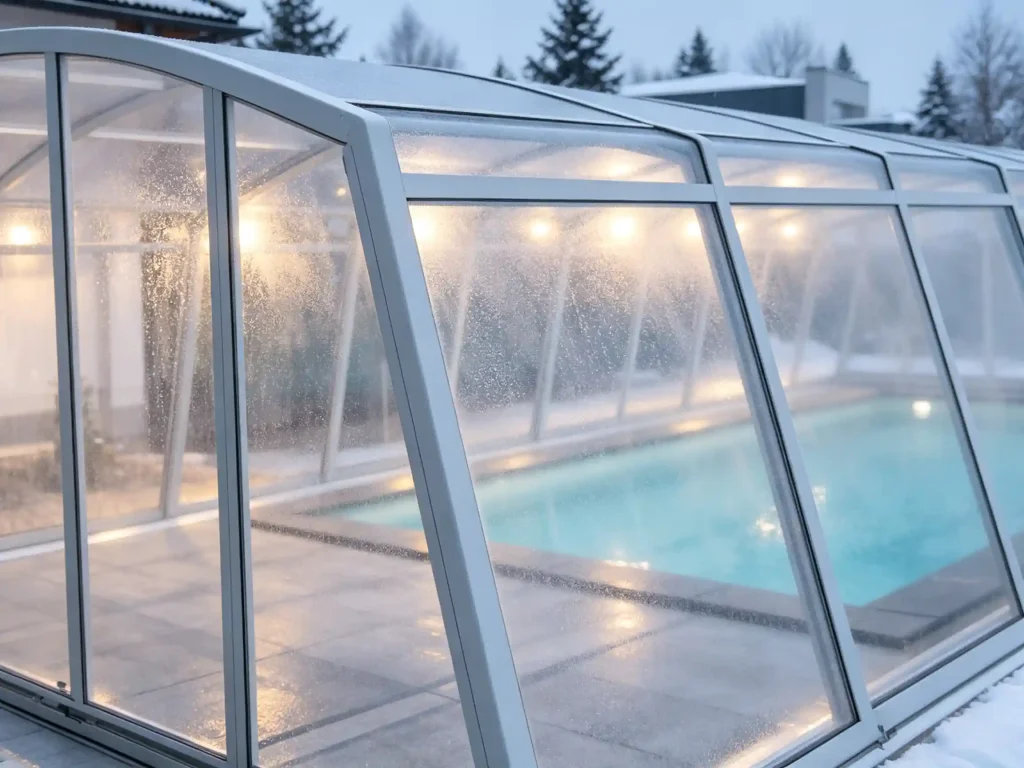
Frame Material and Condensation
Aluminum is widely used for pool sunrooms and pool enclosures because it is lightweight, durable and corrosion resistant. However, metal conducts temperature, so frame design is important in cold climates.
To reduce condensation around frames, consider:
- Proper frame profile design
- Better sealing
- Thermal break options if available
- Good air circulation around frames
- Avoiding cold air leakage
- Regular inspection of joints
- Drainage for any collected moisture
For pool sunrooms in Quebec, Wisconsin, Sweden or Switzerland, condensation on frames should be considered during design, especially for enclosed or heated spaces.
Roof Design and Condensation Dripping
Condensation often appears on roof panels because warm humid air rises and touches cooler roof surfaces. If water droplets form on the ceiling, they may drip back into the pool area.
To reduce roof condensation problems, consider:
- Roof slope
- Air movement near the roof
- Ventilation at high points
- Panel material
- Thermal performance
- Drainage channels
- Condensation collection paths
- Regular cleaning and inspection
A sloped or arched roof may help guide moisture and reduce dripping problems compared with poorly designed flat areas.
Pool Covers Can Help Reduce Humidity
A pool cover can reduce evaporation when the pool is not in use. This can help lower humidity inside the pool sunroom.
A pool cover may help:
- Reduce water evaporation
- Lower indoor humidity
- Reduce heating demand
- Reduce condensation risk
- Improve energy efficiency
- Protect pool water
For indoor pool enclosures, using a pool cover during non-use hours is often one of the simplest ways to reduce moisture load.
Door and Window Placement
Door and window placement can affect airflow. Poorly placed openings may leave humid air trapped in corners or near roof sections.
When designing a pool sunroom, consider:
- Cross ventilation
- High and low air openings
- Easy access doors
- Sliding windows
- Roof vents
- Airflow around the pool
- Avoiding dead air zones
- Wind direction on the site
For residential projects, the goal is to create comfortable airflow without making the space too cold during winter.
Signs Your Pool Sunroom Has Poor Humidity Control
Homeowners should watch for early signs of poor condensation or humidity control.
Common warning signs include:
- Frequent fogging on glass
- Water dripping from roof panels
- Wet frames or window edges
- Musty smell
- Mold or mildew spots
- Condensation on furniture
- Slippery deck areas
- Rust on metal accessories
- Peeling paint or finish damage
- Uncomfortable humid air
If these problems appear frequently, the pool sunroom may need better ventilation, dehumidification, sealing or heating balance.
Design Tips for Reducing Condensation
To reduce condensation in a pool sunroom or indoor pool enclosure, consider these design tips:
- Plan ventilation from the beginning
- Use operable windows or roof vents
- Consider mechanical ventilation for year-round use
- Use a suitable dehumidification system
- Maintain balanced air and water temperatures
- Improve panel and frame thermal performance
- Use a pool cover when the pool is not in use
- Avoid completely sealed spaces without airflow
- Keep drainage paths clear
- Inspect seals and joints regularly
- Choose materials suitable for humid pool environments
For cold-climate projects, condensation control should be discussed before production, not after installation.
Fixed Pool Sunroom vs Retractable Pool Enclosure
Condensation control may differ between fixed pool sunrooms and retractable pool enclosures.
Fixed Pool Sunroom
A fixed pool sunroom provides more stable enclosure, but it may trap humidity if ventilation and dehumidification are not properly planned.
It is suitable for:
- Year-round use
- Indoor pool-style spaces
- Cold regions
- Homeowners wanting permanent protection
However, it requires better humidity management.
Retractable Pool Enclosure
A retractable pool enclosure can open during suitable weather, which helps release humidity naturally. It may be easier to ventilate during warm seasons.
It is suitable for:
- Seasonal use
- Homeowners wanting open-air swimming in summer
- Backyards with changing weather
- Mild to moderately cold climates
For cold regions, a retractable design still needs proper sealing, drainage and ventilation planning when closed.
Regional Considerations
Different regions may need different condensation control strategies.
In Ontario and Quebec, cold winters and heated pool spaces can create strong temperature differences. Ventilation, dehumidification and panel performance are important.
In Alberta and Manitoba, cold temperatures and dry winter air may require careful heating and airflow planning.
In Minnesota, Michigan, Wisconsin and New York, snow, freezing temperatures and seasonal humidity can all affect indoor pool enclosure performance.
In British Columbia and the Pacific Northwest, moisture and rain may be more important than extreme cold, so ventilation and corrosion-resistant materials are especially useful.
In Norway, Sweden and Finland, low winter temperatures make thermal performance and controlled ventilation important.
In Germany, Austria and Switzerland, homeowners may also need to consider building standards, energy efficiency and architectural appearance.
What Information Should You Prepare Before Requesting a Quote?
To design a pool sunroom with better condensation control, prepare the following information:
- Project location
- Pool dimensions
- Photos of the pool area
- Expected use season
- Indoor or outdoor installation
- Fixed or retractable preference
- Pool water temperature
- Whether the pool will be heated
- Existing ventilation conditions
- Preferred frame material
- Preferred panel material
- Local winter temperature
- Local humidity conditions
- Whether year-round use is required
- Whether a dehumidification system is planned
- Budget range
For cold-climate projects, location matters. A pool sunroom in Toronto, Montreal, Minneapolis, Stockholm or Zurich may need different ventilation and humidity control strategies.
Why Choose Sunrim for Pool Sunrooms and Pool Enclosures?
Sunrim designs and manufactures pool sunrooms, pool enclosures, retractable sunrooms, retractable roof systems and custom outdoor enclosure solutions for residential and commercial projects.
For pool sunroom and indoor pool enclosure projects, Sunrim can support:
- Custom pool sunroom design
- Fixed and retractable enclosure options
- Aluminum frame structures
- Glass or polycarbonate panel options
- Ventilation planning suggestions
- Condensation control considerations
- Cold-climate design recommendations
- Residential and villa applications
- Export project support
- Installation guidance
Whether your project is in Canada, the Northern United States, Northern Europe or another cold region, Sunrim can help recommend a suitable pool sunroom or pool enclosure solution based on your site conditions and expected use.
Conclusion
Condensation control is an important part of pool sunroom and indoor pool enclosure design, especially in cold climates. Warm pool water, humid air and cold exterior temperatures can create fogging, dripping and moisture problems if the space is not properly planned.
The best solution usually combines ventilation, dehumidification, heating balance, suitable materials, proper roof design, good sealing and regular maintenance. For homeowners in Ontario, Quebec, Minnesota, Michigan, Wisconsin, New York, Norway, Sweden, Finland, Germany and Switzerland, these factors should be considered before choosing a pool sunroom system.
A well-designed pool sunroom can create a bright, protected and more comfortable swimming environment while reducing the risks caused by excessive humidity and condensation.
Start Your Pool Sunroom Project
Planning a pool sunroom or indoor pool enclosure for a cold or humid climate?
Contact Sunrim and send your project location, pool dimensions and site photos. Our team can help recommend a suitable pool sunroom or pool enclosure solution for your climate and project needs.
FAQ About Condensation in Pool Sunrooms
Why does condensation form in a pool sunroom?
Condensation forms when warm, humid air from the swimming pool touches colder surfaces such as glass, polycarbonate panels or aluminum frames.
Is condensation normal in indoor pool enclosures?
Some condensation can be normal, but excessive fogging, dripping or moisture buildup may indicate poor ventilation, insufficient dehumidification or low thermal performance.
How can I reduce condensation in a pool sunroom?
You can reduce condensation with proper ventilation, dehumidification, balanced heating, better panel materials, good sealing, air circulation and using a pool cover when the pool is not in use.
Do pool sunrooms need ventilation?
Yes. Ventilation is important because swimming pools release moisture into the air. Without airflow, humidity can build up and cause condensation.
Do I need a dehumidifier for an indoor pool enclosure?
For year-round indoor pool enclosures or heated pool sunrooms, a dehumidifier is often recommended to control humidity and reduce condensation.
Does a pool cover help with condensation?
Yes. A pool cover can reduce water evaporation when the pool is not in use, which helps lower indoor humidity and condensation risk.
Is condensation worse in cold climates?
Yes. Cold climates increase the temperature difference between warm indoor air and cold exterior surfaces, making condensation more likely.
What materials help reduce condensation?
Better-performing glass, thicker polycarbonate panels, improved frame design, thermal break options and good sealing can help reduce cold surface temperatures and condensation risk.
Can a retractable pool enclosure reduce humidity?
A retractable pool enclosure can help release humidity when opened during suitable weather, but it still needs proper ventilation and sealing when closed.
Where is condensation control most important?
Condensation control is especially important in Canada, the Northern United States, Northern Europe and other cold or humid regions, including Ontario, Quebec, Minnesota, Wisconsin, New York, Norway, Sweden and Finland.


