


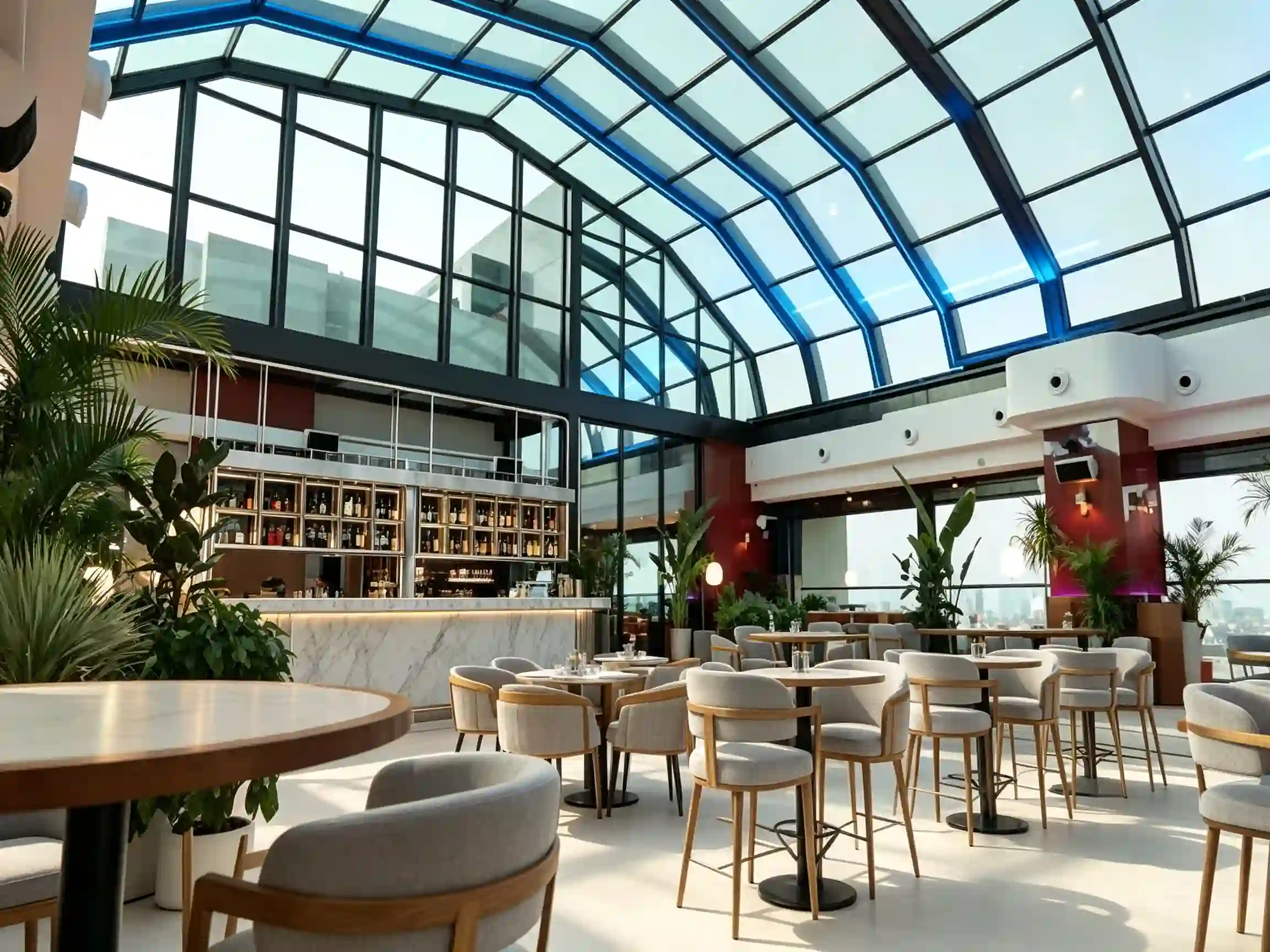
Commercial Retractable Roof Systems: Buyer’s Guide for Hotels, Restaurants and Venues
Commercial retractable roof systems help hotels, restaurants, resorts, shopping centers, rooftop bars and event venues turn outdoor or semi-outdoor spaces into flexible, weather-protected business areas. With a retractable roof, a space can remain open during pleasant weather and close quickly when rain, strong sunlight or wind affects guest comfort.
For commercial properties, outdoor space is not only about appearance. It is also about seating capacity, guest experience, usable days, event reliability and long-term return on investment.
Sunrim designs and manufactures custom commercial retractable roof systems, motorized sliding roofs, retractable glass roofs, courtyard glass roofs and outdoor enclosure solutions for hospitality and commercial projects worldwide.
This buyer’s guide explains how commercial retractable roof systems work, where they are used, what materials and structures are available, and what buyers should consider before starting a project.
Quick Answer: What Is a Commercial Retractable Roof System?
A commercial retractable roof system is a motorized or sliding roof structure designed for business spaces such as hotels, restaurants, cafés, resorts, courtyards, rooftop bars, shopping centers and event venues. It usually includes an aluminum or steel-supported frame, transparent or opaque roof panels, sliding tracks, motors, drainage channels, seals and control systems.
Unlike temporary awnings or umbrellas, a commercial retractable roof is a more durable architectural structure. It is designed to protect outdoor areas from changing weather while maintaining flexible open-air use.
Sunrim provides custom commercial retractable roof systems for hotels, restaurants, courtyards and hospitality projects.
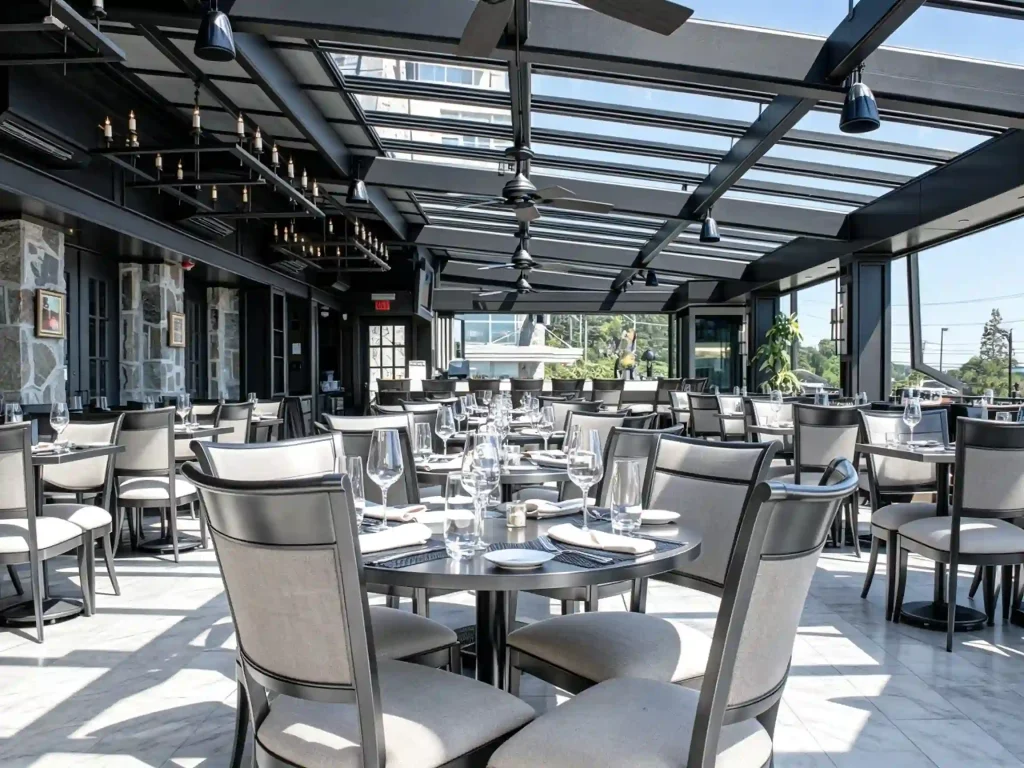
Why Businesses Use Commercial Retractable Roof Systems
Commercial outdoor areas are valuable, but they are often limited by weather. Rain, strong sun, wind or seasonal temperature changes can reduce seating capacity and affect customer experience.
A commercial retractable roof system helps businesses use outdoor areas more consistently.
Businesses use retractable roof systems to:
- Increase usable seating capacity
- Reduce weather-related cancellations
- Improve guest comfort
- Protect furniture and flooring
- Create premium architectural spaces
- Support events and private bookings
- Extend seasonal operation
- Improve rooftop and courtyard usability
- Increase property value
- Strengthen brand experience
For restaurants, a retractable roof can help keep patio tables available even when the weather changes. For hotels, it can turn courtyards and terraces into all-weather guest spaces. For event venues, it can reduce the risk of weather disruption.
Who Uses Commercial Retractable Roof Systems?
1. Hotels and Resorts
Hotels use commercial retractable roof systems to create more flexible guest spaces.
Common hotel applications include:
- Courtyard lounges
- Lobby extensions
- Rooftop bars
- Outdoor restaurants
- Poolside lounges
- Spa waiting areas
- Event terraces
- Garden cafés
- Guest relaxation zones
A hotel retractable roof allows the space to remain bright and open while offering protection from rain or strong sunlight.
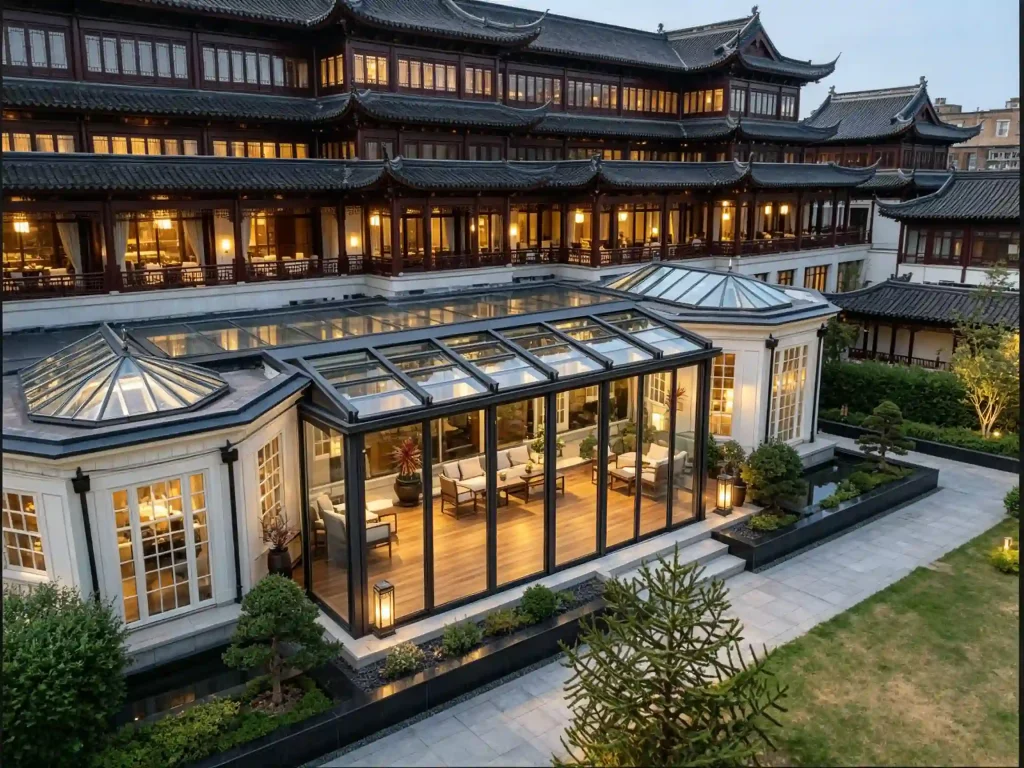
For hotel courtyard projects, Sunrim also provides courtyard glass roof systems and retractable glass roof solutions.
2. Restaurants and Cafés
Restaurants and cafés are among the most common users of commercial retractable roof systems.
A restaurant retractable roof can help:
- Increase outdoor dining capacity
- Protect guests from sudden rain
- Improve lunch and evening dining comfort
- Reduce operational disruption
- Create a premium patio atmosphere
- Support private dining events
- Extend patio usage across seasons
Compared with umbrellas or fabric awnings, a retractable roof system provides stronger structure, better durability and a more professional appearance.
For restaurant-specific planning, see Sunrim’s guide to retractable roof systems for restaurants and cafés.
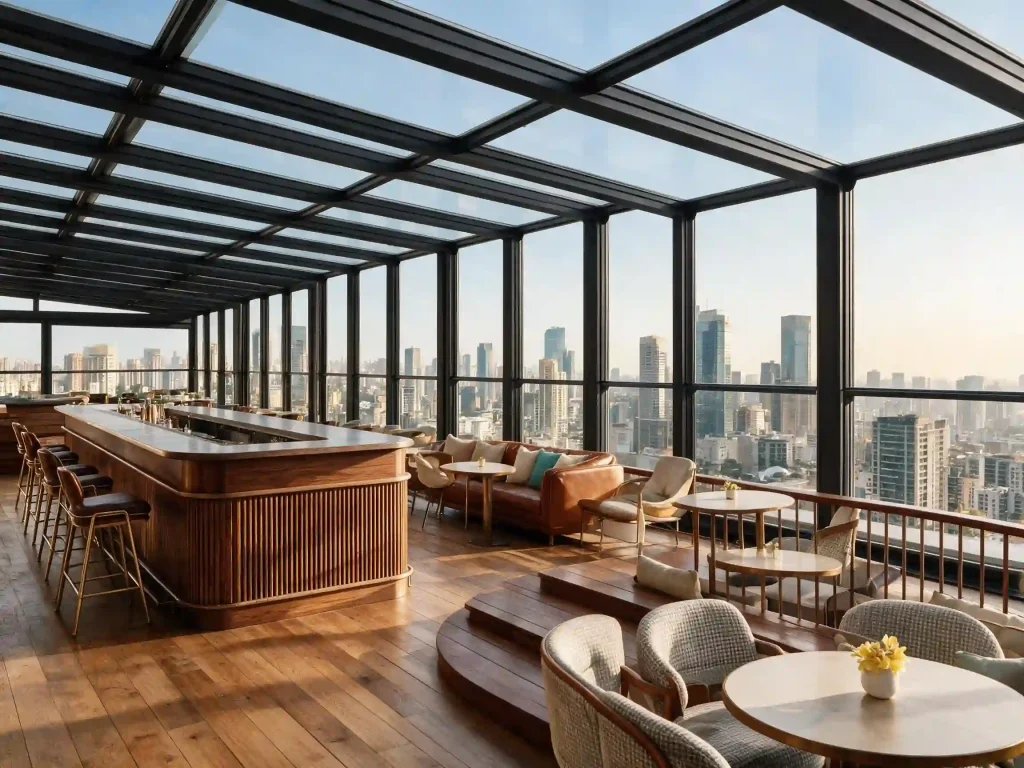
3. Rooftop Bars and Lounges
Rooftop bars face stronger wind exposure, higher structural requirements and more complex drainage conditions.
A commercial retractable roof system can help rooftop venues:
- Stay open in more weather conditions
- Protect guests from rain and sun
- Create a premium hospitality experience
- Improve event reliability
- Increase booking confidence
- Support evening and seasonal operation
Rooftop projects require careful consideration of wind load, anchoring, waterproofing, drainage and installation access.
4. Shopping Centers and Retail Spaces
Shopping centers and commercial complexes often have open courtyards, atriums, terraces or entrance areas that can benefit from retractable roof systems.
Applications include:
- Retail event spaces
- Food courts
- Outdoor dining zones
- Pop-up markets
- Public seating areas
- Seasonal exhibitions
- Entrance canopies
- Commercial atriums
A retractable roof can help make these areas more usable while maintaining natural daylight and an open commercial atmosphere.
5. Event Venues
Event venues need flexibility and reliability. Weather uncertainty can affect weddings, private parties, brand launches, outdoor dining events and corporate gatherings.
A commercial retractable roof can help venues:
- Reduce weather-related event risk
- Improve booking confidence
- Support outdoor and semi-outdoor events
- Protect furniture, lighting and decoration
- Improve guest comfort
- Create flexible event layouts
For event venues, motorized operation is often important because staff need to open or close the roof quickly.
6. Office Buildings and Commercial Courtyards
Commercial office buildings can use retractable roof systems for internal courtyards, staff lounges, visitor areas and outdoor meeting spaces.
A commercial courtyard roof can create:
- Staff relaxation areas
- Covered walkways
- Visitor waiting spaces
- Coffee corners
- Outdoor meeting zones
- Indoor garden spaces
- Multi-use business areas
When the roof is open, users enjoy fresh air and natural ventilation. When closed, the space remains protected from rain or strong sun.
Main Types of Commercial Retractable Roof Systems
Commercial retractable roof systems can be designed in different structures depending on application, span, weather requirements and building conditions.
1. Motorized Sliding Roof System
A motorized sliding roof system uses roof panels that slide along tracks and open or close by electric motors.
It is suitable for:
- Restaurants
- Hotels
- Rooftop terraces
- Commercial patios
- Courtyards
- Event venues
- Outdoor lounges
Motorized sliding roofs are practical for commercial use because staff can operate the system easily with a remote control, wall switch or control panel.
Sunrim provides motorized retractable roof options for residential and commercial projects.
2. Retractable Glass Roof
A retractable glass roof provides a high-end architectural appearance with strong daylight transmission.
It is suitable for:
- Hotel courtyards
- Luxury restaurants
- Commercial atriums
- Resort lounges
- High-end cafés
- Premium rooftop spaces
Glass creates a clear and elegant visual effect, but it is heavier than polycarbonate and requires stronger structural planning.
3. Polycarbonate Retractable Roof
Polycarbonate panels are lighter than glass and offer good impact resistance.
They are suitable for:
- Larger movable roof sections
- Cost-sensitive commercial projects
- Areas requiring lower structural weight
- Poolside commercial spaces
- Restaurants and outdoor terraces
Polycarbonate can be a practical choice when the project needs transparency, lightweight panels and weather resistance.
4. Skylight Retractable Roof
A skylight retractable roof is often used above indoor or semi-indoor spaces where natural light and ventilation are important.
Applications include:
- Atriums
- Courtyards
- Indoor gardens
- Commercial corridors
- Hotel lobbies
- Shopping center spaces
For skylight-type applications, Sunrim offers skylight retractable roof solutions for custom projects.
5. Large-Span Commercial Retractable Roof
Large-span retractable roofs are designed for bigger commercial spaces such as large courtyards, event areas, shopping centers and resort facilities.
These systems may require:
- Stronger aluminum or steel support
- Structural engineering review
- Higher wind and snow load capacity
- Customized track design
- Advanced drainage planning
- Professional installation coordination
Large-span systems usually need more detailed project drawings and technical communication before production.
Key Design Factors for Commercial Projects
Commercial retractable roof systems require more careful planning than small residential patio roofs.
1. Roof Span and Structural Load
The roof span affects frame strength, material selection and system cost.
A large commercial roof may need stronger profiles, additional beams or support columns. The roof must support its own weight, panel weight, wind load and sometimes snow load.
Important dimensions include:
- Roof width
- Roof projection
- Total covered area
- Building height
- Support point locations
- Opening direction
- Column positions
- Installation height
2. Wind and Snow Load Requirements
Local climate is one of the most important design factors.
A project in a windy coastal area needs different structural planning from a courtyard in a mild climate. A project in a snowy region may require stronger frame profiles and roof slope design.
Buyers should provide:
- Project location
- Local wind speed
- Snow load if applicable
- Building height
- Coastal exposure
- Rainfall intensity
- Temperature range
For rooftop projects, wind exposure is especially important.
3. Glass vs Polycarbonate Panels
Panel material affects appearance, weight, cost and structure.
| Factor | Glass Panels | Polycarbonate Panels |
|---|---|---|
| Appearance | Premium and clear | Practical and lightweight |
| Weight | Heavier | Lighter |
| Impact resistance | Depends on glass type | Strong |
| Transparency | Excellent | Good |
| Structure requirement | Higher | Lower |
| Cost | Usually higher | Usually lower |
| Best for | Hotels and high-end commercial spaces | Large movable roofs and cost-sensitive projects |
Glass is often preferred for premium hotels and restaurants. Polycarbonate may be better for larger movable sections or projects where lower weight is important.
4. Drainage and Water Management
Drainage is critical for commercial roof performance.
A retractable roof should consider:
- Roof slope
- Gutter size
- Downpipe position
- Drainage outlet direction
- Track drainage
- Overflow protection
- Sealing details
- Rain intensity
- Maintenance access
Poor drainage can lead to dripping, water stains, leakage and customer complaints.
For hotels and restaurants, drainage should be planned before manufacturing, not after installation.
5. Motorized Control System
Commercial projects usually require motorized operation.
A motorized system may include:
- Electric motors
- Remote control
- Wall switch
- Group control
- Rain sensor
- Wind sensor
- Control panel
- Smart control integration
- Safety limit switches
Motorized operation is especially useful for restaurants, hotels and event venues because staff can respond quickly to weather changes.
6. Sealing and Weather Protection
A commercial retractable roof should reduce rain entry and protect users from uncomfortable weather.
Sealing details may include:
- Rubber seals
- Brush seals
- Panel overlap
- Side flashing
- Wall connection sealing
- Gutter integration
- End closures
The level of weather protection depends on roof type, panel overlap, wind direction and side enclosure conditions.
7. Installation Access
Commercial installation can be complex.
Buyers should consider:
- Crane access
- Delivery route
- Building height
- Rooftop access
- Working hours
- Existing furniture or landscaping
- Nearby glass façades
- Local labor coordination
- Safety restrictions
- Business operating schedule
If the venue is already operating, installation may need to be planned in stages to reduce business disruption.
8. Architectural Integration
A commercial retractable roof should match the building’s design.
Important design details include:
- Frame color
- Panel transparency
- Roof slope
- Column style
- Hidden drainage
- Lighting integration
- Side wall integration
- Existing façade connection
- Interior design style
A well-integrated roof system can improve the overall brand impression of the venue.
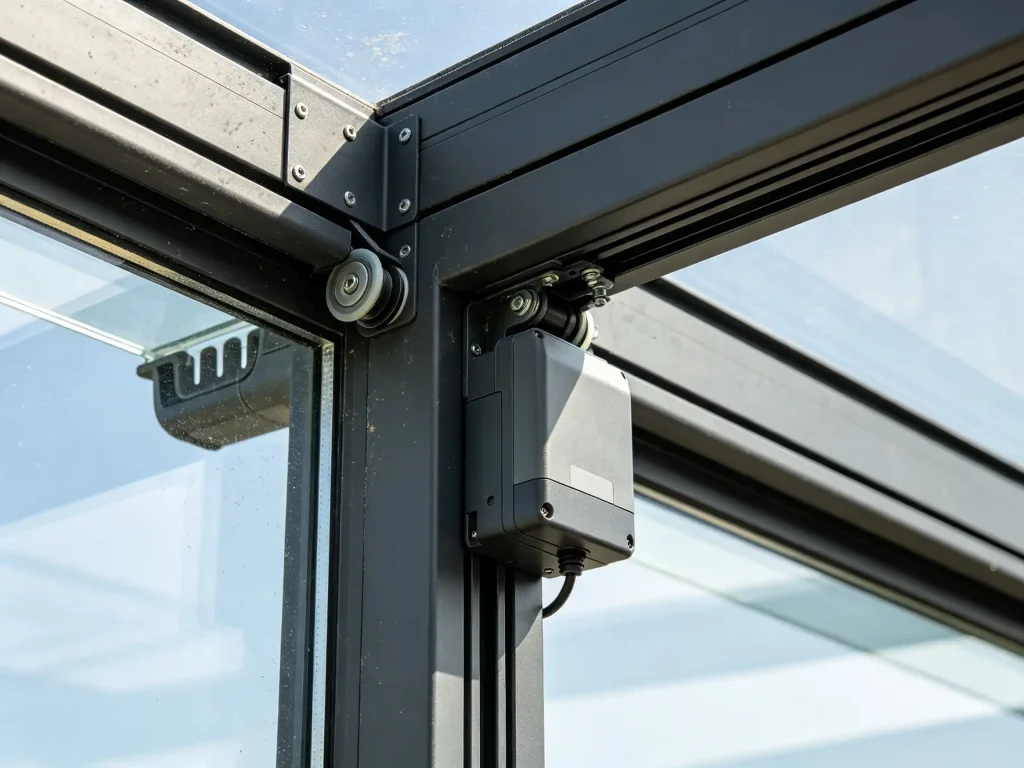
Commercial Retractable Roof vs Awning vs Pergola
Many businesses first consider fabric awnings, umbrellas or pergolas. These may be suitable for basic shade, but they usually provide limited protection compared with commercial retractable roof systems.
| Feature | Commercial Retractable Roof | Fabric Awning | Pergola | Umbrella |
|---|---|---|---|---|
| Weather protection | Strong | Limited | Medium | Low |
| Wind resistance | Higher | Lower | Medium | Low |
| Commercial durability | High | Medium | Medium | Low |
| Appearance | Premium architectural | Basic | Decorative | Temporary |
| Motorized operation | Available | Sometimes | Sometimes | No |
| Rain protection | Better | Limited | Depends on cover | Poor |
| Large-span use | Suitable | Limited | Limited | Not suitable |
| ROI for business | High | Medium | Medium | Low |
For serious commercial outdoor spaces, a retractable roof system is usually a stronger long-term investment.
Cost Factors for Commercial Retractable Roof Systems
Commercial retractable roof cost depends on multiple factors.
Main cost factors include:
- Total roof area
- Roof span
- Structural frame specification
- Glass or polycarbonate panels
- Manual or motorized operation
- Number of movable sections
- Wind and snow load requirements
- Drainage and gutter design
- Custom color or finish
- Side enclosure options
- Installation access
- Shipping and packaging
- Project location
- Technical drawing requirements
A small restaurant patio roof will cost less than a large hotel courtyard or rooftop venue system.
To receive a more accurate quotation, buyers should provide drawings, dimensions, site photos and climate requirements.
What Information Should Buyers Prepare?
Before requesting a quote, prepare the following information:
- Project location
- Building type
- Application area
- Roof length and projection
- Site photos and videos
- Building drawings if available
- Wall or column connection details
- Preferred fixed or retractable design
- Glass or polycarbonate preference
- Manual or motorized operation preference
- Local wind and snow load requirements
- Drainage conditions
- Frame color preference
- Installation access
- Project timeline
- Budget range if available
Clear information helps the manufacturer recommend a practical system and avoid design misunderstandings.
Common Mistakes to Avoid
1. Choosing a Temporary Product for a Permanent Business Need
Umbrellas and simple awnings may look affordable at first, but they often cannot provide strong long-term protection for commercial use.
2. Ignoring Structural Load
Commercial roofs need proper structural planning. Span, wind load, snow load and building connection details must be considered.
3. Underestimating Drainage
Drainage problems can create serious customer complaints in restaurants, hotels and event spaces.
4. Choosing Materials Only by Price
Low-cost materials may reduce initial investment but increase maintenance, replacement and operational problems later.
5. Forgetting Staff Operation
A commercial roof should be easy for trained staff to operate. Motorized control is usually better for large or frequently used spaces.
6. Not Planning Installation Around Business Hours
For operating hotels and restaurants, installation timing should reduce disruption to customers and daily business.
How Sunrim Supports Commercial Retractable Roof Projects
Sunrim designs and manufactures custom commercial retractable roof systems for hotels, restaurants, cafés, resorts, rooftop bars, courtyards, shopping centers and event venues.
Sunrim can support commercial projects with:
- Project requirement analysis
- Site measurement guidance
- Custom retractable roof design
- Aluminum frame engineering
- Glass or polycarbonate panel selection
- Motorized control system options
- Drainage and sealing suggestions
- Frame color customization
- Technical drawings
- Manufacturing and export
- Installation guidance
- Global project support
Sunrim systems are designed for commercial spaces that need weather protection, open-air flexibility and long-term architectural value.
For standard roof applications, you can also explore Sunrim retractable roof systems and motorized sliding roof system options.
Conclusion: A Commercial Retractable Roof Is a Long-Term Business Asset
A commercial retractable roof system can help businesses turn outdoor spaces into reliable, flexible and revenue-generating areas.
For hotels, restaurants, cafés, rooftop bars, shopping centers and event venues, a retractable roof can improve guest comfort, reduce weather risk, increase usable days and strengthen the property’s visual value.
The right system depends on roof span, material, wind and snow load, drainage, motorized control, installation access and architectural integration.
Compared with awnings, umbrellas or basic pergolas, a commercial retractable roof offers better durability, stronger protection and higher long-term value.
Sunrim provides custom commercial retractable roof systems for global hospitality and commercial projects.
Start Your Commercial Retractable Roof Project
Planning a retractable roof for a hotel, restaurant, rooftop bar, courtyard, shopping center or event venue?
Contact Sunrim and send your project location, dimensions, site photos, local climate conditions and design requirements. Our team can help recommend a suitable commercial retractable roof system for your project.
FAQ About Commercial Retractable Roof Systems
What is a commercial retractable roof system?
A commercial retractable roof system is a sliding or motorized roof structure designed for hotels, restaurants, cafés, courtyards, rooftop bars, shopping centers and event venues. It provides flexible weather protection while keeping the space open when needed.
Where are commercial retractable roofs used?
They are commonly used in hotel courtyards, restaurant patios, rooftop bars, resort lounges, shopping center terraces, event venues, commercial atriums and outdoor dining areas.
Are commercial retractable roof systems motorized?
Most commercial retractable roof systems are motorized because businesses need fast and convenient operation. They can be controlled by remote control, wall switch, control panel or optional sensors.
Are retractable roofs better than awnings for restaurants?
Yes. Retractable roofs usually provide stronger structure, better weather protection, longer durability and a more premium appearance compared with fabric awnings or umbrellas.
What materials are used for commercial retractable roofs?
Common materials include aluminum or steel support frames, glass or polycarbonate panels, sliding tracks, rollers, motors, seals, gutters and drainage components.
How much does a commercial retractable roof cost?
The cost depends on roof size, span, material, frame strength, motorized system, drainage design, wind and snow load requirements, customization, shipping and installation access.
Can a retractable roof be used for hotel courtyards?
Yes. Hotels often use retractable roof systems for courtyards, rooftop lounges, outdoor restaurants, poolside areas and event terraces.
What information is needed for a quotation?
Useful information includes project location, dimensions, site photos, building drawings, application type, material preference, motorized requirement, local climate conditions, drainage needs and installation access.
Does Sunrim provide custom commercial retractable roof systems?
Yes. Sunrim designs and manufactures custom commercial retractable roof systems for hotels, restaurants, resorts, shopping centers, rooftop bars and event venues worldwide.


