

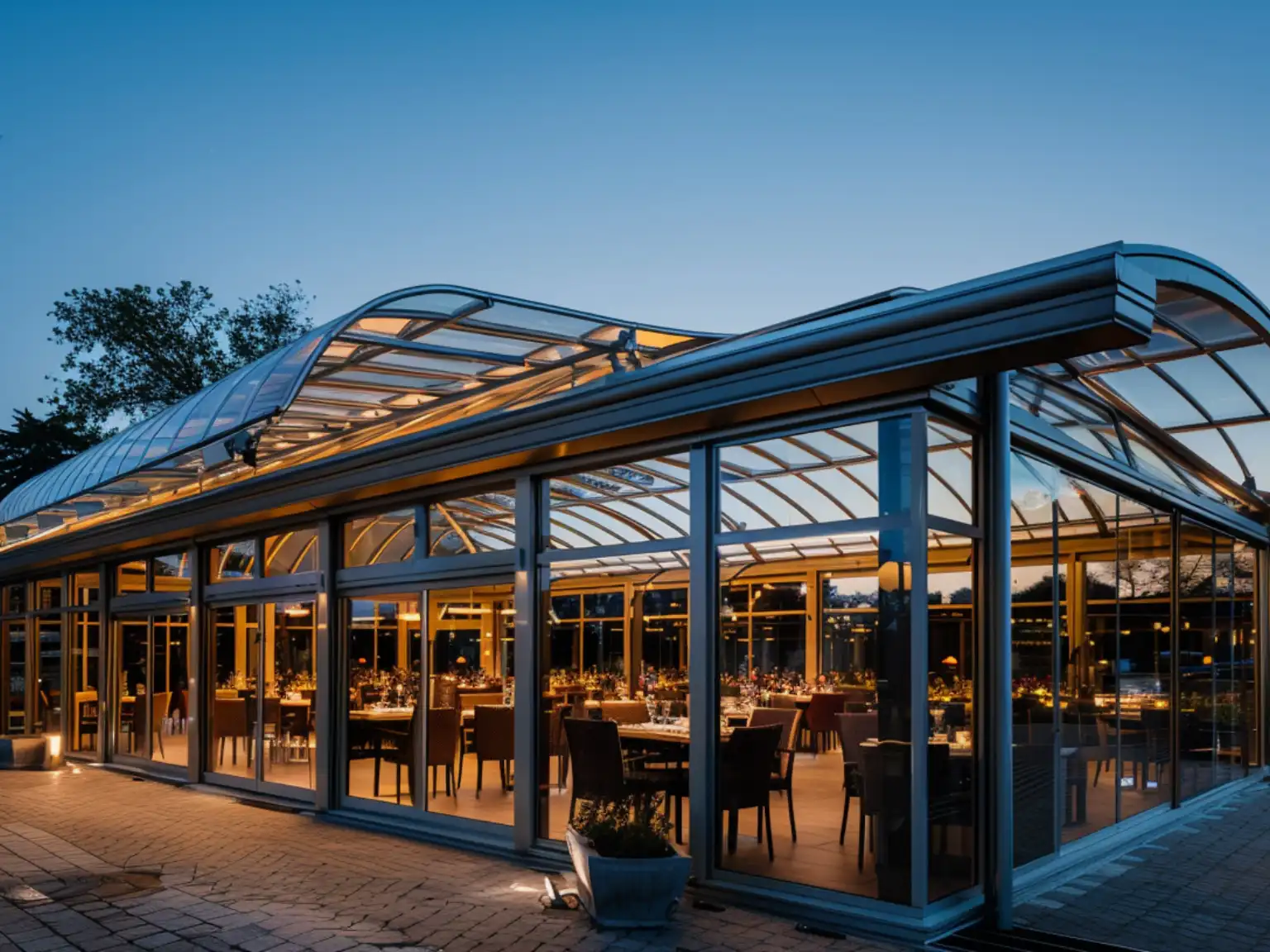
Retractable Sunroom vs Fixed Glass House: Which Is Better for Commercial Outdoor Spaces?
Commercial outdoor spaces are becoming more important for restaurants, hotels, resorts, scenic areas, cafés and public facilities. A well-designed outdoor area can increase usable space, improve customer experience and create more business value.
When planning an outdoor enclosure, many project owners compare two common options: a retractable sunroom and a fixed glass house.
Both solutions can provide weather protection and a bright indoor-outdoor environment. However, they are very different in flexibility, structure, user experience, cost and long-term commercial value.
This guide compares retractable sunrooms and fixed glass houses to help you choose the right solution for your commercial outdoor space.
Quick Answer: Which One Is Better?
A fixed glass house is suitable for projects that need a permanent enclosed space with stable indoor comfort.
A retractable sunroom is usually better for commercial outdoor spaces that need flexibility, natural ventilation, seasonal adaptability and an open-air experience when weather conditions are good.
For restaurants, scenic dining areas, hotel terraces, pool areas and commercial leisure spaces, a retractable sunroom often provides stronger long-term value because it can open, close or partially retract based on weather and business needs.
What Is a Fixed Glass House?
A fixed glass house is a permanent structure built with glass panels and a supporting frame. It is usually designed to create a bright enclosed space that protects users from wind, rain and cold weather.
Fixed glass houses are commonly used for:
- Garden rooms
- Indoor dining extensions
- Hotel lounges
- Commercial reception areas
- Residential sunrooms
- Greenhouse-style spaces
The main advantage of a fixed glass house is stability. Once built, it functions like a permanent room. It can provide strong enclosure performance and a consistent indoor environment.
However, because the structure is fixed, it cannot open or retract. This may limit ventilation, reduce outdoor feeling and make the space less flexible in different seasons.
What Is a Retractable Sunroom?
A retractable sunroom is a movable enclosure system built with aluminum frames and transparent panels such as glass or polycarbonate. Depending on the design, the structure can slide, retract, telescope or partially open.
Unlike a fixed glass house, a retractable sunroom gives users the option to switch between enclosed protection and open-air space.
When the weather is rainy, windy or cold, the system can be closed to protect the area. When the weather is pleasant, it can be opened to allow fresh air, sunlight and a more natural outdoor experience.
Retractable sunrooms are commonly used for:
- Outdoor restaurants
- Scenic area dining spaces
- Hotel terraces
- Pool enclosures
- Resort leisure areas
- Commercial courtyards
- Rooftop spaces
- Public walkways
- Café outdoor seating areas
For commercial projects, this flexibility can make outdoor spaces more useful and more profitable.
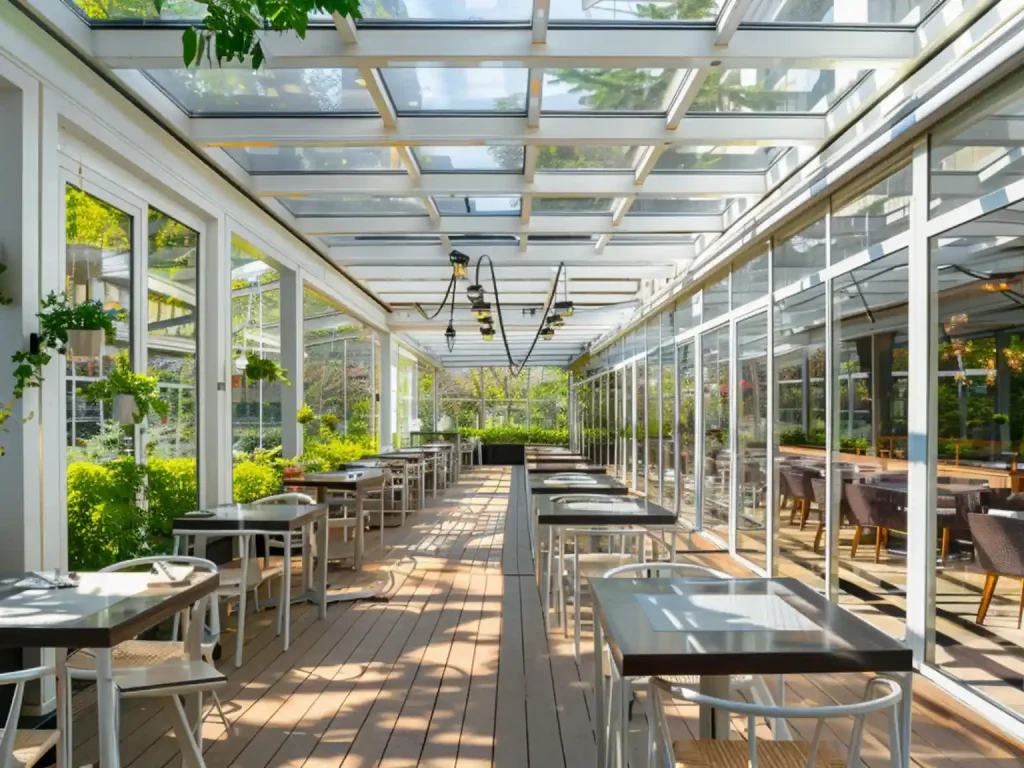
Retractable Sunroom vs Fixed Glass House: Quick Comparison
| Feature | Fixed Glass House | Retractable Sunroom |
|---|---|---|
| Structure | Permanent enclosed structure | Movable aluminum and glass or polycarbonate structure |
| Flexibility | Cannot open or retract | Can slide, retract or partially open |
| Outdoor feeling | Limited once enclosed | Stronger open-air experience when opened |
| Ventilation | Depends on windows or doors | Large opening area possible |
| Weather protection | Strong fixed protection | Flexible protection based on weather |
| Seasonal use | Stable but less adaptable | More adaptable in different seasons |
| Commercial value | Good for permanent indoor extension | Better for flexible commercial outdoor space |
| Best for | Permanent rooms and enclosed lounges | Restaurants, scenic areas, hotels, pools and leisure spaces |
| Design impression | Solid and permanent | Modern, dynamic and flexible |
| Long-term usability | Stable but fixed | High usability due to open-close function |
1. Flexibility and Space Control
The biggest difference between a retractable sunroom and a fixed glass house is flexibility.
A fixed glass house creates a permanent enclosed space. This can be useful when the project needs a room-like environment. However, once the structure is built, the space always feels enclosed.
A retractable sunroom gives commercial operators more control. The system can be closed during rain, wind or cold weather and opened when fresh air or sunlight is desired.
This is especially valuable for restaurants and hotels because guest preferences can change throughout the day. Some customers prefer open-air dining during good weather, while others need protection from wind or rain.
With a retractable sunroom, the same space can serve different needs.
2. Guest Experience and Atmosphere
For commercial outdoor spaces, atmosphere matters.
A fixed glass house can create a bright and protected environment, but it may feel more like an indoor room. This can reduce the outdoor dining or leisure experience.
A retractable sunroom keeps the outdoor feeling alive. When opened, guests can enjoy fresh air, natural sunlight and views of the surrounding landscape. When closed, they still remain protected from weather.
This balance is important for:
- Scenic restaurants
- Resort terraces
- Hotel cafés
- Poolside lounges
- Rooftop dining areas
- Garden restaurants
For businesses that rely on experience and atmosphere, a retractable sunroom can provide a more attractive environment.
3. Weather Protection
Both fixed glass houses and retractable sunrooms can provide weather protection, but they do it in different ways.
A fixed glass house offers permanent protection. It can shield the space from rain, wind and cold weather at all times. This is useful when the goal is to create a fully enclosed indoor extension.
A retractable sunroom provides adjustable protection. It can close when weather conditions are poor and open when the weather is comfortable.
For commercial projects, adjustable protection can be more practical. Instead of forcing the space to remain enclosed all the time, the system can adapt to actual weather and business needs.
With proper sealing, drainage and structural design, a retractable sunroom can protect outdoor spaces from rain, wind, dust and seasonal changes.
4. Ventilation and Natural Comfort
Ventilation is another important difference.
A fixed glass house usually relies on windows, doors or mechanical ventilation. In warm seasons, the enclosed glass space may become hot if shading or cooling is not properly designed.
A retractable sunroom can create a much larger opening area. By sliding or retracting the structure, the space can receive natural airflow and reduce the feeling of heat buildup.
This is especially useful for:
- Outdoor dining areas
- Pool enclosures
- Scenic leisure spaces
- Commercial courtyards
- Garden cafés
Natural ventilation can improve comfort and reduce the need for constant mechanical cooling.
5. Seasonal Adaptability
Commercial spaces often need to adapt to different seasons.
In spring and autumn, operators may want an open-air environment. In summer, they may need shade and ventilation. In winter or rainy seasons, they may need better enclosure and protection.
A fixed glass house provides the same space condition all year. This can be stable, but not always ideal.
A retractable sunroom offers more seasonal flexibility. The structure can be opened during mild weather and closed during colder or rainy periods. When combined with side panels, lighting, heating or ventilation, it can help extend the usable season of an outdoor space.
For restaurants, hotels and scenic areas, this adaptability can improve space utilization and commercial value.
6. Structural Design and Materials
Both systems require careful material selection.
A fixed glass house usually uses a fixed frame structure with glass panels. It may require stronger foundation, permanent connection to the building and more building-like construction.
A retractable sunroom uses aluminum frames, sliding tracks, transparent panels, sealing systems and motorized or manual movement mechanisms.
Common materials for retractable sunrooms include:
- Aluminum alloy frames
- Tempered glass
- Laminated glass
- Polycarbonate panels
- Stainless steel hardware
- Sealing strips
- Sliding track systems
- Motorized drive systems
Aluminum is often preferred because it is strong, lightweight and corrosion-resistant. Glass provides a premium transparent appearance, while polycarbonate can reduce weight and improve impact resistance.
The right material choice depends on span, climate, budget, design style and safety requirements.
7. Installation and Site Conditions
A fixed glass house usually requires more permanent construction. It may involve foundation work, structural connection, building permits and integration with existing walls, floors and utilities.
A retractable sunroom also needs proper site evaluation, but it can often be designed as a modular system. Depending on the project, it may be installed on tracks or supported by aluminum structures.
Important site factors include:
- Ground flatness
- Drainage direction
- Available support points
- Building wall height
- Wind load requirements
- Snow load requirements
- Access for installation
- Electrical supply for motorized systems
- Local regulations
For irregular sites, a custom retractable sunroom may be more suitable than a standard fixed glass structure.
8. Cost and Long-Term Value
A fixed glass house may have a lower or higher cost depending on size, materials and construction requirements. It can be a good choice when the project needs a permanent room.
A retractable sunroom may require additional investment because it includes sliding mechanisms, motorized systems, tracks, sealing and custom engineering.
However, commercial projects should not evaluate cost only by initial price.
A retractable sunroom can create long-term value by:
- Increasing usable outdoor days
- Improving customer comfort
- Supporting open-air and enclosed use
- Reducing weather-related downtime
- Improving visual appeal
- Supporting seasonal operation
- Creating a more flexible commercial space
For restaurants, scenic areas, hotels and resorts, flexibility can directly affect revenue and customer experience.
9. Maintenance Requirements
A fixed glass house mainly requires glass cleaning, frame inspection, sealing maintenance and general building maintenance.
A retractable sunroom requires similar maintenance, plus inspection of tracks, moving parts, motors and drainage channels.
Regular maintenance may include:
- Cleaning glass or polycarbonate panels
- Checking sliding tracks
- Inspecting seals
- Cleaning drainage channels
- Checking fasteners
- Inspecting motors and control systems
- Removing leaves, dust or debris
A high-quality retractable sunroom should be designed for easy inspection and maintenance. For commercial projects, reliable after-sales support and spare parts availability are important.
10. Which Option Is Better for Restaurants?
For restaurants, a retractable sunroom is often the better choice.
A fixed glass house can create a permanent enclosed dining area, but it may reduce the outdoor dining experience. Guests may feel that they are sitting in an indoor room rather than enjoying an outdoor space.
A retractable sunroom allows restaurants to adjust the environment based on weather, time of day and customer preference.
It can help restaurants:
- Use outdoor seating more often
- Provide open-air dining when weather is good
- Protect guests during rain or wind
- Improve comfort in different seasons
- Create a more premium dining atmosphere
- Reduce weather-related cancellations
For outdoor restaurants, scenic dining spaces and hotel cafés, this flexibility is a major advantage.
11. Which Option Is Better for Hotels and Resorts?
Hotels and resorts often need outdoor spaces that are attractive, comfortable and flexible.
A fixed glass house can work well for a lounge or permanent indoor extension. However, for terraces, poolside areas and leisure spaces, a retractable sunroom may offer a better balance between protection and openness.
Guests at hotels and resorts often value views, fresh air and outdoor atmosphere. A retractable sunroom helps preserve these qualities while providing protection when needed.
This makes it suitable for:
- Hotel terraces
- Resort restaurants
- Poolside lounges
- Garden cafés
- Spa leisure areas
- Event spaces
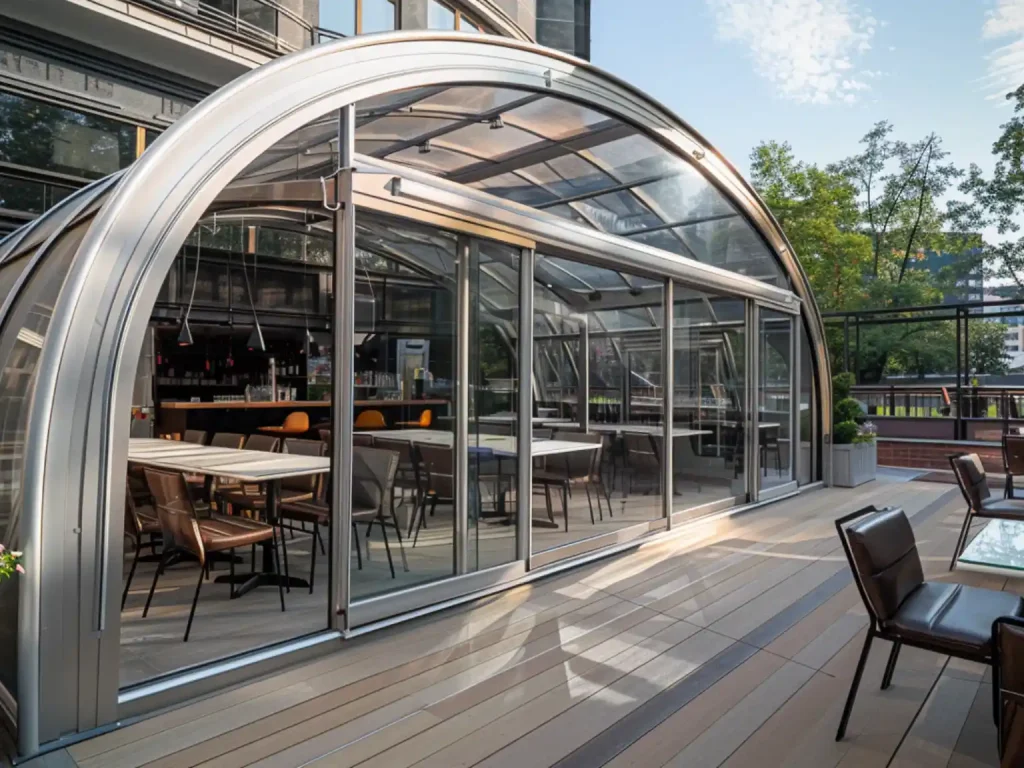
12. Which Option Is Better for Scenic Areas?
Scenic areas often need structures that protect visitors without blocking the surrounding view.
A fixed glass house may provide protection, but it can feel too permanent or heavy in some natural environments.
A retractable sunroom can be designed with transparent panels and an opening structure, allowing visitors to enjoy the landscape more naturally.
For scenic restaurants, tourist rest areas and leisure facilities, retractable sunrooms can help create a comfortable space while keeping a strong connection with nature.
When Should You Choose a Fixed Glass House?
A fixed glass house may be suitable if:
- You need a permanent enclosed room
- You want stable indoor-like comfort
- The space does not need to open widely
- Ventilation can be managed with windows or HVAC
- The project is more like a building extension
- Flexibility is not a major requirement
Fixed glass houses are useful for projects that need permanence and continuous enclosure.
When Should You Choose a Retractable Sunroom?
A retractable sunroom is usually the better choice if:
- You want both open-air and enclosed use
- Outdoor experience is important
- The space is affected by changing weather
- You need seasonal flexibility
- The project is for a restaurant, hotel, resort or scenic area
- Natural ventilation is important
- You want a modern and dynamic architectural solution
- You need a custom commercial enclosure system
For commercial outdoor spaces, the ability to open and close the structure can greatly improve usability and long-term value.
Common Mistakes to Avoid
When choosing between a retractable sunroom and a fixed glass house, avoid these mistakes:
- Choosing only based on initial cost
- Ignoring ventilation requirements
- Forgetting drainage design
- Overlooking wind and snow load
- Using residential-grade systems for commercial projects
- Choosing a fixed structure when flexibility is needed
- Choosing a movable system without proper site evaluation
- Ignoring maintenance and after-sales support
- Not matching the structure with the surrounding architecture
A successful project should consider both function and long-term operation.
Conclusion
Both retractable sunrooms and fixed glass houses can create comfortable and protected commercial outdoor spaces. However, they serve different needs.
A fixed glass house is suitable for permanent enclosed spaces that require stable indoor-like conditions.
A retractable sunroom is better for projects that need flexibility, natural ventilation, seasonal adaptability and a stronger outdoor experience.
For restaurants, hotels, resorts, scenic areas, pool areas and commercial leisure spaces, a retractable sunroom can provide a more dynamic and valuable solution. It allows the space to open when the weather is pleasant and close when protection is needed.
By choosing the right system, project owners can transform outdoor areas into flexible, comfortable and commercially valuable spaces.
Need a Custom Retractable Sunroom System?
Sunrim designs and manufactures custom retractable sunroom systems, opening roof systems and commercial movable enclosures for restaurants, hotels, resorts, scenic areas, pool areas and public facilities.
Our systems combine aluminum structures, transparent glass or polycarbonate panels, sliding or retractable movement and project-based customization to create flexible indoor-outdoor spaces.
Contact Sunrim to discuss your project size, site conditions, climate requirements and design goals.
Request a custom retractable sunroom solution today.
FAQ About Retractable Sunrooms and Fixed Glass Houses
What is the main difference between a retractable sunroom and a fixed glass house?
A fixed glass house is a permanent enclosed structure, while a retractable sunroom can slide, retract or open to create a flexible indoor-outdoor space.
Is a retractable sunroom suitable for restaurants?
Yes. Retractable sunrooms are suitable for restaurants because they provide weather protection while allowing open-air dining when weather conditions are good.
Is a fixed glass house cheaper than a retractable sunroom?
It depends on the size, materials and construction requirements. A fixed glass house may be simpler in some cases, while a retractable sunroom includes moving parts, tracks and optional motorized systems.
Can a retractable sunroom protect against rain and wind?
Yes. A properly designed retractable sunroom can protect against rain and wind. Performance depends on structure, sealing, drainage and local weather conditions.
What materials are used in retractable sunrooms?
Common materials include aluminum frames, tempered glass, laminated glass, polycarbonate panels, stainless steel hardware, sealing strips and sliding track systems.
Can retractable sunrooms be motorized?
Yes. Many commercial retractable sunrooms can be motorized and controlled by remote control, wall switch or smart control systems.
Which is better for hotels and resorts?
For terraces, poolside spaces and outdoor leisure areas, retractable sunrooms usually offer better flexibility. For permanent lounges or indoor extensions, fixed glass houses may also be suitable.
Can a retractable sunroom be customized?
Yes. Retractable sunrooms can be customized based on project size, site layout, climate, materials, opening method, color and design style.


