



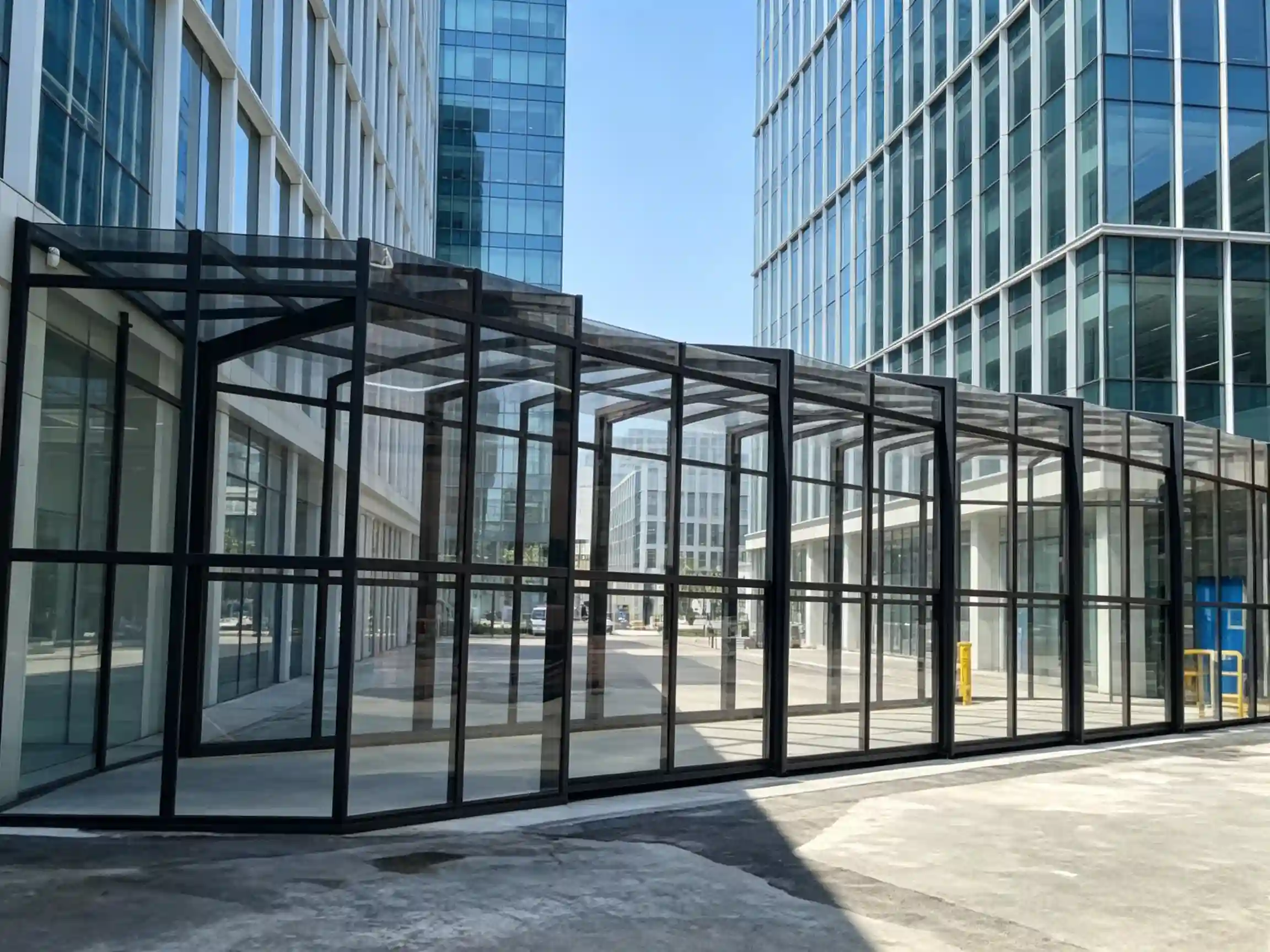
Retractable Walkway Systems: Weatherproof Corridor Solutions for Industrial, Commercial and Public Buildings
A retractable walkway is a flexible weatherproof corridor system designed to protect people, goods and equipment while allowing outdoor spaces to remain open when full enclosure is not required.
Unlike a fixed canopy or permanent corridor, a retractable walkway can open or close depending on weather conditions, pedestrian traffic, vehicle access and operational needs. This makes it suitable for factories, warehouses, loading areas, office buildings, hotels, schools, hospitals and public facilities.
For industrial sites, retractable walkway systems can connect factory buildings, production workshops, warehouses and loading zones. For commercial and public buildings, they can create comfortable pedestrian routes between entrances, parking areas, lobbies, courtyards and adjacent buildings.
Sunrim designs and manufactures custom retractable walkway systems, industrial retractable walkway systems, office building retractable weatherproof walkways and commercial corridor canopy solutions for global projects.
This guide explains how retractable walkways work, where they are used, what benefits they provide and how to choose the right system for industrial, commercial and public building applications.
Quick Answer: What Is a Retractable Walkway?
A retractable walkway is a movable corridor canopy or enclosure that can extend to provide weather protection and retract when open access is needed. It is commonly used to protect pedestrian routes, factory corridors, loading zones, office building entrances and public building connections from rain, wind, sunlight, snow and dust.
A retractable walkway system usually includes an aluminum frame, roof panels, sliding or retractable modules, track system, drainage design and manual or motorized operation.
For commercial buildings and public spaces, Sunrim provides office building retractable walkway solutions for entrances, parking connections, campuses, hotels, schools, hospitals and public facilities.
For factories and logistics sites, Sunrim provides sistemas industriales de pasarelas retráctiles for factory corridors, warehouse connections, production facilities and loading areas.
Why Retractable Walkways Are Becoming Popular
Outdoor passageways are common in factories, campuses, hotels, hospitals, schools and commercial complexes. However, open walkways can become uncomfortable or unsafe during rain, wind, intense sunlight or snow.
Traditional fixed corridor canopies provide weather protection, but they permanently occupy space and may limit ventilation, vehicle access, equipment movement or architectural openness.
A retractable walkway solves this problem by combining weather protection with operational flexibility.
When extended, it creates a protected covered walkway.
When retracted, it opens the space for ventilation, vehicle movement, equipment access or open-air use.
This flexibility makes retractable walkway systems valuable for both industrial and commercial environments.
Main Benefits of a Retractable Walkway
1. Flexible Weather Protection
A retractable walkway can protect pedestrians, workers, visitors, goods and equipment from changing weather conditions.
It can help reduce exposure to:
- Lluvia
- Viento
- Nieve
- Strong sunlight
- Polvo
- Falling leaves
- Harsh outdoor conditions
This is especially useful in facilities where people or materials need to move between buildings every day.
2. Open or Covered Space When Needed
The key advantage of a retractable walkway is flexibility.
A fixed canopy is always closed.
An open walkway provides no weather protection.
A retractable walkway provides both options.
It can be closed during rain or strong sunlight and opened during mild weather, maintenance work or vehicle access.
3. Improved Pedestrian Comfort
For office buildings, schools, hospitals, hotels and public facilities, a weatherproof walkway improves pedestrian comfort.
People can move between:
- Entrances
- Parking areas
- Lobbies
- Adjacent buildings
- Courtyards
- Outdoor plazas
- Drop-off zones
- Campus buildings
without being directly exposed to rain, wind or strong sunlight.
4. Better Industrial Safety
In factories and logistics centers, wet outdoor walkways can increase slip risks and affect workplace safety.
An industrial retractable walkway can help create a more controlled passage between:
- Workshops
- Warehouses
- Production buildings
- Loading docks
- Equipment rooms
- Áreas de transferencia de materiales
- Office blocks
- Maintenance zones
By reducing rain exposure and improving circulation, the system can support safer movement across industrial sites.
5. Protection for Goods and Equipment
Industrial facilities often need to move goods, materials, tools or equipment between separate buildings.
A retractable corridor enclosure can help protect these items from rain, sunlight and dust during transfer.
Esto resulta especialmente útil para:
- Manufacturing plants
- Warehouses
- Logistics centers
- Assembly facilities
- Packaging areas
- Loading docks
- Storage zones
6. Modern Architectural Appearance
For commercial buildings, appearance matters.
A retractable walkway with aluminum frames and transparent roof panels can create a clean and modern architectural look. It can match glass façades, office towers, hotels, schools and public buildings better than temporary fabric covers or simple metal awnings.
7. Space-Saving Design
A retractable walkway can be opened when protection is not required. This helps preserve visual openness, vehicle clearance and outdoor space flexibility.
This is important for:
- Factory yards
- Loading areas
- Commercial plazas
- Campus courtyards
- Hotel drop-off areas
- Office entrances
- Vías de acceso a edificios públicos
Common Applications of Retractable Walkway Systems
Retractable walkway systems can be used in many industrial, commercial and public environments. The right design depends on the site layout, walkway length, width, height, weather conditions and daily usage requirements.
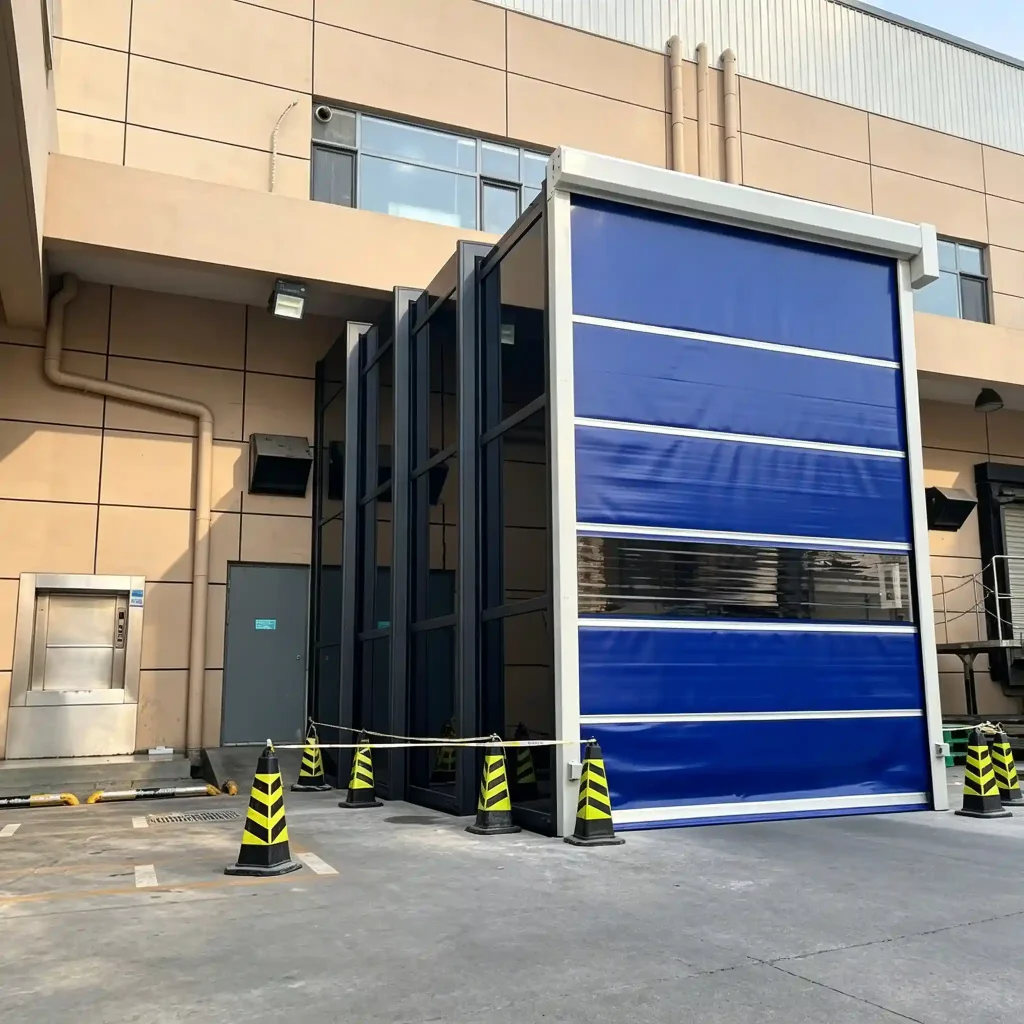
1. Industrial Retractable Walkway Between Factory Buildings
One of the most common uses of a retractable walkway is to connect separate factory buildings.
In many industrial parks, production workshops, warehouses and office blocks are located in different buildings. Workers, materials and equipment need to move between them frequently.
An industrial retractable walkway can create a covered passage between:
- Factory buildings
- Production workshops
- Warehouses
- Office blocks
- Equipment rooms
- Quality inspection areas
- Maintenance buildings
- Storage facilities
When closed, the walkway provides weather protection.
When opened, it allows ventilation, wider access and easier movement for vehicles or equipment.
For factory and warehouse projects, Sunrim’s sistema industrial de pasarelas retráctiles is designed for factories, warehouses, logistics centers and production facilities that require safe, flexible and weather-protected building connections.
2. Loading Dock Retractable Walkway and Weatherproof Passage
Loading areas are often exposed to rain, wind and sunlight. This can affect goods, workers, packaging materials and loading efficiency.
A loading dock retractable walkway can provide temporary or flexible weather protection for loading and unloading operations.
It may be used for:
- Truck loading zones
- Warehouse entrances
- Material transfer routes
- Goods receiving areas
- Logistics passages
- Distribution centers
- Loading platform connections
- Factory shipping areas
Compared with a permanent fixed canopy, a retractable walkway can be opened when large vehicles, forklifts or equipment need more clearance.
This is especially useful for industrial sites where daily operations require both protection and access flexibility.
3. Industrial Corridor Enclosure for Warehouses and Logistics Centers
Warehouses and logistics centers often require fast movement of goods between buildings and loading areas.
A retractable corridor enclosure can help protect workers and goods while maintaining efficient circulation.
Entre las aplicaciones típicas se incluyen:
- Warehouse-to-warehouse connections
- Warehouse-to-workshop walkways
- Logistics center covered corridors
- Packaging area connections
- Cold storage access routes
- Distribution facility walkways
- Outdoor material transfer passages
For detailed application scenarios, see Sunrim’s industrial retractable walkway system application page.
4. Office Building Retractable Walkway
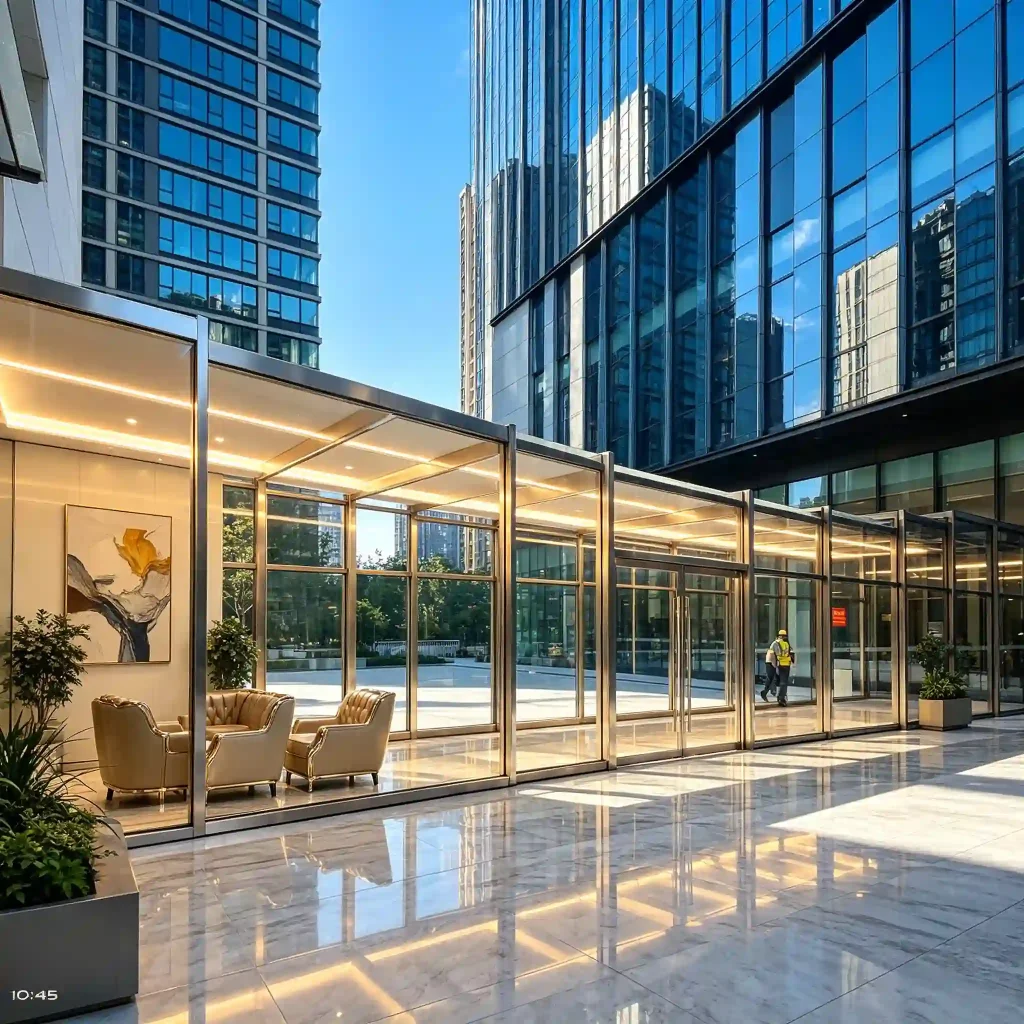
Office buildings and business parks often require covered pedestrian routes between entrances, parking areas, towers, lobbies and landscaped courtyards.
An office building retractable walkway provides flexible weather protection while maintaining a modern appearance.
Es adecuado para:
- Office entrances
- Conexiones entre el área de estacionamiento y el vestíbulo
- Pasarelas entre torres de oficinas
- Business park pedestrian routes
- Corporate campus corridors
- Commercial plaza walkways
- Courtyard passages
- Drop-off area canopies
When extended, the system protects employees, visitors and clients from rain, wind and sunlight. When retracted, it keeps the outdoor environment open and visually clean.
For office and commercial projects, Sunrim provides pasarela retráctil resistente a la intemperie para un edificio de oficinas systems with aluminum frames, transparent roof panels and motorized operation options.
5. Hotel Retractable Walkway and Guest Corridor Canopy
Hotels often need elegant weather-protected walkways between different guest areas.
A retractable walkway can be used to connect:
- Hotel entrances
- Drop-off areas
- Parking zones
- Lobby entrances
- Outdoor restaurants
- Courtyards
- Event halls
- Pool areas
- Spa buildings
- Resort villas
For hotels and resorts, the system should provide both function and appearance. Transparent panels, clean aluminum frames and quiet motorized operation can help create a comfortable guest experience.
A retractable walkway is especially useful for resorts where buildings are spread across outdoor areas and guests need protected routes during rain or strong sunlight.
6. School and Campus Retractable Walkway
Schools, universities and campuses often have multiple buildings connected by outdoor paths.
A retractable walkway can protect students, teachers and visitors while moving between:
- Classrooms
- Libraries
- Dormitories
- Dining halls
- Sports facilities
- Administration buildings
- Lecture halls
- Parking areas
For educational facilities, walkway safety, drainage, visibility and durability are important. A retractable weatherproof walkway can help improve daily movement during rainy seasons or strong sun exposure.
7. Hospital and Healthcare Facility Retractable Walkway
Hospitals and healthcare facilities often require protected pedestrian routes for patients, visitors, staff and service circulation.
A retractable walkway can be used between:
- Hospital entrances
- Outpatient buildings
- Emergency access areas
- Parking areas
- Medical office buildings
- Rehabilitation centers
- Service corridors
- Ambulance drop-off zones
Weather protection is important in healthcare environments because patients and elderly visitors may be more sensitive to rain, wind or heat.
A motorized retractable walkway can provide protection when needed while preserving access and open space when not in use.
8. Public Building and Municipal Facility Walkway Canopy
Public buildings such as libraries, museums, exhibition centers, transportation facilities and municipal offices may require weather-protected outdoor circulation.
Retractable walkway systems can be used for:
- Public building entrances
- Civic center corridors
- Museum access routes
- Exhibition venue walkways
- Transportation facility connections
- Community center passages
- Covered public waiting areas
- Outdoor queue protection
Compared with temporary tents or fixed awnings, a retractable corridor canopy offers a more durable and architectural solution.
Retractable Walkway vs Fixed Canopy
Many projects compare retractable walkways with traditional fixed canopy systems.
| Factor | Fixed Canopy | Retractable Walkway |
|---|---|---|
| Protección contra las inclemencias del tiempo | Constant | Flexible |
| Open-air access | Limitado | Fuerte |
| Vehicle clearance | May be restricted | Can be improved when retracted |
| Architectural flexibility | Menor | Más alto |
| Industrial operation flexibility | Menor | Más alto |
| Public space openness | Menor | Mejor |
| Costo | Por lo general, más bajo | Por lo general, más alto |
| Ideal para | Permanent simple cover | Sites needing open/closed flexibility |
A fixed canopy may be suitable when the walkway should always remain covered.
A retractable walkway is better when the project needs both weather protection and open access flexibility.
Retractable Walkway vs Temporary Tent or Fabric Awning
Temporary tents and fabric awnings may be cheaper at the beginning, but they are not always suitable for long-term commercial or industrial use.
| Característica | Retractable Walkway | Temporary Tent | Fabric Awning |
|---|---|---|---|
| Durabilidad | Alto | Low to medium | Medio |
| Commercial appearance | Fuerte | Bajo | Medio |
| Industrial suitability | Fuerte | Limitado | Limitado |
| Funcionamiento motorizado | Disponible | Usually no | A veces |
| Weather resistance | Fuerte | Limitado | Limitado |
| Custom structural design | Sí | Limitado | Limitado |
| Long-term project value | Más alto | Menor | Medio |
For factories, office buildings, hotels, schools and hospitals, a retractable walkway is usually a more professional long-term solution.
Key Components of a Retractable Walkway System
1. Aluminum Frame Structure
Most retractable walkway systems use aluminum frames because aluminum is lightweight, durable and corrosion-resistant.
Los beneficios incluyen:
- Long outdoor service life
- Aspecto moderno
- Buena resistencia a la corrosión
- Custom color options
- Lower weight than many steel structures
- Suitable for modular construction
For industrial projects, the structure can be customized according to span, wind load and operation requirements.
2. Roof Panels
Roof panels may use transparent or solid materials depending on the project.
Entre las opciones más comunes se encuentran:
- Polycarbonate panels
- Tempered glass panels
- Paneles compuestos de aluminio
- Insulated panels
- Solid weatherproof roof panels
Transparent roof panels allow natural daylight, which is useful for office buildings, schools, hospitals and commercial walkways.
Solid panels may be preferred for industrial areas requiring stronger shading or privacy.
3. Sliding or Retractable Modules
The movable section is the core feature of a retractable walkway.
Depending on the design, the system may use:
- Sliding roof modules
- Telescopic frame sections
- Movable corridor modules
- Track-guided retractable sections
- Manual or motorized movement
The right structure depends on walkway length, required opening area and site layout.
4. Manual or Motorized Operation
Small walkway systems may use manual sliding operation. Larger commercial and industrial systems often use motorized control.
Motorized options may include:
- Interruptor de pared
- Control remoto
- Control panel
- Sistema de control inteligente
- Weather sensor integration
- Group control for multiple sections
A motorized retractable walkway is especially useful for office buildings, hotels, hospitals and factories where staff need to operate the system quickly and safely.
5. Drainage and Sealing
Drainage is critical for any weatherproof walkway.
A good system should consider:
- Inclinación del techo
- Diseño de canaletas
- Drain outlet position
- Ubicación del bajante
- Drenaje de la pista
- Wind-driven rain
- Sealing between modules
- Acceso para mantenimiento
Poor drainage can lead to water leakage, slippery floors and user complaints.
6. Optional Side Protection
Some projects only need overhead rain protection. Others require side protection from wind, dust or heavy rain.
Optional side protection may include:
- Side glass panels
- Polycarbonate side panels
- Sliding side walls
- Paneles laterales fijos
- Partial wind screens
- Transparent enclosure modules
Industrial sites, hospitals and windy locations often require stronger side protection.
Design Considerations Before Choosing a Retractable Walkway
Before choosing a retractable walkway system, project owners should review several key factors.
1. Application Type
The system design should match the application.
Industrial sites may prioritize durability, clearance and equipment access.
Office buildings may prioritize appearance and pedestrian comfort.
Hospitals may prioritize safety and accessibility.
Hotels may prioritize guest experience and architectural design.
2. Walkway Length and Width
The length and width determine the structural design, module size, track layout and motor requirements.
Entre las medidas importantes se incluyen:
- Total walkway length
- Clear walking width
- Required height
- Building connection points
- Posiciones de las columnas
- Vehicle clearance
- Pedestrian flow
- Emergency access requirements
3. Weather Conditions
Local climate affects material selection and structural requirements.
Piensa en lo siguiente:
- Intensidad de la lluvia
- Carga del viento
- Carga de nieve
- Exposición al sol
- Corrosión costera
- Dust exposure
- Cambios de temperatura
Industrial and public building projects should not use residential-grade assumptions.
4. Access Requirements
A retractable walkway must not interfere with daily operations.
For factories, consider:
- Forklift routes
- Truck access
- Loading dock operation
- Equipment maintenance
- Emergency vehicle access
- Material transfer paths
For commercial buildings, consider:
- Pedestrian flow
- Disabled access
- Entrance visibility
- Drop-off traffic
- Security routes
- Cleaning and maintenance access
5. Building Connection
The walkway may be attached to existing buildings or designed as a freestanding corridor.
Connection details may include:
- Wall mounting
- Column support
- Ground fixing
- Drainage connection
- Expansion joints
- Building façade integration
- Existing structure evaluation
6. Método de funcionamiento
Choose manual or motorized operation based on:
- Walkway size
- Frequency of use
- Staff availability
- Weather change speed
- Safety requirements
- Public access needs
- Presupuesto
For public buildings, hotels, office buildings and large industrial projects, motorized operation is usually recommended.
7. Appearance and Branding
For commercial and public buildings, the walkway should match the architectural environment.
Piensa en lo siguiente:
- Color del marco
- Roof transparency
- Side enclosure style
- Integración de la iluminación
- Building façade alignment
- Modern or industrial appearance
- Visibility from entrances and roads
Cost Factors for Retractable Walkway Systems
The cost of a retractable walkway depends on project-specific requirements.
Entre los principales factores de costo se incluyen:
- Walkway length and width
- Largura estructural
- Material del marco
- Roof panel material
- Funcionamiento manual o motorizado
- Side enclosure requirements
- Requisitos relativos a las cargas de viento y nieve
- Drainage and sealing design
- Acceso a la instalación
- Building connection complexity
- Custom color and finish
- Export packaging and shipping
- Site installation requirements
Industrial retractable walkway systems may require stronger structural design because they often need to handle demanding site conditions, larger spans and operational access requirements.
Office building retractable walkway systems may require more attention to appearance, transparency, façade matching and pedestrian comfort.
¿Qué información debes tener a la mano antes de solicitar una cotización?
To get an accurate retractable walkway proposal, prepare the following information:
- Ubicación del proyecto
- Application type
- Industrial, commercial or public building use
- Walkway length
- Walkway width
- Required height
- Fotos y videos del sitio
- Planos del edificio, si están disponibles
- Existing wall or ground conditions
- Connection points
- Requisitos relativos a las cargas de viento y nieve
- Rainfall or drainage concerns
- Need for side protection
- Preferencia por el funcionamiento manual o motorizado
- Roof material preference
- Preferencia de color del marco
- Pedestrian or vehicle access requirements
- Loading dock or forklift clearance if applicable
- Installation timeline
- Rango de presupuesto, si está disponible
For industrial sites, also provide information about vehicles, forklifts, equipment access and loading operations.
For public buildings, also provide information about pedestrian traffic, accessibility and entrance layout.
How Sunrim Supports Retractable Walkway Projects
Sunrim provides custom retractable walkway systems for industrial, commercial and public building applications.
Our support includes:
- Análisis de los requisitos del proyecto
- Application scenario review
- Industrial walkway design
- Office building walkway design
- Commercial corridor canopy design
- Ingeniería de estructuras de aluminio
- Roof panel material selection
- Manual or motorized operation options
- Opciones de cerramientos laterales
- Sugerencias sobre drenaje y sellado
- Tamaño y color personalizados
- Planos técnicos
- Fabricación y exportación
- Guía de instalación
- Apoyo a proyectos a nivel mundial
For office buildings, hotels, schools, hospitals and public facilities, Sunrim offers pasarela retráctil resistente a la intemperie para un edificio de oficinas systems designed for commercial corridor canopies and pedestrian weather protection.
For factories, warehouses, loading zones and logistics centers, Sunrim offers sistemas industriales de pasarelas retráctiles designed for motorized factory corridor enclosures and weatherproof industrial passages.
You can also explore more Sunrim application scenarios on our retractable roof and sunroom applications page, including restaurants, hotels, swimming pools, patios, rooftops, courtyards, commercial buildings and industrial walkway systems.
Conclusion: Retractable Walkways Provide Flexible Weatherproof Corridors
A retractable walkway is a practical solution for projects that need weather protection without permanently closing outdoor space.
For industrial sites, retractable walkways can connect factories, warehouses, production buildings, logistics centers and loading areas while supporting flexible access for workers, goods, vehicles and equipment.
For commercial and public buildings, retractable walkways can improve pedestrian comfort between offices, hotels, schools, hospitals, parking areas, entrances and campus buildings.
Compared with fixed canopies, temporary tents or fabric awnings, retractable walkway systems provide better flexibility, stronger durability and a more professional architectural appearance.
The right system depends on application type, walkway size, weather conditions, operation method, structural requirements, drainage design and whether the project requires industrial or commercial-grade performance.
Sunrim provides custom retractable walkway systems for factories, loading areas, office buildings, hotels, schools, hospitals and public facilities worldwide.
If you are planning a project budget, read our 2026 retractable walkway cost and use guide to compare cost factors, materials, applications and design options.
Start Your Retractable Walkway Project
Planning a retractable walkway for a factory, warehouse, loading area, office building, hotel, school, hospital or public facility?
Póngase en contacto con Sunrim and send your project location, walkway dimensions, site photos, application scenario and weather protection requirements. Our team can help recommend a suitable retractable walkway, industrial retractable corridor enclosure or office building weatherproof walkway system for your project.
FAQ About Retractable Walkway Systems
What is a retractable walkway?
A retractable walkway is a movable weatherproof corridor system that can extend to protect pedestrians, workers, goods or equipment from rain, wind, sunlight and snow, and retract when open access or ventilation is needed.
Where are retractable walkways commonly used?
Retractable walkways are commonly used in factories, warehouses, loading areas, office buildings, hotels, schools, hospitals, business parks, campuses and public facilities.
What is an industrial retractable walkway?
An industrial retractable walkway is a movable corridor enclosure designed for factories, warehouses, logistics centers and production facilities. It helps connect workshops, warehouses, loading zones and outdoor work areas while providing flexible weather protection.
Can a retractable walkway be used between factory buildings?
Yes. A retractable walkway can connect factory buildings, production workshops, warehouses, office blocks and equipment rooms. It provides weather protection when closed and allows wider access when retracted.
Is a retractable walkway suitable for loading dock areas?
Yes. A retractable walkway can be used near loading docks, truck loading zones, warehouse entrances and material transfer routes. It helps protect workers and goods while allowing vehicle or forklift access when retracted.
What is an office building retractable walkway?
An office building retractable walkway is a commercial corridor canopy system used to protect pedestrian routes between entrances, parking areas, office towers, lobbies, courtyards and public walkways.
Can retractable walkways be motorized?
Yes. Retractable walkway systems can be manually operated or motorized. Motorized operation is recommended for larger commercial, public and industrial projects.
What materials are used for retractable walkway systems?
Common materials include aluminum frames, polycarbonate panels, tempered glass panels, solid roof panels, sliding tracks, rollers, seals, gutters and motorized control components.
Are retractable walkways suitable for hospitals and schools?
Yes. Retractable walkways are suitable for hospitals, schools, universities and public facilities because they improve pedestrian comfort and provide weather-protected access between buildings.
How much does a retractable walkway cost?
The cost depends on walkway length, width, height, structure, roof material, side protection, motorized operation, wind and snow load requirements, drainage design and installation conditions.
What information is needed for a retractable walkway quote?
Useful information includes project location, application type, walkway dimensions, site photos, building drawings, weather conditions, operation preference, side protection needs, vehicle clearance requirements and project timeline.


