

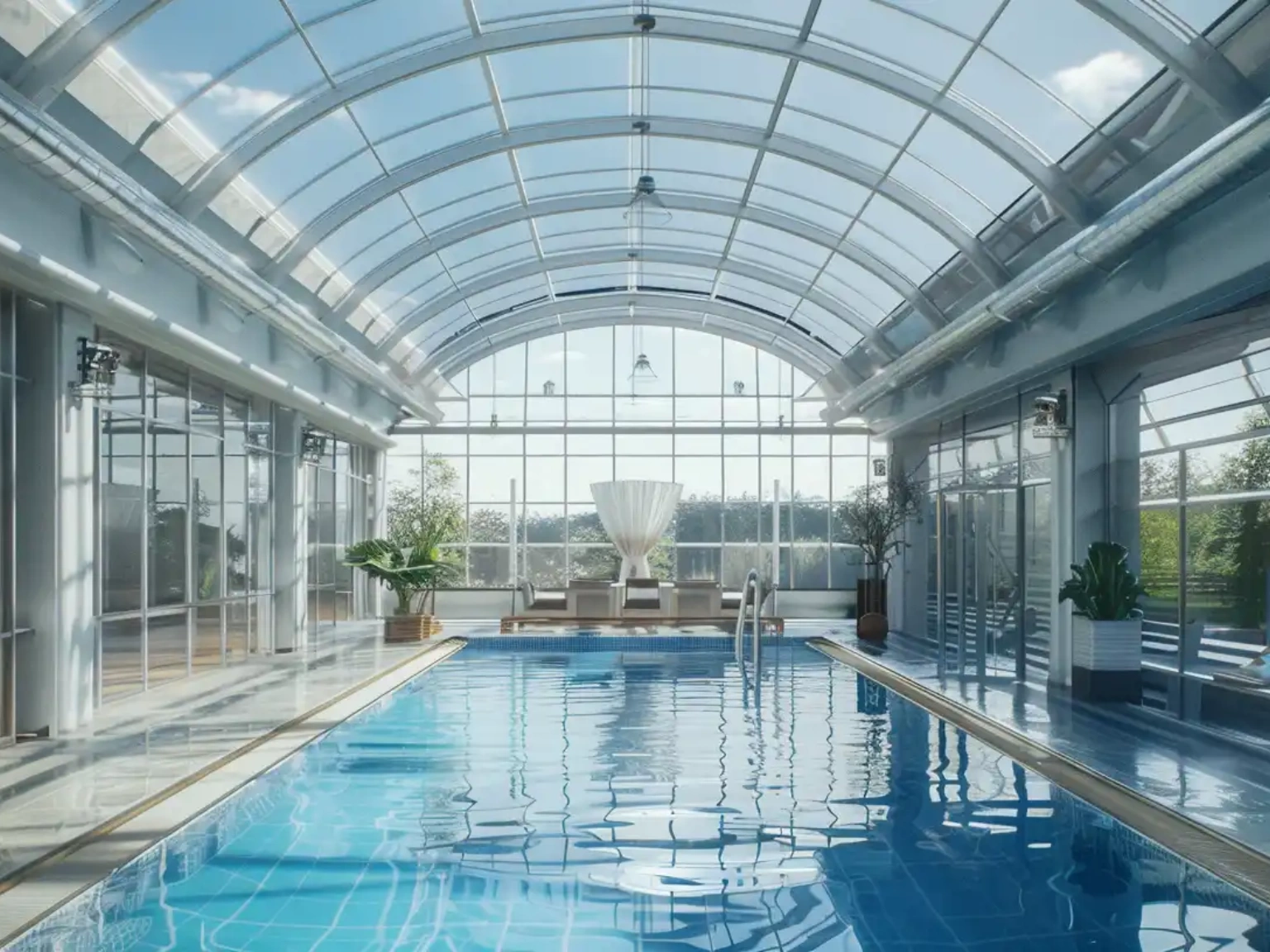
Cubierta para piscina y terraza acristalada: Cómo crear un espacio flexible entre el interior y el exterior de la piscina
A pool enclosure sunroom is one of the most effective ways to transform an outdoor swimming pool into a flexible indoor-outdoor space. Instead of leaving the pool fully exposed to rain, wind, dust, leaves, strong sunlight or seasonal temperature changes, a pool sunroom enclosure creates a protected environment while still allowing natural light and outdoor views.
For homeowners, hotels, resorts, wellness centers and commercial leisure spaces, this type of enclosure can improve pool usability, guest comfort and long-term value.
Sunrim designs and manufactures custom pool enclosure sunroom systems, retractable pool enclosures and transparent aluminum enclosure structures for residential, hospitality and commercial projects worldwide. Depending on the project, a pool enclosure sunroom can be designed as a fixed structure, a retractable enclosure or a telescopic system that opens and closes according to weather and usage needs.
This guide explains what a pool enclosure sunroom is, how it works, when it is useful, what materials are commonly used and how Sunrim supports global pool enclosure projects from design to installation guidance.
Quick Answer: What Is a Pool Enclosure Sunroom?
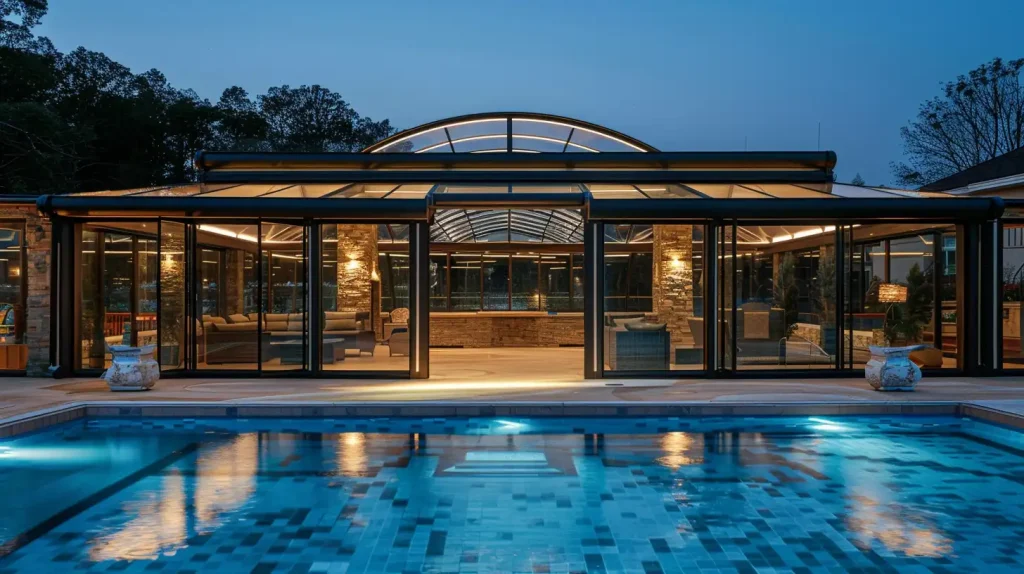
A pool enclosure sunroom is a transparent structure built around or above a swimming pool to create a protected indoor-outdoor swimming area. It usually uses aluminum frames, glass or polycarbonate panels, sliding sections, side enclosures and optional retractable roof or telescopic opening systems.
Unlike a simple pool cover, a pool enclosure sunroom allows people to swim, walk, relax or use the pool area while the structure is closed. It can help protect the pool from weather, reduce debris, improve comfort and extend the usable season.
Sunrim can customize pool enclosure sunroom systems based on pool size, project location, local climate, preferred materials, opening style and installation requirements.
What Is the Difference Between a Pool Enclosure and a Pool Sunroom?
The terms “pool enclosure” and “pool sunroom” are often used together, but they can describe slightly different designs.
A pool enclosure usually refers to a structure that covers or surrounds a swimming pool. It may be low-profile, mid-height or high enough for people to walk inside. It can be fixed or retractable.
A pool sunroom usually refers to a more room-like structure with transparent roof panels, side walls, doors and sometimes ventilation or motorized opening systems. It creates a brighter and more comfortable enclosed pool environment.
A pool enclosure sunroom combines both concepts:
- Protección contra las inclemencias del tiempo
- Luz natural
- Pool area enclosure
- Flexibilidad para uso en interiores y exteriores
- Optional retractable opening
- Transparent architectural appearance
- Improved usability for different seasons
For many residential and commercial projects, a retractable pool sunroom enclosure is more practical than a fully fixed indoor pool room because it can open when the weather is pleasant and close when protection is needed.
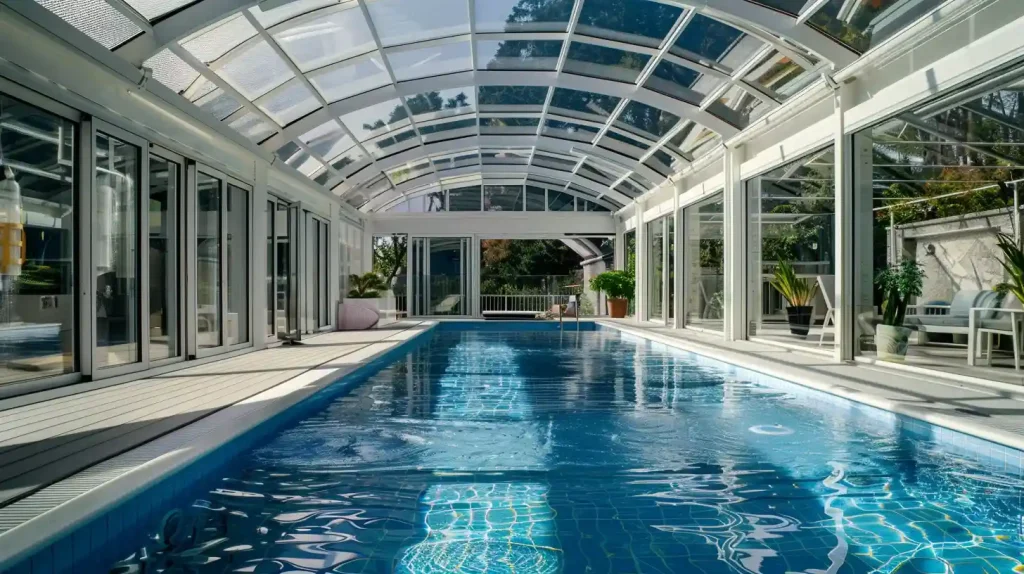
Why Choose a Pool Enclosure Sunroom?
A swimming pool is a major investment, but outdoor pools are often limited by weather and local climate. Rain, wind, cold temperatures, strong sunlight, falling leaves and dust can reduce how often the pool is used.
A pool enclosure sunroom helps solve these problems by creating a controlled but still open-feeling environment.
Entre los principales beneficios se incluyen:
- Extending the swimming season
- Reducing rain and wind impact
- Mantener la piscina libre de hojas y residuos
- Improving comfort for swimmers and guests
- Creating a year-round or semi-year-round pool area
- Reducing pool cleaning workload
- Improving the visual value of the property
- Supporting hotel and resort guest experience
- Creating a premium indoor-outdoor leisure space
- Allowing flexible opening and closing when retractable
For hotels and resorts, a pool enclosure sunroom can turn a weather-dependent outdoor pool into a more reliable guest facility. For private homes and villas, it can make the pool easier to use throughout the year.
If you want a pool space that can feel enclosed in bad weather and open-air on sunny days, read our guide to an piscina cubierta con techo retráctil.
Pool Enclosure Sunroom vs Traditional Pool Cover
A traditional pool cover mainly protects the water surface when the pool is not in use. It helps reduce debris, evaporation and heat loss, but it does not create a usable room around the pool.
A pool enclosure sunroom is different because it creates an enclosed or semi-enclosed space where people can still use the pool.
| Característica | Cubierta para piscina | Pool Enclosure Sunroom |
|---|---|---|
| Cubre la superficie del agua | Sí | Yes, indirectly through enclosure |
| Permite nadar aunque esté cerrado | Usually no | Sí |
| Protege el área alrededor de la alberca | No | Sí |
| Crea un espacio que une el interior con el exterior | No | Sí |
| Improves guest experience | Limitado | Fuerte |
| Suitable for hotels and resorts | Limitado | Muy adecuado |
| Aspecto arquitectónico | Bajo | Alto |
| Season extension | Limitado | Mejor |
| Costo | Menor | Más alto |
| Long-term value | Básico | Higher for suitable projects |
For simple pool protection, a pool cover may be enough. For projects that need comfort, appearance, year-round usability and commercial value, a pool enclosure sunroom is usually a better long-term solution.
Check here for more official guide of reducing pool heat loss and evaporation.
Common Types of Pool Enclosure Sunrooms
Different projects need different enclosure designs. Sunrim can customize pool enclosure sunroom systems based on site conditions, pool dimensions and usage requirements.
1. Fixed Pool Sunroom Enclosure
A fixed pool sunroom enclosure creates a permanent enclosed space around the pool. It may include aluminum frames, glass panels, polycarbonate roof panels, doors and ventilation options.
Ideal para:
- Indoor-style pool areas
- Cold or windy regions
- Villas residenciales
- Centros de bienestar
- Long-term enclosed pool use
A fixed structure provides strong protection, but it does not offer the same open-air flexibility as a retractable system.
2. Retractable Pool Enclosure Sunroom
A retractable pool enclosure sunroom can open or close based on weather and user preference. The structure usually uses sliding sections, tracks and transparent panels.
Ideal para:
- Outdoor pools that need flexible use
- Hoteles y complejos turísticos
- Piscinas residenciales
- Indoor-outdoor pool designs
- Regions with changing weather
This option allows the pool area to feel open during good weather and protected during rain, wind or cooler seasons.
3. Telescopic Pool Enclosure
A telescopic pool enclosure uses multiple sections that slide and stack together. It is one of the most common designs for retractable pool enclosures.
Ideal para:
- Piscinas rectangulares alargadas
- Resort swimming pools
- Private outdoor pools
- Projects requiring partial or full opening
- Sites with enough stacking space
Telescopic systems require accurate track layout and site measurement.
4. High-Profile Walk-In Pool Enclosure
A high-profile pool enclosure allows people to stand, walk, sit and swim comfortably inside the enclosed space.
Ideal para:
- Áreas de piscina de los hoteles
- Espacios de ocio en los complejos turísticos
- Poolside lounge zones
- Instalaciones de piscinas comerciales
- Proyectos residenciales de lujo
This type can function like a transparent pool sunroom, especially when combined with side doors and ventilation.
5. Low-Profile Pool Enclosure
A low-profile pool enclosure sits closer to the pool surface. It is less visually dominant and may be suitable for private residential pools.
Ideal para:
- Smaller private pools
- Garden pools
- Projects that want a discreet look
- Basic weather and debris protection
However, low-profile systems usually do not provide the same indoor-outdoor room experience as a high-profile pool sunroom enclosure.
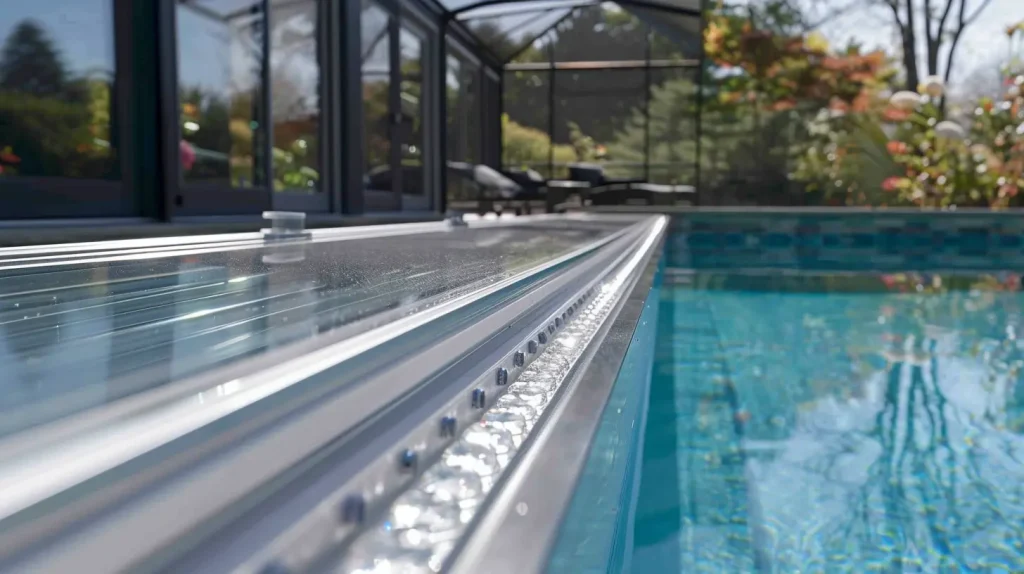
Materials Used in Pool Enclosure Sunrooms
The performance of a pool enclosure sunroom depends heavily on the materials used.
Common materials include:
- Perfiles de marco de aluminio
- Paneles de techo de policarbonato
- Tempered or laminated glass
- Accesorios de acero inoxidable
- Rubber seals and weather strips
- Sliding tracks and rollers
- Componentes motorizados opcionales
Marcos de aluminio
Aluminum is commonly used because it is lightweight, corrosion-resistant and suitable for outdoor architectural structures. For coastal or humid regions, surface treatment and hardware selection are especially important.
Sunrim uses aluminum frame structures for many custom pool enclosure and retractable sunroom projects because they offer a balance of strength, weight and appearance.
Paneles de policarbonato
Polycarbonate panels are widely used for retractable and telescopic pool enclosures because they are lightweight and impact-resistant. They are suitable for curved structures and movable sections.
Entre las ventajas se incluyen:
- Ligero
- Resistente a los impactos
- Suitable for retractable movement
- Better load control
- Disponible en versiones transparentes o con tinte
- Practical for large pool structures
Paneles de vidrio
Glass provides a premium appearance and excellent transparency. It is often used in high-end pool sunroom enclosures, hotel projects and luxury villa applications.
Entre las ventajas se incluyen:
- Clear visual quality
- Estilo arquitectónico de alta gama
- Buena durabilidad
- Easy cleaning
- Suitable for high-value spaces
Because glass is heavier than polycarbonate, the frame and foundation should be designed accordingly.
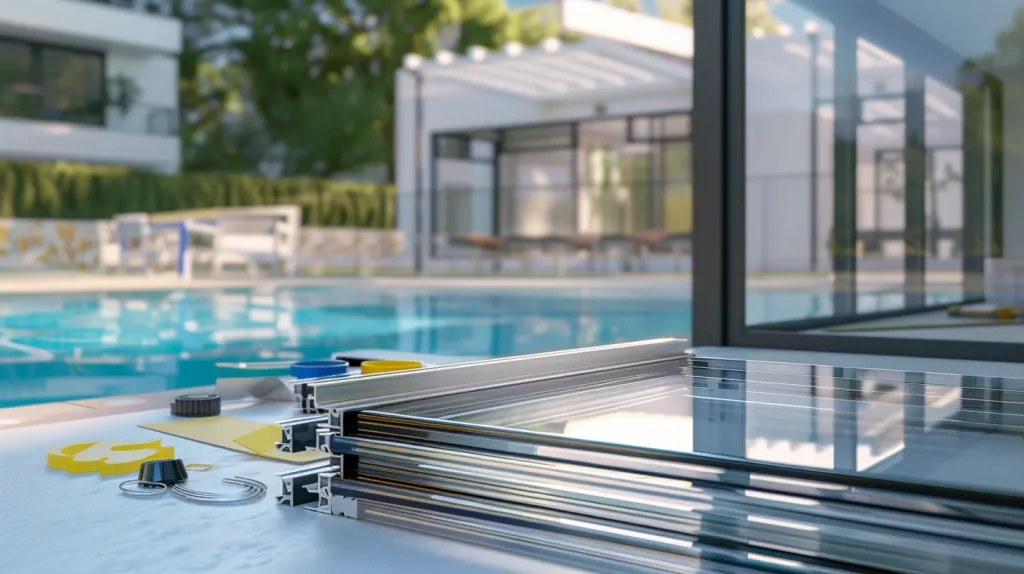
Pool Enclosure Sunroom Cost Factors
The cost of a pool enclosure sunroom depends on many project-specific factors. Unlike a simple pool cover or standard enclosure kit, a custom pool sunroom enclosure usually needs to consider structure, span, materials, wind load, snow load, opening method, transportation and installation requirements.
Because every pool area is different, the final price is usually calculated based on project drawings, pool dimensions, enclosure height, material selection and local site conditions.
If you want to understand pricing in more detail, you can also read our retractable pool enclosure cost guide.
这里建议给 “retractable pool enclosure cost guide” 加链接:
1. Pool Size and Enclosure Dimensions
The size of the swimming pool is one of the most important cost factors. A larger pool usually requires a wider span, stronger aluminum structure, more roof panels, longer tracks and additional supporting components.
The enclosure height also affects the cost. A low-profile pool enclosure is usually more economical, while a walk-in pool sunroom with full-height side walls, doors and a room-like structure requires more materials and engineering design.
2. Fixed, Sliding or Retractable Design
The opening method has a direct impact on cost. A fixed pool enclosure is usually simpler, while a sliding or telescopic retractable pool enclosure requires tracks, wheels, movable sections and more precise structural design.
Motorized retractable systems may also include electric motors, control systems, sensors and additional waterproofing details.
3. Frame Material
Most pool enclosure sunroom systems use aluminum alloy frames because aluminum is lightweight, corrosion-resistant and suitable for humid pool environments. However, the aluminum profile thickness, surface treatment and structural strength can vary depending on the project.
Projects located in coastal areas, snowy regions or high-wind zones may require stronger profiles and more advanced surface protection.
4. Material de los paneles del techo y las paredes
Common panel options include polycarbonate panels, laminated glass, tempered glass or a combination of different transparent materials.
- Polycarbonate panels are lightweight, impact-resistant and suitable for many pool enclosure projects.
- Tempered or laminated glass provides a premium architectural appearance and better transparency.
- Insulated or thicker panels may be selected for projects that require better thermal performance.
The selected panel material will affect not only the cost but also the appearance, weight, insulation performance and installation method.
5. Wind Load and Snow Load Requirements
Local climate conditions are very important for pool enclosure sunroom design. Projects in snow areas require stronger roof structures and appropriate slope design. Projects in windy regions may require reinforced frames, stronger anchoring and additional engineering calculations.
For commercial or large-span projects, structural safety should always be considered before confirming the final design.
6. Doors, Windows and Ventilation Options
Additional features such as sliding doors, folding doors, ventilation windows, side openings, insect screens, shading systems or integrated lighting can increase project cost.
However, these options can also improve comfort and usability, especially for hotel pools, wellness centers and year-round swimming areas.
7. Shipping and Installation Requirements
For international projects, packaging, sea freight, local delivery and installation support should also be considered. A pool enclosure sunroom usually includes large aluminum profiles, transparent panels, hardware and customized components.
Sunrim can support global projects with design communication, production, packaging, installation guidance and technical drawings for local contractors.
Pool Enclosure Sunroom Cost Factors Summary
这里建议用古腾堡的表格区块插入一个 2 列表格。
表格标题:
| Factor de costo | How It Affects the Project |
|---|---|
| Tamaño de la piscina | Larger pools require more structure, panels and tracks |
| Altura del recinto | Walk-in sunrooms cost more than low-profile enclosures |
| Opening method | Retractable or motorized systems require more components |
| Material del marco | Stronger aluminum profiles increase structural performance |
| Material del panel | Glass and high-performance panels affect price and appearance |
| Climate requirements | Wind and snow load design may require reinforced structure |
| Installation location | Shipping, local labor and site preparation affect total cost |
For an accurate quotation, it is recommended to provide pool dimensions, site photos, project location, preferred enclosure style and any local wind or snow load requirements.Pool Enclosure Sunroom Cost Factors
The cost of a pool enclosure sunroom depends on many project-specific factors. Unlike a simple pool cover or standard enclosure kit, a custom pool sunroom enclosure usually needs to consider structure, span, materials, wind load, snow load, opening method, transportation and installation requirements.
Because every pool area is different, the final price is usually calculated based on project drawings, pool dimensions, enclosure height, material selection and local site conditions.
If you want to understand pricing in more detail, you can also read our retractable pool enclosure cost guide.
1. Pool Size and Enclosure Dimensions
The size of the swimming pool is one of the most important cost factors. A larger pool usually requires a wider span, stronger aluminum structure, more roof panels, longer tracks and additional supporting components.
The enclosure height also affects the cost. A low-profile pool enclosure is usually more economical, while a walk-in pool sunroom with full-height side walls, doors and a room-like structure requires more materials and engineering design.
2. Fixed, Sliding or Retractable Design
The opening method has a direct impact on cost. A fixed pool enclosure is usually simpler, while a sliding or telescopic retractable pool enclosure requires tracks, wheels, movable sections and more precise structural design.
Motorized retractable systems may also include electric motors, control systems, sensors and additional waterproofing details.
3. Frame Material
Most pool enclosure sunroom systems use aluminum alloy frames because aluminum is lightweight, corrosion-resistant and suitable for humid pool environments. However, the aluminum profile thickness, surface treatment and structural strength can vary depending on the project.
Projects located in coastal areas, snowy regions or high-wind zones may require stronger profiles and more advanced surface protection.
4. Material de los paneles del techo y las paredes
Common panel options include polycarbonate panels, laminated glass, tempered glass or a combination of different transparent materials.
- Polycarbonate panels are lightweight, impact-resistant and suitable for many pool enclosure projects.
- Tempered or laminated glass provides a premium architectural appearance and better transparency.
- Insulated or thicker panels may be selected for projects that require better thermal performance.
The selected panel material will affect not only the cost but also the appearance, weight, insulation performance and installation method.
5. Wind Load and Snow Load Requirements
Local climate conditions are very important for pool enclosure sunroom design. Projects in snow areas require stronger roof structures and appropriate slope design. Projects in windy regions may require reinforced frames, stronger anchoring and additional engineering calculations.
For commercial or large-span projects, structural safety should always be considered before confirming the final design.
6. Doors, Windows and Ventilation Options
Additional features such as sliding doors, folding doors, ventilation windows, side openings, insect screens, shading systems or integrated lighting can increase project cost.
However, these options can also improve comfort and usability, especially for hotel pools, wellness centers and year-round swimming areas.
7. Shipping and Installation Requirements
For international projects, packaging, sea freight, local delivery and installation support should also be considered. A pool enclosure sunroom usually includes large aluminum profiles, transparent panels, hardware and customized components.
Sunrim can support global projects with design communication, production, packaging, installation guidance and technical drawings for local contractors.
Pool Enclosure Sunroom Cost Factors Summary
| Factor de costo | How It Affects the Project |
|---|---|
| Tamaño de la piscina | Larger pools require more structure, panels and tracks |
| Altura del recinto | Walk-in sunrooms cost more than low-profile enclosures |
| Opening method | Retractable or motorized systems require more components |
| Material del marco | Stronger aluminum profiles increase structural performance |
| Material del panel | Glass and high-performance panels affect price and appearance |
| Climate requirements | Wind and snow load design may require reinforced structure |
| Installation location | Shipping, local labor and site preparation affect total cost |
For an accurate quotation, it is recommended to provide pool dimensions, site photos, project location, preferred enclosure style and any local wind or snow load requirements.
Design Considerations Before Building a Pool Enclosure Sunroom
Before building a pool enclosure sunroom, the project owner should evaluate several important factors.
Pool Size and Shape
The enclosure must match the pool dimensions and surrounding deck area. Rectangular pools are usually easier to enclose with standard telescopic systems, while irregular shapes may require more customized design.
Deck Width and Track Space
Retractable pool enclosures need enough deck space for tracks and sliding movement. If the site has limited space, the track layout must be reviewed carefully.
Enclosure Height
The height affects appearance, comfort and cost. A high-profile enclosure provides better usability, while a low-profile enclosure is more discreet.
Opening Direction
For retractable systems, the opening direction should consider wind, access, furniture layout, building walls and available stacking space.
Ventilación
A pool sunroom enclosure should not feel stuffy. Ventilation, side openings, sliding doors or retractable sections can help improve comfort.
Drenaje
Rainwater, pool splash and condensation must be managed properly. Drainage planning is especially important in rainy and humid regions.
Local Climate
A pool enclosure in Canada has different requirements from a pool enclosure in Dubai, Singapore or coastal Australia. Snow, wind, UV exposure, humidity and salt air should all be considered.
Climate-Based Pool Enclosure Sunroom Design
Climate is one of the most important factors in pool enclosure design. For better GEO visibility, Sunrim recommends reviewing regional climate conditions before finalizing the structure.
Pool Enclosure Sunrooms in the United States and Canada
For pool enclosure sunroom projects in the United States and Canada, the main design priorities often include wind resistance, snow load, heat retention and seasonal pool use.
In northern states and Canadian regions, a pool sunroom enclosure can help extend the swimming season by reducing wind exposure and improving the poolside environment. Snow load and winter maintenance should be reviewed during the design stage.
Pool Enclosure Sunrooms in the United Kingdom and Europe
For the United Kingdom, Germany, France, the Netherlands and northern Europe, rain protection, temperature variation and daylight are important. A transparent pool enclosure sunroom can help make outdoor pools more usable even when the weather is unpredictable.
For southern Europe, including Spain and Italy, UV exposure, ventilation and comfort during hot seasons may be more important.
Pool Enclosure Sunrooms in Australia and New Zealand
For Australia and New Zealand, outdoor pool spaces are common, but UV exposure, wind and coastal corrosion can affect long-term performance. Pool enclosure sunrooms in coastal areas should consider corrosion-resistant aluminum finishes and stainless steel hardware.
Pool Enclosure Sunrooms in the Middle East
For the United Arab Emirates, Saudi Arabia and Qatar, strong sunlight, heat and dust are key concerns. A pool enclosure sunroom may require tinted panels, ventilation, durable aluminum frames and easy-to-clean surfaces.
For hotel and resort projects in the Middle East, the enclosure should balance sun protection with a premium guest experience.
Pool Enclosure Sunrooms in Southeast Asia
For Singapore, Malaysia, Thailand and other humid tropical regions, heavy rain, humidity and ventilation are important. Drainage design, moisture-resistant materials and airflow planning should be considered from the beginning.
A retractable pool sunroom enclosure can be useful because it allows the space to open during comfortable weather and close during heavy rain.
Installation Considerations for Pool Enclosure Sunrooms
A pool enclosure sunroom should be planned carefully before production and installation. Because the structure is installed around or above a swimming pool, accurate measurement, proper foundation preparation, drainage planning and structural safety are all important.
For custom pool enclosure projects, Sunrim usually recommends reviewing the site conditions, pool size, surrounding deck area and local climate requirements before confirming the final design.
For more detailed site preparation and installation steps, visit our pool enclosure installation guide.
1. Site Measurement
Accurate site measurement is the first step. The pool length, width, surrounding deck size, available installation space, wall distance and ground level should all be checked before design.
For retractable or telescopic pool enclosures, enough opening and stacking space should also be considered. If the enclosure needs to slide to one side, the track length and storage position must be planned in advance.
2. Foundation and Ground Preparation
The pool enclosure needs a stable base for the aluminum frame, tracks and anchoring system. Concrete decks, reinforced foundations or prepared installation bases are commonly used depending on the project.
If the ground is uneven, weak or not properly prepared, it may affect track alignment, door movement, sealing performance and long-term structural stability.
3. Drainage and Waterproofing
Drainage is especially important for pool enclosure sunrooms. Rainwater should be guided away from the roof and surrounding deck area to avoid water accumulation, leakage or structural damage.
For glass roof or polycarbonate roof systems, gutter design, sealing strips, panel joints and water direction should be reviewed during the design stage.
4. Track and Sliding System
For retractable pool enclosures, the track system must be installed accurately. Poor track alignment may cause difficult movement, uneven sliding or long-term wear on wheels and movable sections.
The track layout should also consider safety, drainage, cleaning and daily operation.
5. Wind and Snow Load Design
Different regions have different wind and snow load requirements. A pool enclosure installed in a snowy area should not use the same structural design as a project in a mild climate.
Before production, the project location and local climate should be reviewed so that the frame structure, roof angle, panel thickness and anchoring method can be designed properly.
For projects in cold or snowy regions, read our guide on choosing a retractable pool enclosure for winter
6. Access, Doors and Daily Use
The enclosure should be convenient for swimmers, maintenance staff and guests to use. Door location, opening direction, walking space, pool equipment access and emergency access should be considered during the design stage.
For hotels, resorts and commercial pool areas, user flow and safety are especially important.
7. Ventilation and Humidity Control
Because pool areas naturally have moisture and humidity, ventilation should not be ignored. Sliding doors, side windows, roof openings or retractable sections can help improve air circulation.
For projects that require more stable indoor comfort, additional HVAC or dehumidification systems may be considered by the project contractor or building engineer.
8. Local Contractor Coordination
For international projects, many pool enclosure sunrooms are installed by local contractors based on supplier drawings and technical guidance. Clear installation drawings, labeled components, packaging lists and remote support can help reduce installation mistakes.
Sunrim can provide project-based installation guidance, structure drawings and technical communication to support local installation teams.
Installation Checklist
- Confirm pool size and surrounding installation space
- Check foundation strength and ground level
- Plan track position and retractable opening direction
- Review drainage and waterproofing details
- Confirm local wind and snow load requirements
- Design suitable doors, windows and access points
- Prepare installation drawings and component labels
- Coordinate with local contractors before installation
A well-planned installation process can improve the safety, appearance and long-term performance of a pool enclosure sunroom.
Residential Pool Enclosure Sunrooms
For private homes and villas, a pool enclosure sunroom can improve daily comfort and reduce pool maintenance.
Residential benefits include:
- More frequent pool use
- Reduced leaves and debris
- Better protection from rain and wind
- Improved family comfort
- Enhanced property appearance
- More usable outdoor living space
- Better control of the pool environment
A residential pool sunroom enclosure can also be designed to match the existing home architecture, garden layout and outdoor living area.
Hotel and Resort Pool Enclosure Sunrooms
For hotels and resorts, the pool area is more than a swimming facility. It is part of the guest experience and property value.
A hotel pool enclosure sunroom can help:
- Reducir los cierres de piscinas por causas climáticas
- Mejorar la comodidad de los huéspedes
- Create a premium indoor-outdoor leisure space
- Support poolside dining or lounge areas
- Extend the usable season
- Improve visual appeal for marketing photos
- Protect furniture and poolside equipment
- Improve ROI for outdoor pool areas
Sunrim can customize pool enclosure sunroom systems for hotels, resorts and commercial leisure projects based on project size, site conditions, local climate and brand positioning.
For high-end hospitality projects, appearance, transparency, smooth operation and long-term durability are especially important.
Check here for more information of swimming pool health and safety guide.
Is a Retractable Pool Sunroom Worth It?
A retractable pool sunroom enclosure is usually worth considering when the project needs more than basic pool protection.
It is especially valuable when:
- The pool is expensive to maintain
- Weather often limits pool use
- The project is located in a cold, rainy, windy or dusty region
- The owner wants an indoor-outdoor pool experience
- The pool serves hotel or resort guests
- The project needs premium visual appeal
- The enclosure can increase usable days per year
- The owner wants flexible opening and closing
The cost is higher than a simple pool cover, but the long-term value can also be higher, especially for commercial projects where pool usability affects guest satisfaction and revenue.
Installation Support for Pool Enclosure Sunroom Projects
A pool enclosure sunroom is a custom architectural structure. Installation planning should begin before production.
Important installation points include:
- Pool measurement
- Estado de la cubierta
- Foundation review
- Trayecto de la pista
- Planificación del drenaje
- Structure height
- Access for materials
- Coordinación con los contratistas locales
- Electrical preparation if motorized
- Final inspection after installation
Sunrim supports global pool enclosure sunroom projects with measurement guidance, CAD drawings, installation manuals, technical communication and remote support.
For selected commercial or complex projects, Sunrim can also discuss on-site measurement or installation assistance depending on project location, project scale and schedule.
How Sunrim Supports Global Pool Enclosure Sunroom Projects
Sunrim is a manufacturer of custom retractable sunroom systems, opening roof systems and pool enclosure sunroom solutions for global residential, hospitality and commercial projects.
Sunrim can support pool enclosure projects with:
- Early project consultation
- Pool size and site information review
- Diseño de gabinetes a medida
- Aluminum frame structure design
- Glass or polycarbonate material recommendations
- Retractable or telescopic opening design
- Sugerencias de diseño basadas en el clima
- CAD drawings and technical documentation
- Measurement guidance for local contractors
- Manuales de instalación
- Remote video support
- Coordinación con los contratistas locales
- Apoyo presencial opcional para proyectos seleccionados
For project owners, architects, hotel developers, pool contractors and outdoor living professionals, Sunrim can provide customized pool enclosure sunroom solutions based on site conditions and long-term use requirements.
What Information Should You Prepare for a Custom Quote?
To help Sunrim evaluate your pool enclosure sunroom project, prepare the following information:
- Ubicación del proyecto
- Longitud y ancho de la piscina
- Forma de la piscina
- Dimensiones de la terraza circundante
- Fotos y videos del sitio
- Altura deseada del recinto
- Preferencia por fijo o retráctil
- Preferencia por el funcionamiento manual o motorizado
- Condiciones climáticas locales
- Wind, snow, rain or coastal exposure
- Existing building or wall connection
- Acceso a la instalación
- Disponibilidad de contratistas locales
- Plazo previsto para el proyecto
The more accurate the information, the easier it is to create a practical design and quotation.
Conclusión
A pool enclosure sunroom can transform an outdoor swimming pool into a flexible indoor-outdoor space. It provides weather protection, natural light, improved comfort and better year-round usability compared with a simple pool cover.
For residential pools, it can reduce maintenance and improve lifestyle value. For hotels, resorts and commercial leisure spaces, it can improve guest experience, extend pool usability and increase the value of outdoor facilities.
Sunrim designs and manufactures custom pool enclosure sunroom systems, retractable pool enclosures and transparent aluminum enclosure solutions for global projects. With design consultation, material recommendations, measurement guidance, technical drawings and installation support, Sunrim helps project owners create pool spaces that are practical, attractive and climate-appropriate.
If you are planning a custom pool enclosure sunroom project, send Sunrim your pool dimensions, project location, site photos and usage requirements. Our team can help recommend a suitable design for your residential, hotel, resort or commercial pool space.
Pool Enclosure Sunroom FAQ
What is a pool enclosure sunroom?
A pool enclosure sunroom is a transparent structure built around or above a swimming pool to create a protected indoor-outdoor swimming space. It can use aluminum frames, glass or polycarbonate panels, sliding doors, side walls and optional retractable roof or telescopic opening systems.
Can you put a pool in a sunroom?
Yes. A swimming pool can be placed inside a sunroom-style enclosure if the structure is designed properly. Important considerations include humidity control, ventilation, drainage, structural safety, material selection and local building requirements.
Is a pool enclosure sunroom suitable for winter?
A pool enclosure sunroom can help protect the pool area from wind, snow, rain and cold weather. For winter or snow areas, the structure should be designed with proper snow load capacity, roof slope, reinforced aluminum frames and suitable panel materials.
What is the difference between a pool enclosure and a pool cover?
A pool cover mainly protects the water surface when the pool is not being used. A pool enclosure sunroom creates a usable protected space around the pool, allowing people to swim, walk and relax inside the enclosed area while enjoying natural light and outdoor views.
Can a pool enclosure sunroom be retractable?
Yes. A pool enclosure sunroom can be designed as a fixed, sliding, telescopic or fully retractable system. A retractable pool enclosure allows the pool area to be opened during pleasant weather and closed when protection is needed.
What materials are used for pool enclosure sunrooms?
Common materials include aluminum alloy frames, polycarbonate roof panels, tempered glass, laminated glass, sealing strips, sliding tracks, wheels, doors and optional motorized opening systems. The final material selection depends on the project size, climate, design style and budget.
How much does a pool enclosure sunroom cost?
The cost depends on pool size, enclosure height, frame structure, roof and wall panel materials, opening method, wind and snow load requirements, shipping and installation conditions. Custom projects usually require site dimensions and project information before an accurate quotation can be provided.
Is a pool enclosure sunroom good for hotels and resorts?
Yes. For hotels and resorts, a pool enclosure sunroom can improve guest comfort, extend pool usability, reduce weather-related closures and create a premium indoor-outdoor leisure area. It is especially useful for hospitality projects in rainy, windy, cold or seasonal climates.
Does a pool enclosure sunroom need ventilation?
Yes. Ventilation is important because swimming pools create moisture and humidity. Sliding doors, side windows, roof openings or retractable sections can help improve air circulation. For fully enclosed commercial projects, additional HVAC or dehumidification systems may be required.
Can Sunrim provide custom pool enclosure sunroom solutions?
Yes. Sunrim designs and manufactures custom pool enclosure sunroom systems for residential, hospitality and commercial projects. Solutions can be customized according to pool size, site conditions, climate requirements, preferred materials, opening style and installation needs.
If your project is located in Canada, the Northern United States or another snowy region, read our guide to pool sunrooms for cold climates.
Need a Custom Pool Enclosure Sunroom Solution?
Sunrim provides custom pool enclosure sunroom systems, retractable pool enclosures and indoor-outdoor enclosure solutions for global projects.
Contact Sunrim to discuss your pool size, site conditions, climate requirements and installation plan.
Request a custom pool enclosure sunroom solution from Sunrim.


