

Residential Pool Enclosures: A Practical Guide for Backyard Swimming Pools
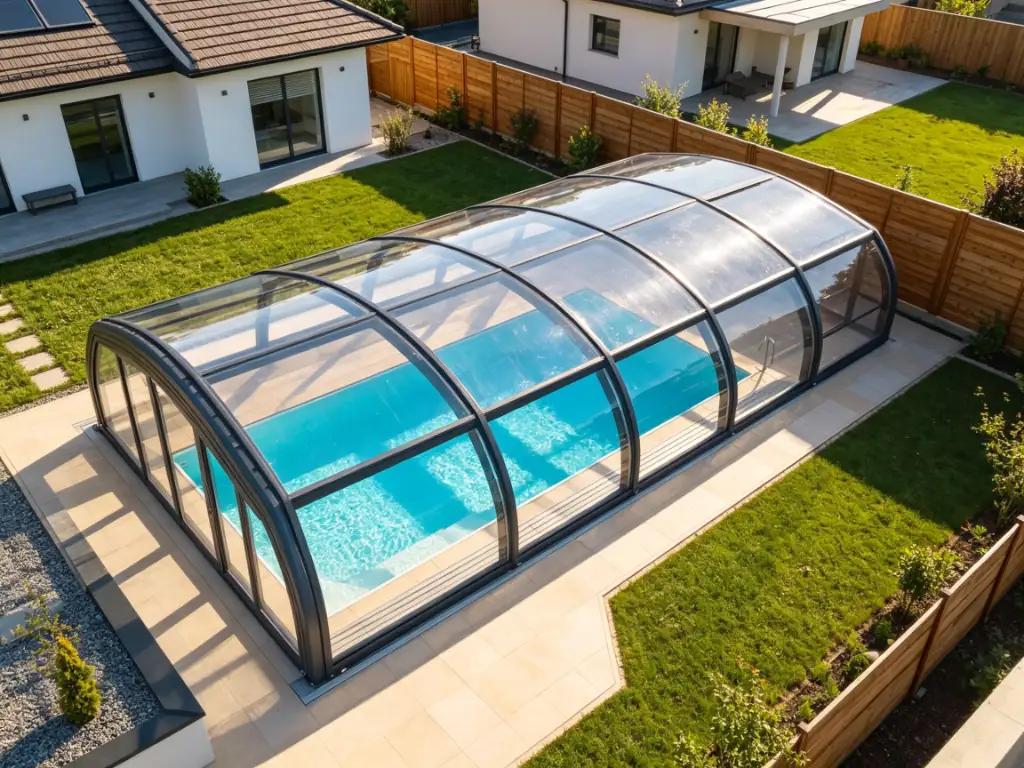
Residential pool enclosures are a practical solution for homeowners who want to protect their backyard swimming pools, reduce maintenance work and make the pool area more comfortable throughout the year. Instead of leaving the pool fully exposed to leaves, wind, rain, insects, snow and debris, a pool enclosure creates a cleaner and more protected swimming space.
For many homes, a swimming pool is one of the most valuable outdoor features. However, outdoor pools can also require regular cleaning and seasonal care. Weather changes, falling leaves, dust, insects and cold wind can make the pool harder to maintain and less enjoyable to use.
A well-designed residential pool enclosure can help solve many of these problems. It can keep the water cleaner, protect the pool deck, improve privacy, extend the swimming season and make a backyard pool feel more like an indoor-outdoor leisure space.
This guide explains the benefits, types, cost factors, installation considerations and winter use of residential pool enclosures. If you are still learning about pool enclosure types in general, you can also read our complete pool enclosures guide.
What Are Residential Pool Enclosures?
Residential pool enclosures are structures installed over or around private swimming pools. They are designed to protect the pool area from outdoor weather and debris while allowing natural light to enter through transparent or translucent panels.
A residential pool enclosure usually includes:
- Aluminum frame structure
- Transparent panels
- Doors or access openings
- Sliding tracks for retractable designs
- Sealing components
- Drainage considerations
- Optional manual or motorized operation
Depending on the height and design, a residential pool enclosure can simply cover the pool or create a walk-in space where people can swim, walk and relax inside.
Residential pool enclosures are commonly used for:
- Backyard swimming pools
- Villa pools
- Heated outdoor pools
- Family swimming areas
- Vacation homes
- Private wellness spaces
- Cold-climate residential pools
- Pools surrounded by trees or gardens
The right enclosure depends on the pool size, climate, budget and how the homeowner plans to use the pool.
Quick Answer: Are Residential Pool Enclosures Worth It?
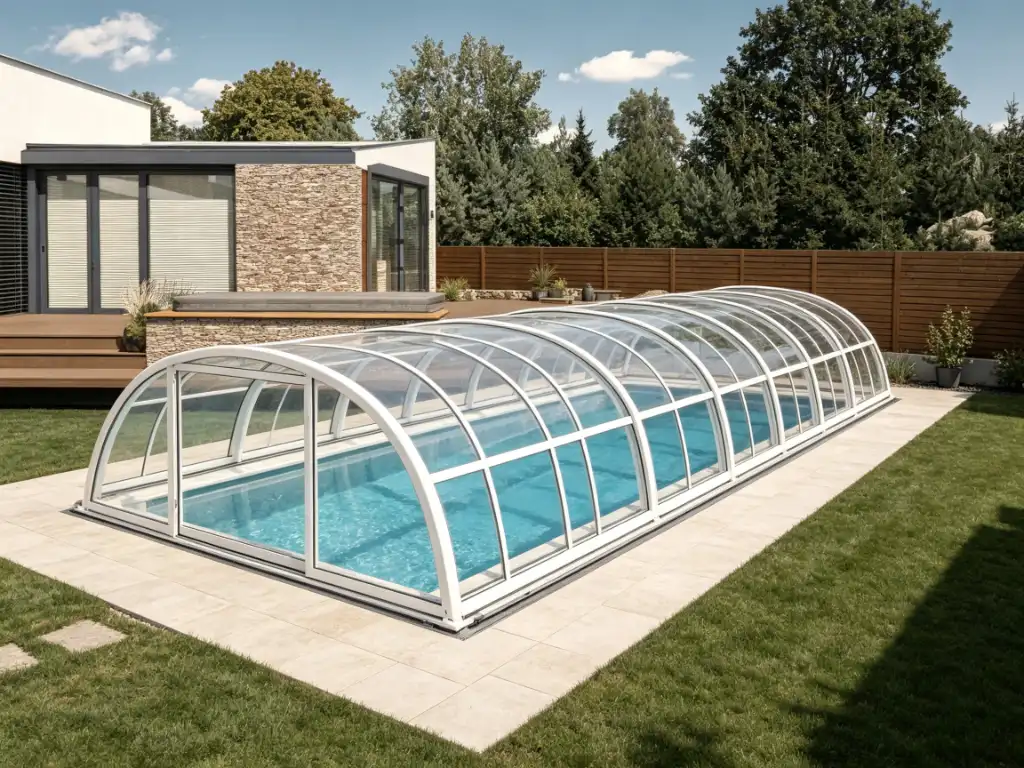
Yes. Residential pool enclosures are worth considering if you want cleaner pool water, less maintenance, better comfort, improved privacy and a longer swimming season.
For homeowners, the main value is not only covering the pool. A good enclosure can make the backyard pool easier to use and manage. It can reduce leaves and debris, protect the pool from wind and rain, and make swimming more comfortable in spring, autumn and winter.
If the pool is heated, a residential pool enclosure can be even more useful because it helps create a more protected environment around the water.
Why Homeowners Choose Residential Pool Enclosures
Homeowners choose residential pool enclosures for different reasons. Some want to reduce maintenance. Others want to extend pool use beyond summer. Some want a cleaner backyard appearance or a more private swimming area.
The most common reasons include:
- Keeping leaves and debris out of the pool
- Reducing cleaning work
- Making the pool more comfortable in cooler seasons
- Protecting the pool deck from rain and snow
- Improving privacy
- Supporting heated pool use
- Creating an indoor-outdoor pool experience
- Making the backyard look more organized
- Improving pool usability for family members and guests
For many homeowners, the pool enclosure becomes part of the outdoor living space, not just a pool cover.
Cleaner Pool Water with Less Debris
One of the biggest advantages of residential pool enclosures is cleaner pool water.
Outdoor pools are constantly exposed to leaves, insects, pollen, dust, branches and wind-blown debris. If the pool is located near trees, gardens or open land, cleaning can become a daily task during some seasons.
A pool enclosure helps reduce the amount of debris entering the water by creating a physical barrier around the pool area.
It can help reduce:
- Leaves
- Dust
- Dirt
- Insects
- Pollen
- Branches
- Rainwater contamination
- Snow and winter debris
- Wind-blown particles
Cleaner water means less skimming, less deck cleaning and less pressure on the filtration system. This does not remove the need for regular pool maintenance, but it can make maintenance much easier.
Reducing Backyard Pool Maintenance
Pool maintenance is one of the main challenges for homeowners. Even a beautiful backyard pool can become frustrating if it requires constant cleaning.
A residential pool enclosure can help reduce:
- Daily skimming
- Leaf removal
- Dirt accumulation
- Pool deck cleaning
- Seasonal cleanup
- Rainwater entering the pool
- Wind-blown debris
- Insects in the water
For families that use the pool regularly, this can save time and make the pool more enjoyable. Instead of spending time cleaning before swimming, homeowners can keep the pool area ready for use more often.
In areas with many trees or windy weather, a pool enclosure can be especially valuable.
Extending the Swimming Season
Many backyard pools are used mainly during summer. In spring and autumn, the weather may be sunny but still too cool or windy for comfortable swimming.
A residential pool enclosure helps create a more protected pool environment. It reduces wind exposure and helps make the area around the pool more comfortable.
This can support longer seasonal use, especially for:
- Heated pools
- Families that swim regularly
- Homes in cooler climates
- Vacation houses
- Pools used for exercise
- Private wellness spaces
A pool enclosure does not replace a pool heater, but it works well together with heating equipment. If the water is heated, the enclosure helps reduce the impact of cold wind around the pool deck.
For more seasonal use ideas, read our guide to pool enclosures for winter use.
Better Comfort for Heated Backyard Pools
A heated pool can still feel uncomfortable if the surrounding air is cold and windy. Swimmers may enjoy the warm water, but stepping out of the pool into cold air can be unpleasant.
A residential pool enclosure helps create a more comfortable environment around the heated pool.
It can help:
- Reduce cold wind
- Improve deck comfort
- Make swimming more practical in cooler weather
- Support longer daily use
- Create a more stable enclosed space
- Improve the overall swimming experience
For homeowners who already have a pool heating system, adding an enclosure can improve the value of that system. Instead of heating the water while the pool remains fully exposed, the enclosure creates a more protected swimming area.
Residential Pool Enclosures for Winter Use
In cold climates, winter can make outdoor pools difficult to manage. Snow, freezing wind and winter debris can quickly affect both the pool water and the surrounding deck.
Residential pool enclosures can help protect backyard pools during winter by reducing direct exposure to snow, wind and debris.
Winter benefits include:
- Less snow entering the pool
- Reduced winter debris
- Cleaner pool deck
- Better protection around the water
- More comfortable heated pool use
- Reduced wind exposure
- Improved backyard appearance during cold months
If your home is located in a snowy region, snow load and structural design are very important. The enclosure should be designed according to local climate conditions.
For snowy regions, see our guide to pool enclosures for winters with snow.
Common Types of Residential Pool Enclosures
There are several types of residential pool enclosures. Each type has different advantages depending on how the pool will be used.
Low Pool Enclosures for Homes
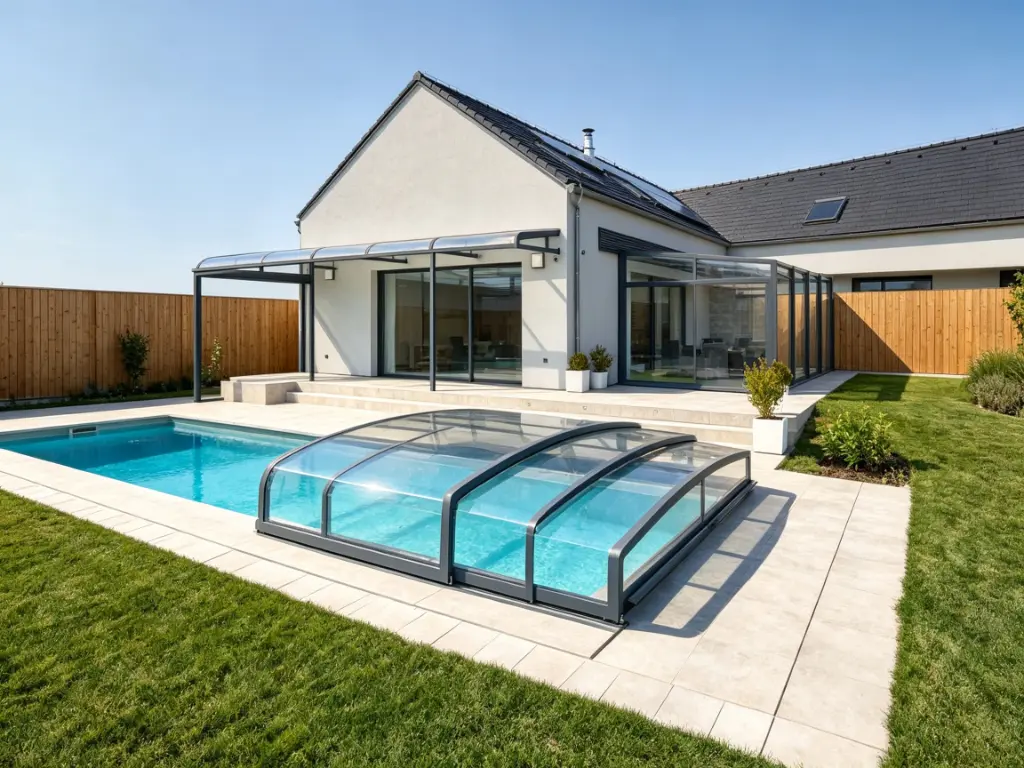
Low pool enclosures are usually installed close to the pool surface. They are mainly used for basic protection.
They are suitable for homeowners who want to:
- Keep leaves and debris out
- Reduce pool cleaning
- Maintain a lower visual profile
- Protect the pool when it is not in use
- Use a simpler enclosure solution
Low enclosures are not usually designed for walking or relaxing inside while closed. They are best for homeowners whose main goal is water protection and maintenance reduction.
Classic Pool Enclosures for Backyard Pools
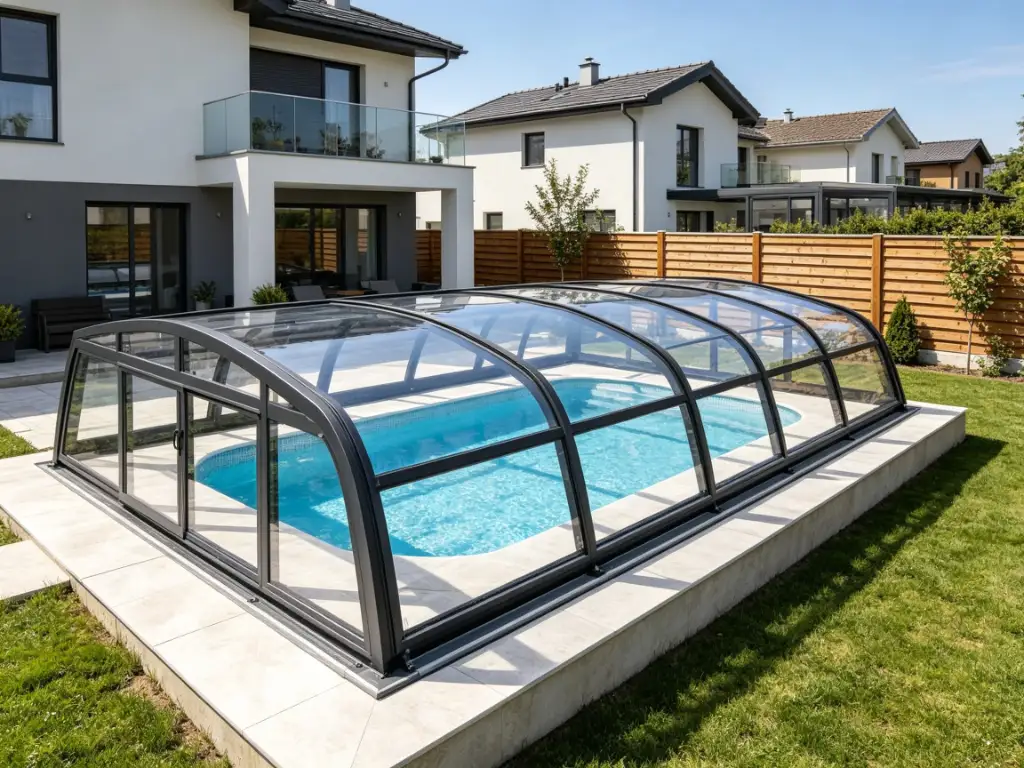
Classic pool enclosures provide more height than low enclosures and create a more usable space around the pool.
They are suitable for:
- Family backyard pools
- Villa pools
- Heated pools
- Seasonal swimming
- Homes that need both protection and comfort
A classic enclosure can be a practical choice for many residential projects because it balances appearance, cost, function and usability.
It can make the backyard pool feel more protected without turning it into a fully indoor pool.
High Residential Pool Enclosures
High pool enclosures create a walk-in pool space. People can swim, walk, sit and relax inside while the enclosure is closed.
They are suitable for:
- Luxury homes
- Large backyard pools
- Heated pools
- Year-round swimming goals
- Private wellness areas
- Homes in colder or windier climates
A high residential pool enclosure provides the best comfort and usability. It can make the pool area feel like a private indoor-outdoor swimming room.
However, it usually requires more space, stronger structure and a higher budget than low or classic enclosures.
Retractable Pool Enclosures for Homes
Retractable pool enclosures are very popular for residential swimming pools because they provide flexibility.
A retractable enclosure can stay closed during rain, wind, cold weather or snow. It can open partially or fully when the weather is warm and sunny.
This allows homeowners to enjoy both:
- Protected swimming when weather is poor
- Open-air swimming when weather is good
Benefits of retractable pool enclosures for homes include:
- Seasonal flexibility
- Better ventilation control
- Open-air pool experience
- Weather protection when needed
- More comfortable swimming in cooler seasons
- Better backyard usability
Sunrim’s retractable pool enclosure systems are designed for residential and commercial pool projects that need flexible weather protection and long-term use.
Glass vs Polycarbonate Residential Pool Enclosures
Residential pool enclosures often use either glass or polycarbonate panels. Each material has different characteristics.
Glass Pool Enclosures
Glass pool enclosures provide a premium appearance and clear visibility. They can look elegant and match modern villa or luxury home designs.
However, glass is heavier and may require more careful structural design and installation.
Glass may be suitable for:
- Luxury homes
- Fixed structures
- Premium pool rooms
- Projects requiring clear views
Polycarbonate Pool Enclosures
Polycarbonate panels are commonly used in retractable pool enclosures because they are lighter, durable and impact resistant.
Polycarbonate is suitable for:
- Retractable structures
- Curved enclosure designs
- Residential pools
- Cold-climate projects
- Larger enclosure spans
- Practical long-term use
For most retractable residential pool enclosures, polycarbonate is often a practical choice because it balances weight, durability and transparency.
Backyard Pool Enclosure Design Considerations
Before choosing a residential pool enclosure, homeowners should consider both appearance and function.
Important design factors include:
- Pool length and width
- Pool deck size
- Enclosure height
- Frame color
- Panel material
- Door location
- Track direction
- Opening direction
- Ventilation
- Drainage
- Privacy
- Local wind conditions
- Local snow conditions
- Existing landscape design
- House style
- Budget
A pool enclosure should match the home and backyard layout. It should not feel like an afterthought. The best designs look integrated with the pool, deck, fence and house.
How Much Do Residential Pool Enclosures Cost?
The cost of residential pool enclosures depends on many project factors.
Common cost factors include:
- Pool size
- Enclosure size
- Enclosure height
- Frame material
- Panel material
- Fixed or retractable design
- Manual or motorized system
- Snow load and wind load requirements
- Track system
- Door design
- Custom color
- Shipping
- Installation
- Site condition
In general, low enclosures cost less than classic or high enclosures. High enclosures cost more because they require more materials and stronger structure. Retractable systems usually cost more than fixed systems because they need track systems, moving modules and more precise installation.
For a more detailed pricing breakdown, read our pool enclosure cost guide.
Installation Considerations for Backyard Pool Enclosures
Installation quality is very important for residential pool enclosures.
Even if the enclosure design is good, poor installation can cause problems such as difficult movement, poor sealing, water drainage issues or unstable structure.
Important installation details include:
- Accurate site measurement
- Flat and stable installation surface
- Correct track alignment
- Strong rail fixing
- Proper frame assembly
- Correct panel installation
- Door adjustment
- Drainage planning
- Final movement testing
- Safety inspection
For retractable pool enclosures, the track system must be installed accurately. If the rails are not aligned correctly, the enclosure may become difficult to open and close.
You can read our pool enclosure installation guide for more information.
Residential Pool Enclosures vs Pool Covers
Some homeowners compare pool enclosures with pool covers. Both can protect a swimming pool, but they are very different.
A pool cover sits directly over the water surface. It is useful when the pool is not being used.
A pool enclosure creates a protected space around the pool. Depending on its height, it may allow people to swim and walk inside while it is closed.
| Feature | Pool Cover | Residential Pool Enclosure |
|---|---|---|
| Covers water surface | Yes | Yes |
| Protects pool deck | No | Yes |
| Reduces wind around pool | No | Yes |
| Allows swimming while covered | No | Yes, depending on height |
| Improves backyard appearance | Limited | Yes |
| Extends seasonal use | Limited | Yes |
| Creates indoor-outdoor space | No | Yes |
If your goal is only to cover the pool when not in use, a pool cover may be enough. If you want comfort, usability and a better backyard pool environment, a residential pool enclosure offers more value.
Best Residential Pool Enclosure by Homeowner Need
| Homeowner Need | Recommended Enclosure Type |
|---|---|
| Basic debris protection | Low pool enclosure |
| Family backyard pool use | Classic pool enclosure |
| Heated pool comfort | Classic or high pool enclosure |
| Year-round swimming goal | High pool enclosure |
| Flexible open-close use | Retractable pool enclosure |
| Cold climate protection | Classic or high enclosure with winter-ready design |
| Luxury backyard design | High or custom pool enclosure |
| Lower visual impact | Low pool enclosure |
This table can help homeowners quickly understand which type may fit their project.
If you are still exploring different backyard designs, our pool enclosure ideas for homes guide compares low, high, retractable and sunroom-style options.
Common Mistakes When Choosing Residential Pool Enclosures
When choosing a residential pool enclosure, some homeowners focus only on price or appearance. This can lead to problems later.
Common mistakes include:
- Choosing an enclosure that is too low for intended use
- Ignoring local wind conditions
- Ignoring snow load in cold regions
- Not planning enough deck space
- Forgetting about door access
- Not considering ventilation
- Choosing unsuitable panel material
- Not checking the installation surface
- Ignoring drainage direction
- Choosing a design that does not match the house style
A residential pool enclosure should be planned as part of the whole backyard environment.
What Information Should Homeowners Prepare Before Requesting a Quote?
Before requesting a residential pool enclosure quote, it is helpful to prepare clear information.
Useful information includes:
- Project location
- Pool length and width
- Pool deck dimensions
- Site photos
- Desired enclosure height
- Expected seasonal use
- Whether the pool is heated
- Local wind conditions
- Local snow conditions
- Preferred frame color
- Manual or motorized preference
- Fixed or retractable preference
- Door location preference
- Installation surface
- Budget range
The more detailed the project information, the easier it is to recommend the right enclosure type.
How Sunrim Helps with Residential Pool Enclosure Projects
Sunrim designs and manufactures pool enclosures, retractable pool enclosures, pool sunrooms and custom outdoor enclosure systems for residential and commercial projects worldwide.
For residential pool enclosure projects, Sunrim can help with:
- Project requirement review
- Pool size and site analysis
- Low, classic or high enclosure recommendation
- Retractable system design
- Aluminum frame design
- Polycarbonate panel selection
- Manual or motorized options
- Custom size and color
- Snow and wind condition consideration
- Technical drawings
- Export support
- Installation guidance
Whether you are planning a backyard pool enclosure for summer use, winter protection or year-round swimming, Sunrim can help recommend a suitable solution based on your home, climate and pool size.
Conclusion: Residential Pool Enclosures Make Backyard Pools More Practical
Residential pool enclosures help homeowners protect backyard swimming pools, reduce maintenance and improve comfort. They can keep pool water cleaner, reduce wind exposure, support heated pool use and extend the swimming season.
The right enclosure depends on your pool size, climate, budget and how you want to use the pool. Low enclosures are suitable for basic protection, classic enclosures offer a balance of comfort and appearance, and high or retractable enclosures provide more usable space and flexibility.
For many homeowners, a pool enclosure turns the backyard pool into a cleaner, more comfortable and more practical outdoor living feature.
Start Your Residential Pool Enclosure Project
Planning a pool enclosure for your backyard swimming pool?
Contact Sunrim and send your project location, pool dimensions, site photos and use requirements. Our team can help recommend a suitable residential pool enclosure for your home.
FAQ About Residential Pool Enclosures
What are residential pool enclosures?
Residential pool enclosures are structures installed over or around private backyard swimming pools to protect the pool from weather, leaves, debris and wind while improving comfort and usability.
Are residential pool enclosures worth it?
Yes. Residential pool enclosures are worth considering if you want cleaner water, less maintenance, improved comfort, better privacy and a longer swimming season.
What type of pool enclosure is best for a backyard pool?
The best type depends on how you use the pool. Low enclosures are good for basic protection, classic enclosures are suitable for family pool use, and high or retractable enclosures are better for comfort and seasonal flexibility.
Can you swim inside a residential pool enclosure?
Yes, if the enclosure has enough height and interior space. Classic and high pool enclosures usually provide better swimming comfort while closed.
Do residential pool enclosures reduce maintenance?
Yes. They can reduce leaves, dirt, insects, rainwater, snow and wind-blown debris entering the pool area, which helps reduce cleaning work.
Are retractable pool enclosures good for homes?
Yes. Retractable pool enclosures are popular for homes because they can close during bad weather and open during sunny or warm days.
Do residential pool enclosures work in winter?
Yes, if they are designed for local climate conditions. In snowy regions, snow load, wind load, drainage and structural strength are especially important.
How much do residential pool enclosures cost?
The cost depends on pool size, enclosure height, materials, fixed or retractable design, motorization, snow and wind requirements, shipping and installation.
What material is best for residential pool enclosures?
Aluminum frames with polycarbonate panels are commonly used for retractable residential pool enclosures because they are lightweight, durable and suitable for curved structures.
What information is needed for a residential pool enclosure quote?
Useful information includes project location, pool dimensions, deck size, site photos, desired height, local climate, fixed or retractable preference and expected use.


