


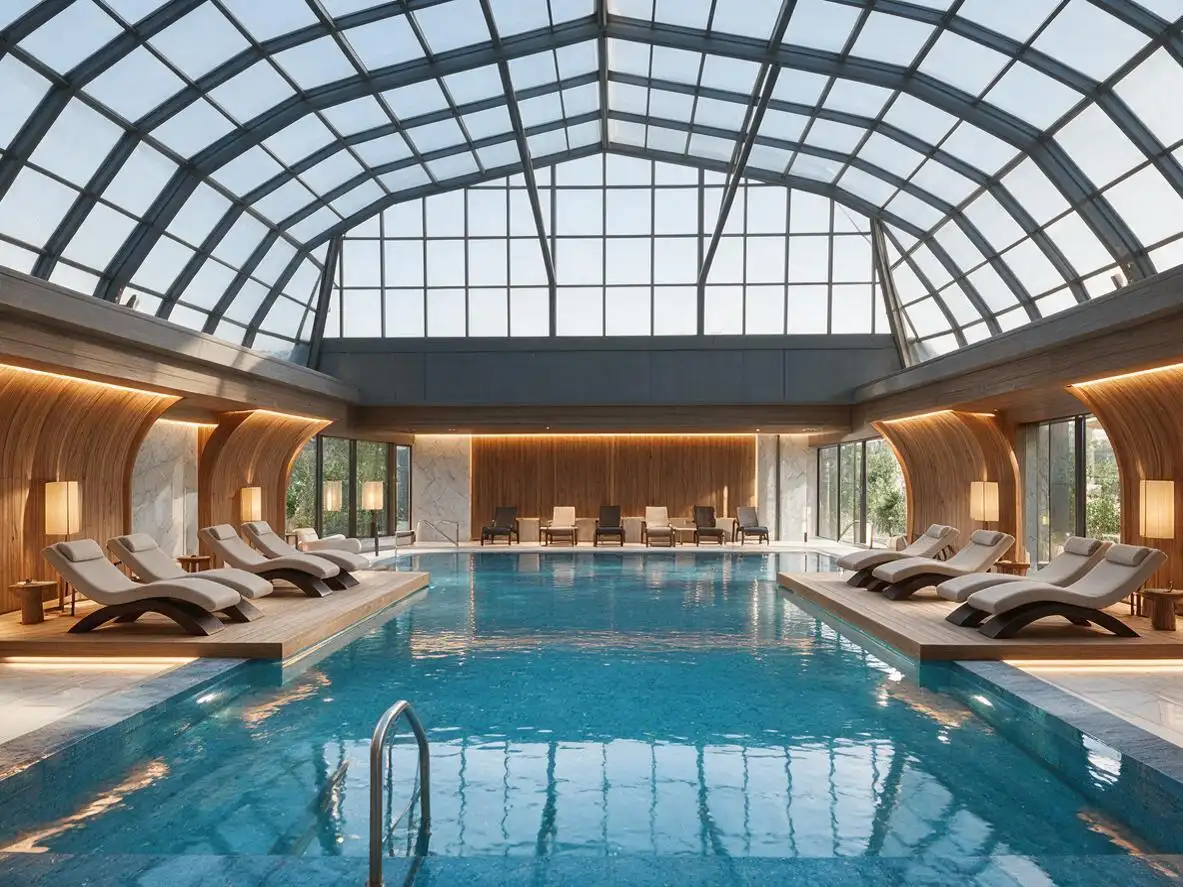
Retractable Sunroom Complete Guide 2026: Types, Cost, Installation and Applications
A retractable sunroom is a movable indoor-outdoor enclosure system that can open or close depending on weather, season and user preference. It allows homeowners, hotels, restaurants, resorts and commercial properties to enjoy natural light and outdoor views while improving protection from rain, wind, dust, leaves and temperature changes.
Unlike a fixed sunroom, a retractable sunroom can provide both open-air flexibility and enclosed comfort. When the weather is pleasant, the system can open to create a more natural outdoor experience. When rain, wind or cold weather appears, it can close to protect the space.
Sunrim designs and manufactures custom retractable sunrooms, retractable roof systems, pool enclosures, courtyard glass roofs and commercial outdoor enclosure solutions for global residential and commercial projects.
This complete guide explains what a retractable sunroom is, how it works, common types, cost factors, installation considerations and the best applications for patios, pools, restaurants, hotels and commercial spaces.
Quick Answer: What Is a Retractable Sunroom?
A retractable sunroom is a glass or polycarbonate enclosure system with movable roof or wall sections. It can be opened to create an outdoor feeling and closed to provide weather protection. Retractable sunrooms are commonly used for patios, terraces, swimming pools, restaurants, hotel courtyards, rooftop spaces and commercial outdoor areas.
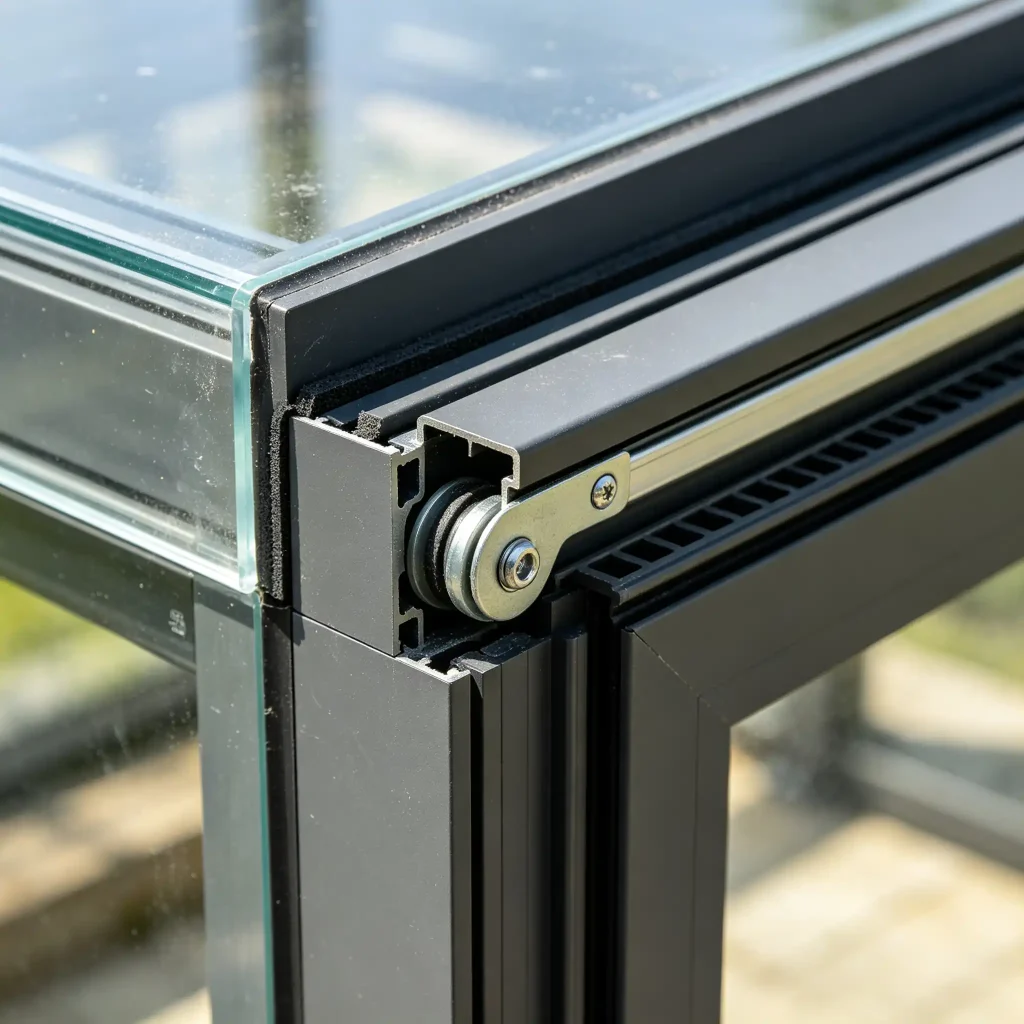
A retractable sunroom usually includes aluminum frames, transparent panels, sliding tracks, rollers, seals, locking systems and sometimes motorized controls. The structure may be freestanding, attached to a building or integrated into a larger outdoor enclosure project.
Sunrim provides custom retractable sunroom systems based on project size, local climate, building conditions and application requirements.
Key Points About Retractable Sunrooms
- A retractable sunroom combines outdoor openness with indoor protection.
- It can be used for patios, pools, restaurants, hotels, rooftops and commercial spaces.
- Common materials include aluminum frames with glass or polycarbonate panels.
- Cost depends on size, structure, material, motorized system, wind or snow load and installation conditions.
- Retractable sunrooms can be freestanding or attached to an existing building.
- A motorized retractable sunroom is easier to operate for large or commercial projects.
- Proper installation, drainage, sealing and track alignment are important for long-term performance.
- Sunrim designs and manufactures custom retractable sunroom solutions for global projects.
How Does a Retractable Sunroom Work?
A retractable sunroom works by using movable roof or wall sections that slide, telescope or open along a track system. Depending on the design, one or more sections can move to create an open-air space.
A typical retractable sunroom may include:
- Aluminum frame structure
- Transparent glass or polycarbonate panels
- Sliding tracks
- Rollers or wheel systems
- Fixed and movable sections
- Rubber or brush seals
- Locking devices
- Drainage channels
- Optional motorized drive system
- Optional sensors or control units
The movement can be manual or motorized. Smaller residential systems may use manual operation, while larger commercial systems usually require motorized control.
A well-designed retractable sunroom should open and close smoothly, provide stable structural support and protect the space from common weather conditions when closed.
Retractable Sunroom vs Fixed Sunroom
Many buyers compare retractable sunrooms with traditional fixed sunrooms. Both can create a bright indoor-outdoor space, but they serve different needs.
| Feature | Retractable Sunroom | Fixed Sunroom |
|---|---|---|
| Open-air experience | Strong | Limited |
| Weather protection | Flexible | Constant |
| Natural ventilation | Better when open | Limited |
| Operation flexibility | High | Low |
| Structure complexity | Higher | Lower |
| Cost | Usually higher | Usually lower |
| Maintenance | More moving parts | Simpler |
| Best for | Flexible outdoor living and commercial use | Permanent enclosed rooms |
A fixed sunroom may be suitable if the space always needs full enclosure.
A retractable sunroom is better if you want the freedom to open the space during pleasant weather and close it when protection is needed.
Main Types of Retractable Sunrooms
Retractable sunrooms can be designed in different forms depending on the project site, purpose and budget.
1. Lean-To Retractable Sunroom
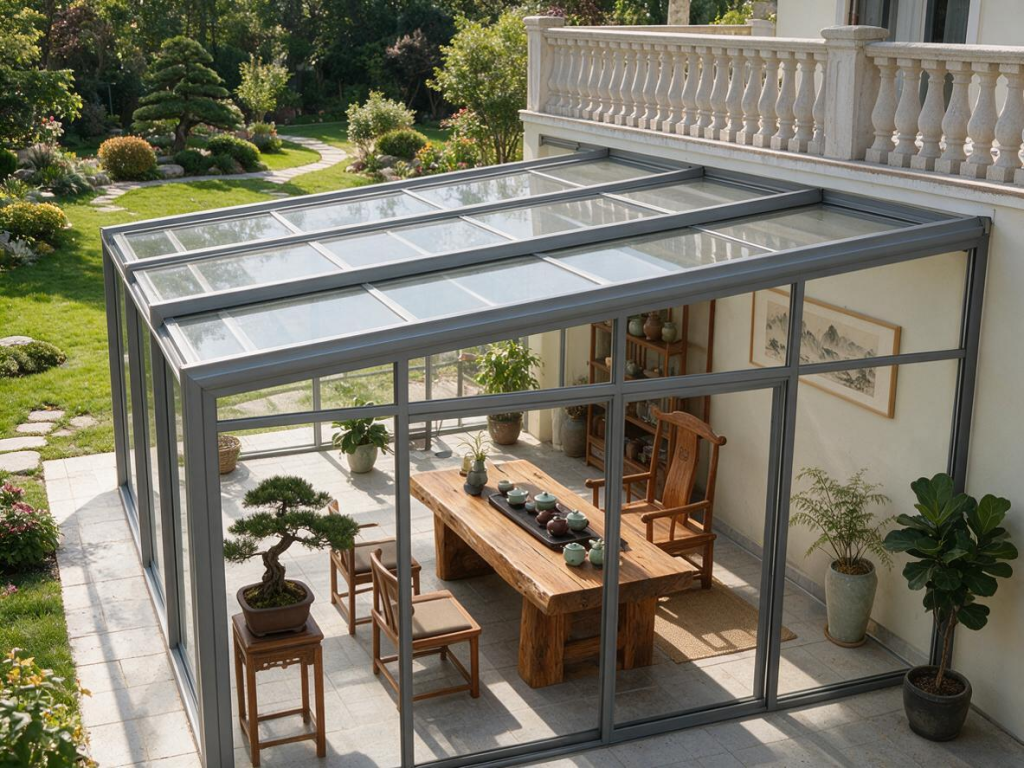
A lean-to retractable sunroom is attached to an existing building wall. It is one of the most common designs for patios, terraces, restaurants and building-side outdoor areas.
It is suitable for:
- Residential patios
- Backyard terraces
- Restaurant extensions
- Café outdoor seating
- Hotel courtyard edges
- Building-side leisure areas
The main advantage is that one side of the structure can connect to the existing building, which may reduce the need for a fully independent frame.
Lean-to designs should consider wall connection, roof slope, drainage direction, door access and building façade integration.
2. Freestanding Retractable Sunroom
A freestanding retractable sunroom is an independent structure that does not rely on an existing wall for support.
It is suitable for:
- Gardens
- Poolside areas
- Resort lounges
- Outdoor dining areas
- Independent commercial spaces
- Private leisure rooms
- Event areas
Freestanding systems require their own structural support, so foundation, anchoring, wind resistance and drainage planning are very important.
This type is useful when the sunroom needs to be placed away from the main building.
3. Pool Retractable Sunroom
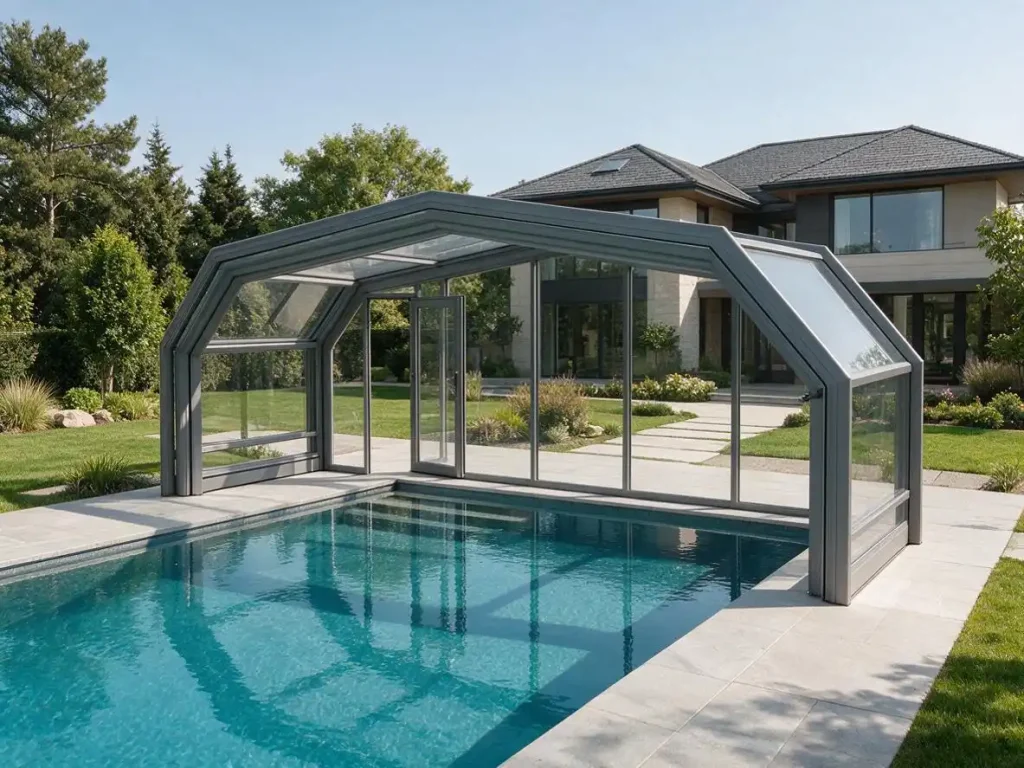
A pool retractable sunroom is designed to cover a swimming pool or poolside area. It helps protect the pool from leaves, dust, rain and seasonal temperature changes.
It can be used for:
- Private swimming pools
- Hotel pools
- Resort pools
- Wellness centers
- Indoor-outdoor pool spaces
- Cold climate pool projects
A pool retractable sunroom can extend the swimming season and reduce pool maintenance.
For cost planning, you can also read Sunrim’s pool enclosure cost guide to understand how size, material and installation affect pricing.
4. Rooftop Retractable Sunroom
A rooftop retractable sunroom is installed on a roof terrace, penthouse area or commercial rooftop space.
It is suitable for:
- Rooftop bars
- Hotel rooftop lounges
- Residential roof terraces
- Office rooftop leisure areas
- Restaurant rooftop dining
- Urban hospitality projects
Rooftop projects require careful engineering because wind exposure, installation access, drainage and structural load are more demanding.
For rooftop applications, the design should consider building height, wind load, anchoring method, waterproofing and maintenance access.
5. Commercial Retractable Sunroom
A commercial retractable sunroom is designed for business use. It may be larger, stronger and more frequently operated than a residential system.
Common commercial applications include:
- Restaurants
- Cafés
- Hotels
- Resorts
- Shopping centers
- Event venues
- Commercial courtyards
- Rooftop hospitality spaces
- Outdoor leisure areas
Commercial retractable sunrooms often require stronger frames, motorized operation, better drainage design and clear safety planning.
For large business spaces, Sunrim also provides commercial retractable roof systems for hotels, restaurants and hospitality projects.
6. Retractable Glass Sunroom
A retractable glass sunroom uses glass panels for a premium architectural appearance.
It is suitable for:
- Luxury villas
- Hotel lounges
- Restaurant dining rooms
- Commercial courtyards
- High-end terraces
- Premium hospitality spaces
Glass provides strong visual clarity and a high-end appearance, but it is heavier than polycarbonate and requires careful structural design.
7. Polycarbonate Retractable Sunroom
A polycarbonate retractable sunroom uses lightweight, impact-resistant panels.
It is suitable for:
- Pool enclosures
- Larger movable sections
- Cost-sensitive projects
- Residential outdoor spaces
- Commercial projects requiring lower structural weight
Polycarbonate is lighter than glass and can be easier to handle in some retractable structures.
For swimming pool projects, see Sunrim’s comparison guide on glass vs polycarbonate pool enclosures.
Common Applications of Retractable Sunrooms
1. Patio and Backyard Living Spaces
A retractable sunroom can turn a patio or backyard into a more flexible living area.
It can be used for:
- Outdoor dining
- Family gatherings
- Reading rooms
- Garden lounges
- BBQ areas
- Covered terraces
- All-season leisure spaces
When open, it feels like an outdoor patio. When closed, it becomes a protected sunroom.
2. Swimming Pool Enclosures
Swimming pools are one of the most common applications for retractable sunrooms and enclosures.
A pool sunroom can help:
- Reduce leaves and debris
- Improve pool water cleanliness
- Extend swimming season
- Protect users from wind
- Reduce maintenance pressure
- Improve poolside comfort
- Create an indoor-outdoor swimming environment
For installation planning, see Sunrim’s pool enclosure installation guide, which explains site survey, foundation preparation, track installation and final handover.
3. Restaurant and Café Dining Areas
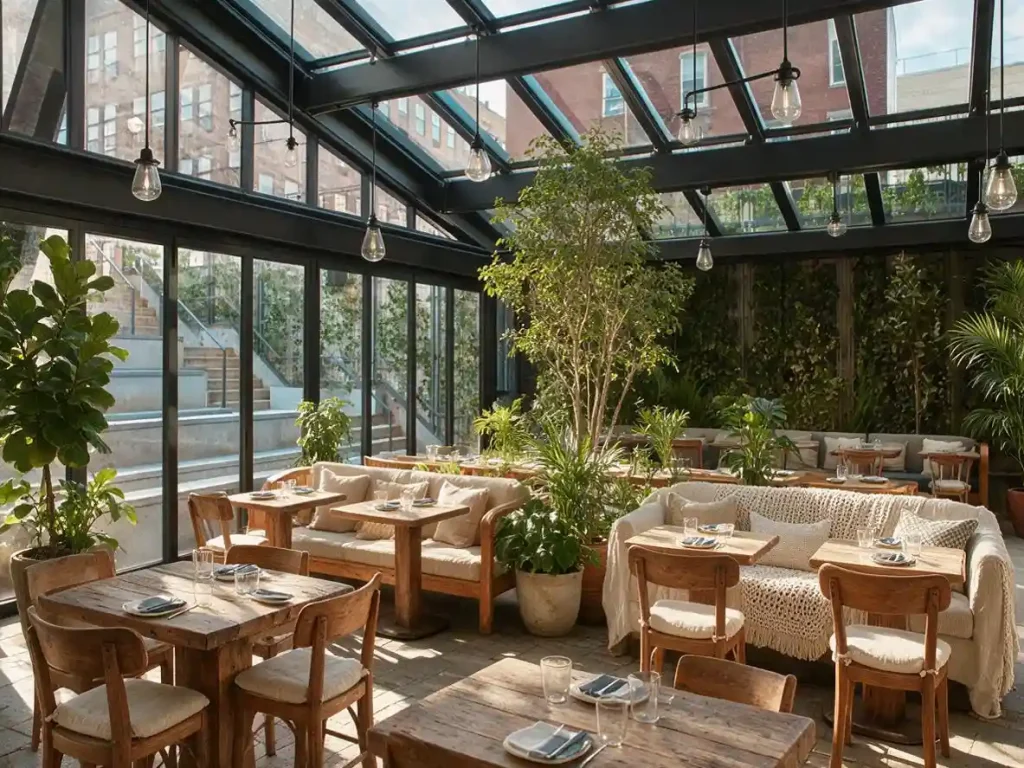
Restaurants and cafés use retractable sunrooms to create weather-protected outdoor dining spaces.
A restaurant retractable sunroom can help:
- Increase seating capacity
- Reduce weather-related cancellations
- Protect tables and furniture
- Improve guest comfort
- Create a semi-outdoor dining experience
- Support year-round patio operation
For restaurant-specific roof and enclosure applications, read Sunrim’s guide to retractable roof systems for restaurants and cafés.
4. Hotel Courtyards and Guest Lounges
Hotels use retractable sunrooms and glass roofs to improve courtyard, terrace and lounge spaces.
A retractable sunroom can create:
- Guest lounge areas
- Hotel café spaces
- Courtyard dining zones
- Rooftop leisure areas
- Spa waiting areas
- Event extensions
- Weather-protected outdoor rooms
For hotel courtyard projects, Sunrim also provides courtyard glass roof systems and retractable roof options.
5. Commercial Outdoor Spaces
Commercial buildings can use retractable sunrooms to make outdoor spaces more functional.
Applications include:
- Shopping center terraces
- Office building courtyards
- Event venues
- Resort leisure areas
- Commercial patios
- Rooftop spaces
- Hospitality extensions
A commercial retractable sunroom can make outdoor areas usable in more weather conditions and improve long-term return on investment.
Retractable Sunroom Cost Factors
Retractable sunroom cost depends on many project-specific factors. Because most retractable sunrooms are custom-made, there is no single standard price.
The main cost factors include:
1. Size and Span
Larger sunrooms require more aluminum profiles, panels, tracks and installation work.
Span is also important. A wide-span structure may need stronger frames or additional engineering support.
2. Freestanding vs Attached Design
A lean-to sunroom attached to a building may have different structural requirements from a freestanding system.
Freestanding sunrooms usually require more independent structural support.
3. Glass vs Polycarbonate Panels
Glass usually offers a more premium appearance but is heavier and may require stronger frames.
Polycarbonate is lighter and impact-resistant, often suitable for pool enclosures and larger movable sections.
4. Manual vs Motorized Operation
Manual systems are usually simpler and may cost less.
A motorized retractable roof or motorized sunroom system is more convenient, especially for large residential or commercial projects.
Motorized systems may include motors, controllers, sensors, remote control and safety devices.
5. Wind and Snow Load Requirements
Local climate affects structural design.
Projects in windy, snowy or coastal areas may require stronger aluminum frames, better anchoring and higher specification materials.
6. Drainage and Sealing Design
Drainage and sealing are critical for outdoor performance.
A good retractable sunroom design should consider:
- Roof slope
- Gutter position
- Drainage outlet
- Track drainage
- Rubber seals
- Panel overlap
- Wind-driven rain protection
- Maintenance access
7. Installation Access
Installation can affect total cost.
Difficult access, rooftop locations, narrow courtyards, lifting equipment and local labor requirements can increase installation complexity.
8. Custom Design Requirements
Custom color, special shape, integrated lighting, side doors, glass walls, ventilation options and smart control systems can all affect cost.
Typical Information Needed for a Retractable Sunroom Quote
To receive a practical quote, prepare the following information:
- Project location
- Application type
- Sunroom length and width
- Desired height
- Site photos or videos
- Building drawings if available
- Existing wall or foundation condition
- Preferred material
- Manual or motorized preference
- Local wind and snow conditions
- Frame color preference
- Drainage requirements
- Installation access
- Project timeline
- Budget range if available
The more accurate the information, the more suitable the design recommendation will be.
Retractable Sunroom Installation Process
A retractable sunroom installation usually includes several steps.
1. Site Survey and Measurement
The project team confirms site dimensions, ground conditions, wall connection points, drainage direction and installation access.
2. Design Confirmation
The manufacturer confirms sunroom type, size, material, opening direction, frame color, roof shape and control system.
3. Foundation Preparation
The ground or deck must be strong, level and suitable for fixing tracks or structural posts.
4. Frame Assembly
Aluminum profiles, beams, posts and support structures are assembled according to the technical drawings.
5. Track and Roller Installation
For retractable systems, tracks and rollers must be accurately aligned to ensure smooth movement.
6. Panel Installation
Glass or polycarbonate panels are installed into the frame. Panel orientation, sealing and expansion allowance should be checked.
7. Sealing and Drainage Check
Seals, gutters, drainage outlets and water flow directions are inspected.
8. Operation Test
Manual or motorized movement is tested. The system should open and close smoothly without obstruction.
9. Final Inspection and Handover
The installer checks fasteners, locks, movement, seals, drainage and safety before handover.
For more details, you can read Sunrim’s retractable sunroom installation guide.
Manual vs Motorized Retractable Sunroom
The operation method depends on project size, frequency of use and budget.
| Factor | Manual Retractable Sunroom | Motorized Retractable Sunroom |
|---|---|---|
| Cost | Lower | Higher |
| Operation | Hand-operated | Electric control |
| Best for | Small residential spaces | Large or commercial projects |
| Convenience | Medium | High |
| Daily use | Limited | Easier |
| Smart control | No | Available |
| Maintenance | Simpler | More technical components |
A manual system may be enough for small residential applications.
A motorized system is usually better for restaurants, hotels, rooftop spaces and larger sunrooms.
Glass vs Polycarbonate for Retractable Sunrooms
| Factor | Glass Panels | Polycarbonate Panels |
|---|---|---|
| Appearance | Premium and clear | Practical and lightweight |
| Weight | Heavier | Lighter |
| Impact resistance | Good depending on glass type | Strong |
| Transparency | Excellent | Good |
| Cost | Usually higher | Usually lower |
| Best for | Luxury and commercial projects | Pools, patios and movable structures |
Glass is ideal for high-end visual quality. Polycarbonate is practical for lightweight and impact-resistant enclosure systems.
Retractable Sunroom vs Pergola vs Awning
Some buyers compare retractable sunrooms with pergolas or awnings.
| Feature | Retractable Sunroom | Pergola | Awning |
|---|---|---|---|
| Weather protection | Strong | Limited | Basic |
| Side protection | Available | Usually no | No |
| Open-air flexibility | Strong | Medium | Medium |
| Long-term durability | High | Medium | Medium |
| Transparent enclosure | Yes | Usually no | No |
| Suitable for pools | Yes | Limited | No |
| Suitable for restaurants | Yes | Sometimes | Basic shade |
| Year-round use | Better | Limited | Limited |
A pergola or awning may be suitable for shade, but a retractable sunroom provides a more complete enclosure solution.
Maintenance Tips for Retractable Sunrooms
To keep a retractable sunroom working properly, regular maintenance is important.
Recommended maintenance includes:
- Clean tracks regularly
- Remove leaves and debris
- Wash panels with mild cleaner
- Check seals and weather strips
- Inspect screws and fasteners
- Test locks and rollers
- Check drainage outlets
- Avoid forcing the system if blocked
- Inspect motorized parts if applicable
- Check after storms or heavy snow
Regular maintenance helps extend service life and keep the system safe.
Common Mistakes to Avoid
1. Choosing the Wrong Type
A pool sunroom, patio sunroom and restaurant enclosure have different requirements. Choose based on real application needs.
2. Ignoring Local Climate
Wind, snow, heat, humidity and coastal exposure all affect design.
3. Underestimating Drainage
Drainage should be designed before production, not after installation.
4. Using Weak Foundation
A retractable system needs a stable base for tracks, posts and movement.
5. Focusing Only on Price
Low initial cost can lead to higher maintenance costs if materials and structure are not suitable.
6. Forgetting Installation Access
Large panels and frames may require special access, lifting equipment or staged installation.
7. Not Planning Maintenance
Tracks, seals, rollers and drainage points should remain accessible after installation.
Are Retractable Sunroom Kits a Good Choice?
Some buyers search for retractable sunroom kits because they want a lower-cost or easier installation option.
A retractable sunroom kit may be suitable for:
- Small residential patios
- Simple deck projects
- Standard-size spaces
- Basic weather protection
- DIY-friendly markets
However, custom retractable sunrooms are usually better for:
- Large patios
- Swimming pools
- Hotels
- Restaurants
- Rooftop spaces
- Snow or high-wind areas
- Commercial projects
- Special architectural designs
The main limitation of kits is that they may not fully match your site dimensions, climate requirements or structural conditions.
For serious commercial or custom residential projects, a made-to-order retractable sunroom is usually safer and more suitable.
How Sunrim Supports Retractable Sunroom Projects
Sunrim designs and manufactures custom retractable sunrooms, retractable roof systems, pool enclosures, courtyard glass roofs and commercial outdoor enclosure solutions.
For retractable sunroom projects, Sunrim can support:
- Project requirement analysis
- Site measurement guidance
- Custom design
- Aluminum frame engineering
- Glass or polycarbonate panel selection
- Manual or motorized opening options
- Drainage and sealing suggestions
- Frame color customization
- Technical drawings
- Manufacturing and export
- Installation guidance
- Global project support
Sunrim retractable sunrooms are used for residential patios, swimming pools, restaurants, cafés, hotels, resorts, rooftop spaces and commercial outdoor environments.
Conclusion: A Retractable Sunroom Creates Flexible Indoor-Outdoor Space
A retractable sunroom is a flexible enclosure system that combines natural light, outdoor views, weather protection and open-air operation.
Compared with fixed sunrooms, pergolas or awnings, a retractable sunroom provides more flexibility and a more complete indoor-outdoor experience. It can be opened during good weather and closed when protection is needed.
The right system depends on project size, application, material preference, local climate, operation method, installation conditions and budget.
For homeowners, hotels, restaurants, resorts and commercial property owners, a custom retractable sunroom can improve comfort, usability and long-term property value.
Sunrim provides custom retractable sunroom solutions for global residential and commercial projects.
Start Your Retractable Sunroom Project
Planning a retractable sunroom for a patio, swimming pool, restaurant, hotel courtyard, rooftop or commercial outdoor space?
Contact Sunrim and send your project location, dimensions, site photos, climate conditions and design requirements. Our team can help recommend a suitable retractable sunroom system for your project.
If your main goal is to create a flexible outdoor living area, you may also consider retractable glass patio enclosures for patios, terraces and restaurant spaces.
FAQ About Retractable Sunrooms
What is a retractable sunroom?
A retractable sunroom is a movable indoor-outdoor enclosure system with sliding or opening roof and wall sections. It can open during good weather and close to provide protection from rain, wind, dust and seasonal temperature changes.
How does a retractable sunroom work?
A retractable sunroom works through sliding tracks, rollers, movable roof or wall sections and aluminum frame structures. Depending on the design, it can be manually operated or motorized.
How much does a retractable sunroom cost?
The cost depends on size, structure, material, glass or polycarbonate panels, manual or motorized operation, wind and snow load requirements, drainage design, customization and installation access.
Is a retractable sunroom better than a fixed sunroom?
A retractable sunroom is better if you want both open-air flexibility and weather protection. A fixed sunroom may be better if the space always needs permanent enclosure and simpler maintenance.
Can a retractable sunroom be used for a swimming pool?
Yes. Retractable sunrooms are commonly used as pool enclosures. They help protect the pool from leaves, dust, rain and wind while extending the swimming season.
Are retractable sunrooms suitable for restaurants?
Yes. Restaurants and cafés can use retractable sunrooms to create weather-protected outdoor dining spaces while maintaining a semi-outdoor atmosphere.
What materials are used for retractable sunrooms?
Retractable sunrooms commonly use aluminum frames with glass or polycarbonate panels, sliding tracks, rollers, seals, locks and optional motorized control systems.
Can a retractable sunroom be motorized?
Yes. Larger residential projects and commercial retractable sunrooms often use motorized control systems for easier opening and closing.
Are retractable sunroom kits worth it?
Retractable sunroom kits may work for small and simple residential spaces, but custom retractable sunrooms are usually better for pools, restaurants, hotels, rooftops, snow areas and commercial projects.
What information is needed for a retractable sunroom quote?
Useful information includes project location, dimensions, site photos, application type, preferred material, manual or motorized preference, local climate, wind and snow requirements, frame color and installation access.
For swimming pool applications in snowy or cold regions, you may also compare pool sunrooms for cold climates.


