

Swimming pools are a valuable feature for residential homes, resorts, and commercial properties. However, weather conditions, debris, and safety concerns often limit how frequently a pool can be used.
A retractable pool enclosure provides a flexible architectural solution that allows pool owners to enjoy their swimming area in different weather conditions while reducing maintenance and improving energy efficiency.
Unlike fixed pool structures, retractable systems can open during warm weather and close during colder or rainy conditions, effectively transforming an outdoor pool into a semi‑indoor recreational space.
For property owners looking to improve usability and long‑term value, retractable enclosures are increasingly considered a high‑performance outdoor structure.
Related reading:
Pool owners often compare enclosure costs before installing one. See our detailed cost breakdown:
https://retractablesunroom.com/pool-enclosure-cost/
What Is a Retractable Pool Enclosure?
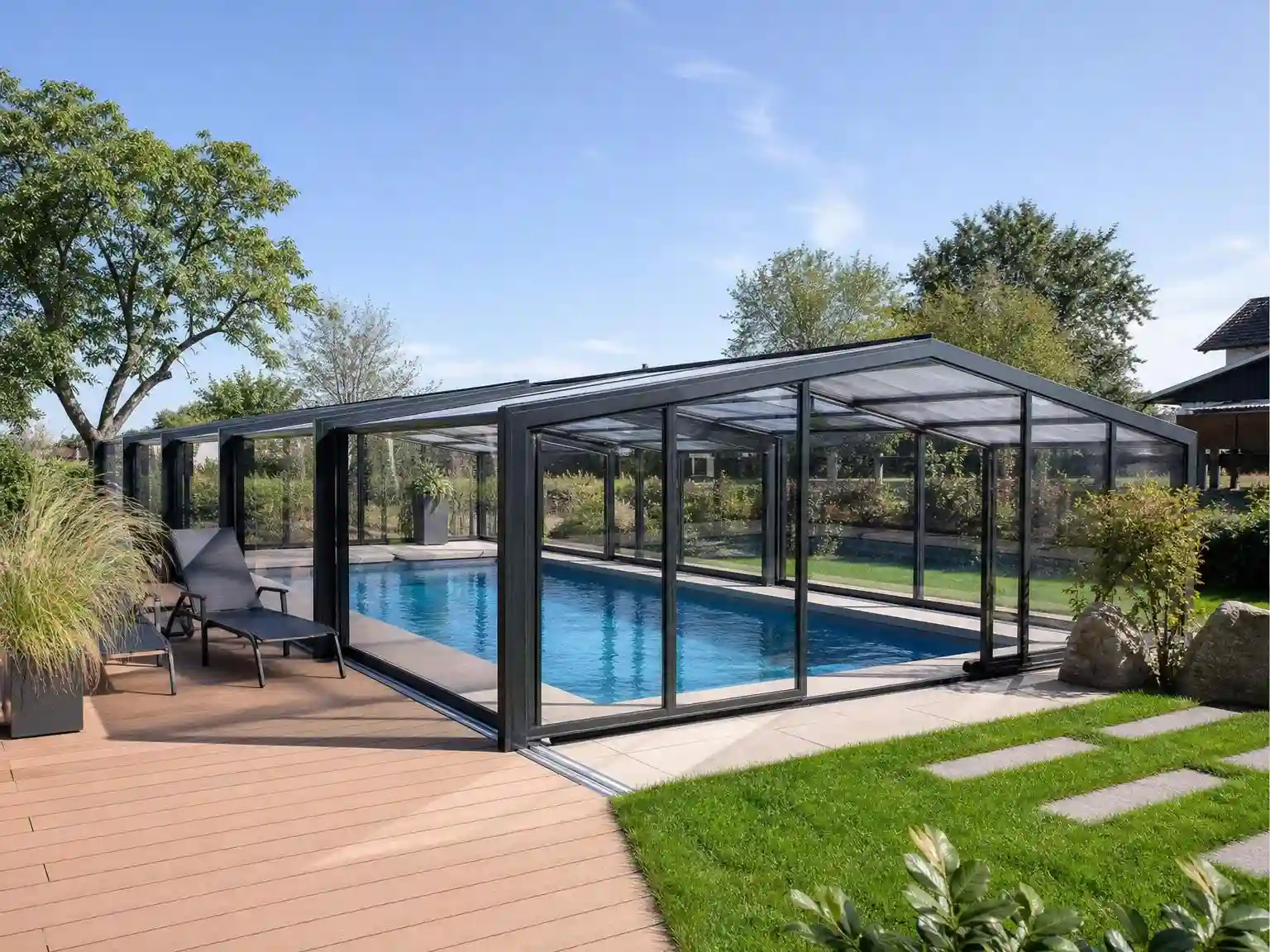
A retractable pool enclosure is a movable structural system installed over a swimming pool to provide environmental protection while maintaining the flexibility of an open pool.
Most modern systems consist of:
- Powder‑coated aluminum structural frames
- High‑impact polycarbonate or tempered glass panels
- Telescopic sliding modules
- Ground rail or rail‑free track systems
- Optional motorized automation
The telescopic modules slide smoothly along tracks, allowing sections to stack together and fully open the pool area when desired.
This design enables the space to function as:
- An open outdoor pool in summer
- A protected swimming area in spring and autumn
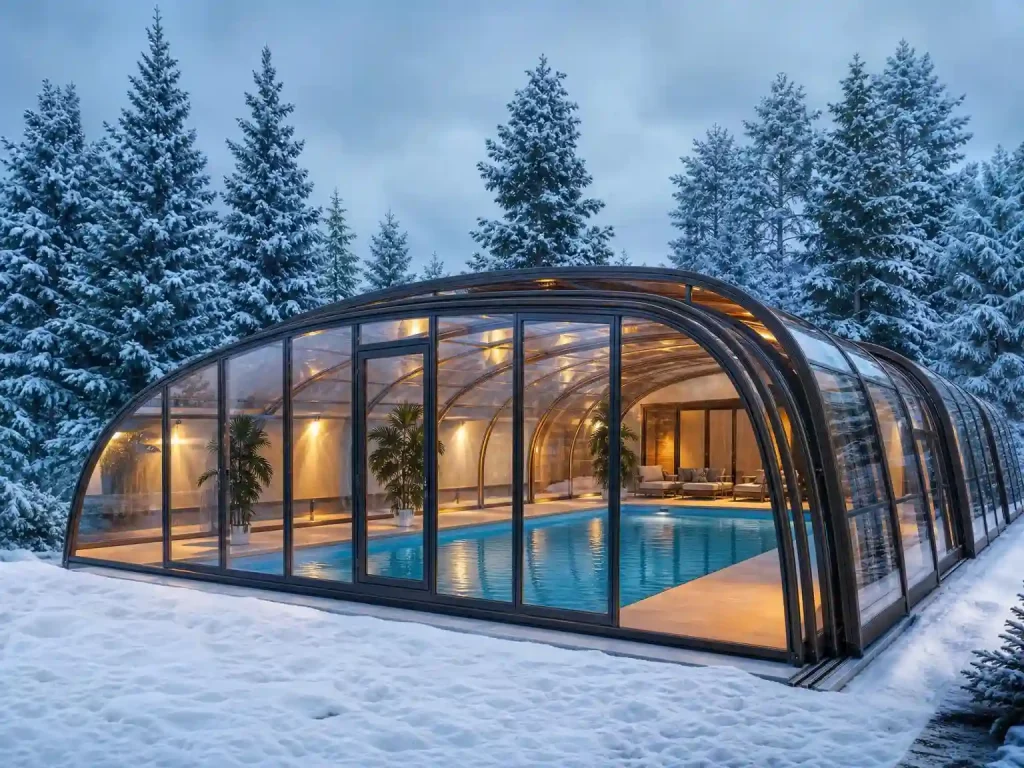
- A semi‑indoor pool environment in winter
Many high-end systems are designed with wind resistance, snow load capacity, and UV protection, ensuring long‑term durability in different climates.
How Retractable Pool Enclosures Work
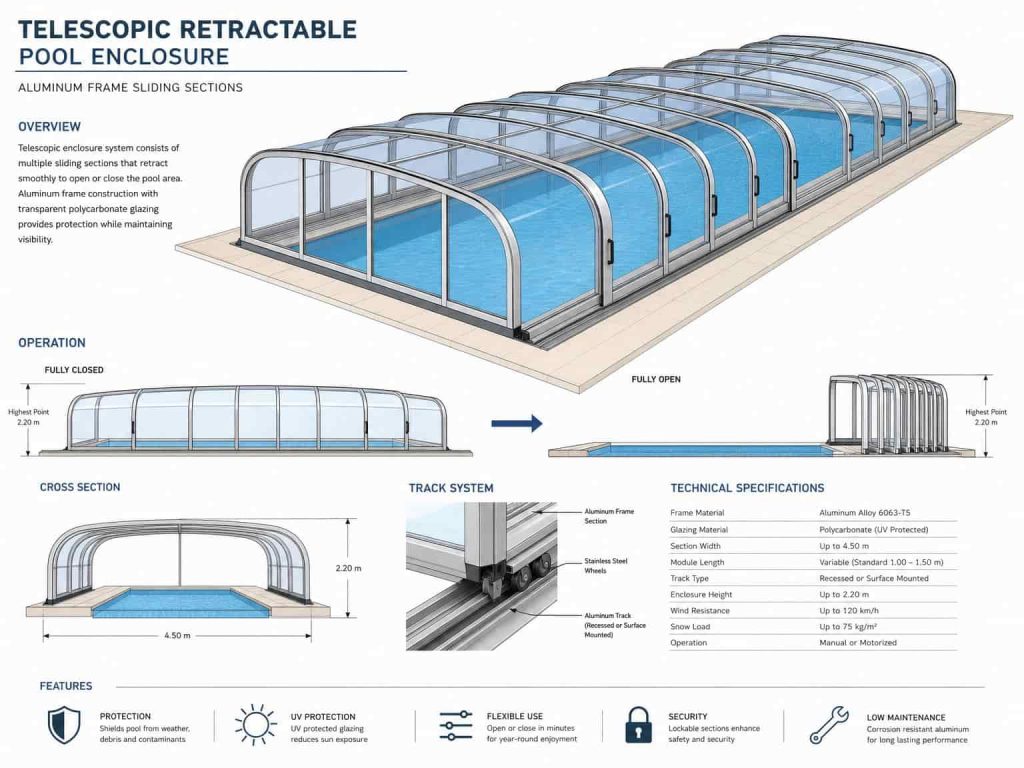
Most retractable enclosures use a telescopic structural system.
Multiple sections are constructed in gradually decreasing sizes. These sections slide beneath one another along precision tracks.
Operational modes typically include:
- Fully closed (maximum protection)
- Partially open (ventilation)
- Fully retracted (open-air swimming)
Depending on the project, the system may be:
- Manual sliding
- Motorized with remote control
- Fully automated smart control systems
Many modern installations are integrated with outdoor living structures such as:
- Retractable sunrooms
- patio enclosures
- pergola shading systems
Explore our full range of retractable structures:
https://retractablesunroom.com/
Benefits of Installing a Retractable Pool Enclosure
1. Extend the Swimming Season
One of the primary motivations for installing an enclosure is seasonal extension.
The transparent roofing panels capture solar radiation and create a greenhouse effect, which helps maintain warmer air temperatures around the pool.
In many climates, this allows homeowners to extend the swimming season by four to six months or even year‑round.
2. Reduce Pool Maintenance
Open pools are exposed to environmental contamination.
Common debris sources include:
- Leaves
- Dust
- Pollen
- Insects
A retractable enclosure acts as a protective barrier, significantly reducing the amount of debris entering the pool.
Benefits include:
- Lower cleaning frequency
- Reduced chemical consumption
- Longer equipment lifespan
3. Improve Energy Efficiency
Heat loss is a major factor in pool operating costs.
A retractable enclosure reduces:
- Evaporation
- Wind exposure
- Nighttime heat loss
By maintaining a warmer air environment, many pools require less mechanical heating, lowering energy costs over time.
4. Increase Safety
Safety is an important consideration for residential pools.
When closed and locked, a pool enclosure acts as a physical safety barrier, helping prevent unsupervised access by:
- Children
- Pets
- Wildlife
Many systems also include locking mechanisms and reinforced structures that meet regional safety standards.
5. Protect Against Weather
Retractable pool enclosures provide protection against:
- Rain
- Strong wind
- Snow accumulation
- UV exposure
High-quality systems are engineered to withstand heavy snow loads and strong wind conditions, which is particularly important in northern climates.
For more information about pricing and design factors, read:
https://retractablesunroom.com/pool-enclosure-cost/
Types of Retractable Pool Enclosures
Retractable enclosures are generally categorized based on structural height.
Low Profile Pool Enclosures
Low enclosures sit close to the pool surface.
Characteristics:
- Minimal visual impact
- Lower cost
- Excellent heat retention
However, these structures typically do not allow users to walk inside the enclosure.
Medium Height Enclosures
Medium height enclosures provide enough space for limited movement around the pool.
Advantages include:
- Balanced cost and usability
- Improved ventilation
- Better comfort for pool users
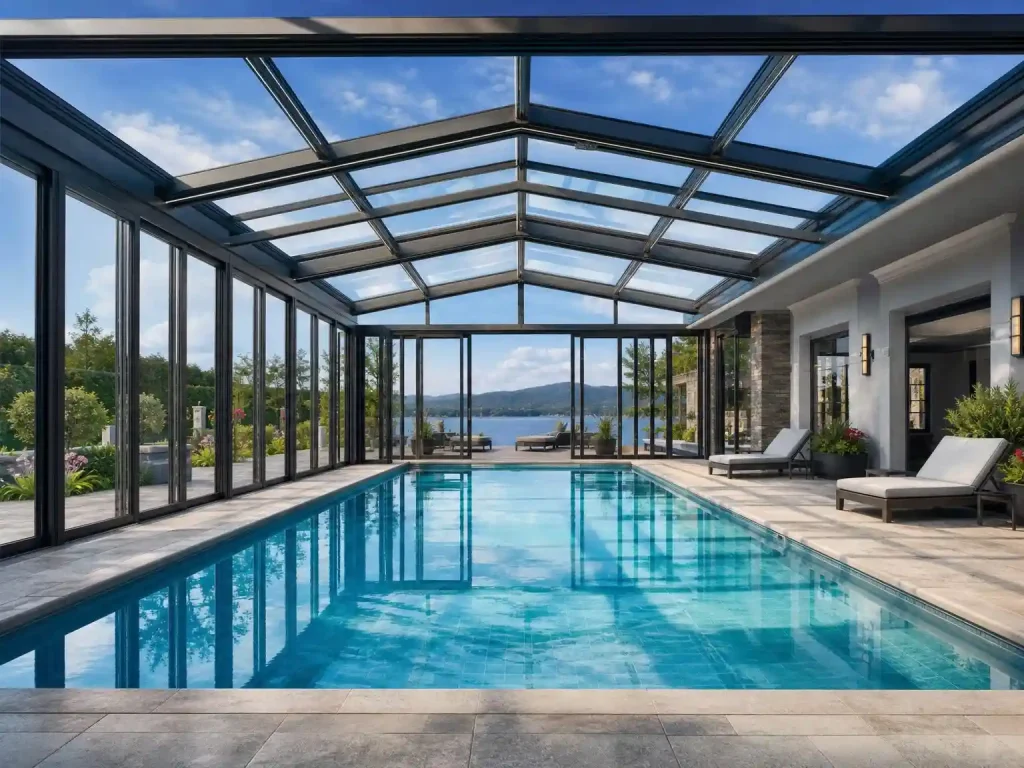
High Pool Enclosures (Sunroom Style)
High-profile structures function almost like retractable sunrooms.
Users can comfortably walk, relax, or place outdoor furniture inside the enclosure.
These systems are commonly used in:
- Luxury residential properties
- Hotels and resorts
- Indoor‑outdoor living areas
Learn more about sunroom structures:
https://retractablesunroom.com/
Retractable Pool Enclosure Cost
The cost of a retractable pool enclosure varies depending on design complexity, materials, and project size.
Typical price ranges include:
- Low enclosures: $8,000 – $20,000
- Medium enclosures: $15,000 – $40,000
- High enclosures: $30,000 – $80,000+
Key pricing factors include:
- Pool dimensions
- Enclosure height
- Frame material thickness
- Glazing material (polycarbonate vs glass)
- Wind and snow load requirements
- Manual or motorized systems
- Installation complexity
For a detailed price analysis, see our full guide:
https://retractablesunroom.com/pool-enclosure-cost/
Manual vs Motorized Retractable Systems
Manual Systems
Manual enclosures are opened by pushing the telescopic sections along the tracks.
Advantages:
- Lower initial investment
- Simple maintenance
- Reliable long‑term operation
Motorized Systems
Motorized systems use electric motors to retract or close the structure.
Advantages:
- Convenient operation
- Ideal for large enclosures
- Suitable for commercial facilities
These systems are commonly used in hotels, spas, and recreational centers.
How to Choose the Right Pool Enclosure
Selecting the right enclosure requires evaluating several factors.
Important considerations include:
- Local climate conditions
- Wind and snow load requirements
- Available space around the pool
- Desired enclosure height
- Budget and long‑term usage goals
Working with an experienced manufacturer ensures the enclosure is structurally safe, aesthetically compatible, and optimized for local conditions.
Conclusion
A retractable pool enclosure offers a combination of functionality, protection, and architectural elegance.
By transforming an open pool into a flexible indoor‑outdoor environment, these systems improve usability, safety, and long‑term property value.
For homeowners, hotels, and developers, retractable enclosures represent one of the most practical upgrades for modern pool design.
FAQ: Retractable Pool Enclosures
How long does a retractable pool enclosure last?
High‑quality aluminum and polycarbonate enclosures typically last 20–30 years with proper maintenance.
Can retractable pool enclosures withstand snow?
Yes. Many modern enclosures are engineered with snow load ratings suitable for cold climates.
Do retractable pool enclosures increase home value?
Yes. They extend the usability of the pool area and enhance the property’s outdoor living space.


